Mold Removal in Hall County: Complete Guide for Every Town
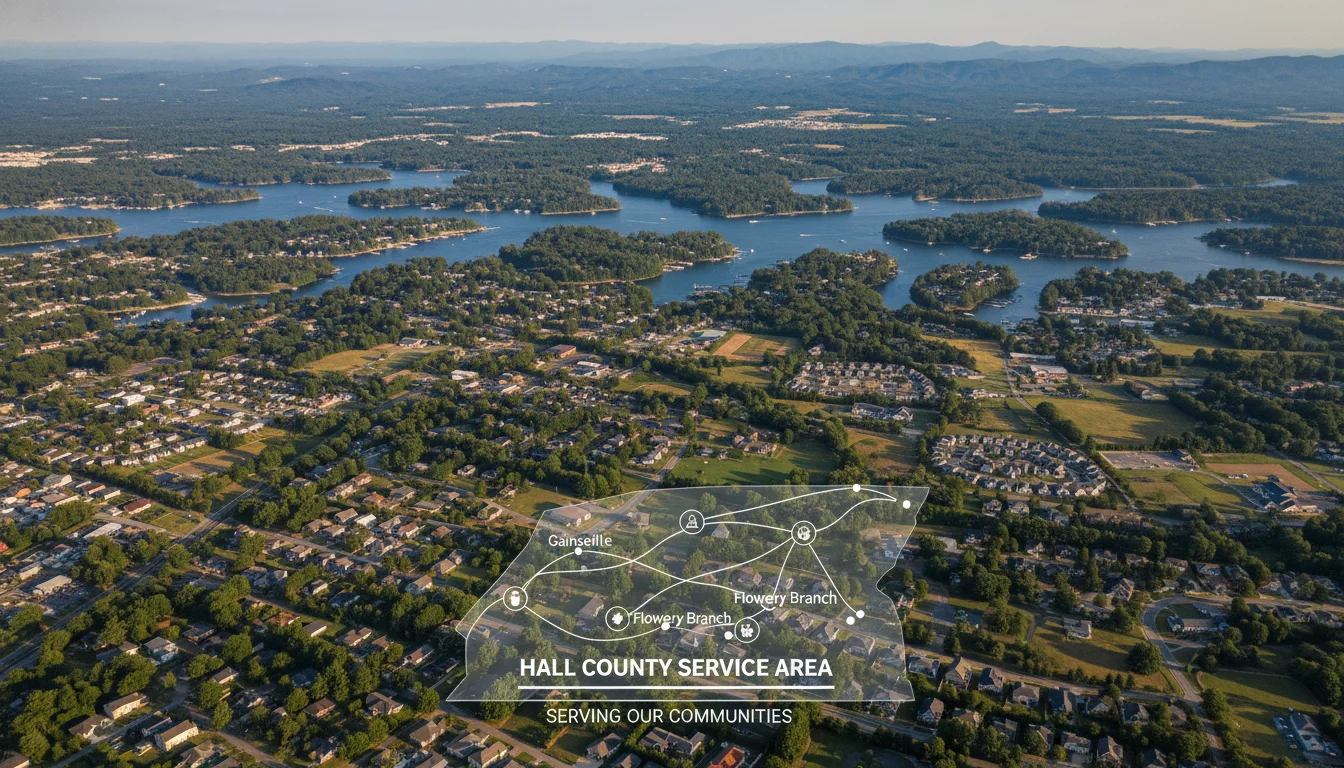
Hall County, Georgia is one of the fastest-growing regions in the state, with a humid subtropical climate, proximity to Lake Lanier, and a housing stock that ranges from 19th-century farmhouses to brand-new subdivisions. These conditions create a perfect storm for mold problems. Whether you live in downtown Gainesville, a lakefront home in Flowery Branch, or a rural property in Murrayville, understanding the local mold landscape is the first step toward protecting your home and your family's health.
Why Hall County Has a Mold Problem
Hall County sits in the northeastern corner of Georgia, in the foothills of the Blue Ridge Mountains. The county experiences average annual rainfall of approximately 52 inches, well above the national average, and humidity levels regularly exceed 70% from May through October. This constant moisture, combined with summer temperatures that average 88°F, creates the warm, damp conditions that mold needs to thrive.
Lake Lanier, a 38,000-acre reservoir with 692 miles of shoreline, dominates the county's geography. While the lake is a recreational treasure and economic engine, it also acts as a massive humidity source for the entire region. Homes within a mile of the shoreline experience measurably higher ambient humidity than properties further inland. According to U.S. Census Bureau data, approximately 38% of Hall County's housing stock was built before 1990, meaning many homes predate modern moisture-management building codes. Older homes often lack proper vapor barriers in crawlspaces, have aging roofs with small leaks, or use materials like unsealed wood that absorb moisture over decades.
The combination of an aging housing stock, sustained high humidity, and Lake Lanier's influence means mold is not an occasional problem in Hall County — it is a persistent, structural challenge that requires active management.
Common Mold Types in North Georgia
Aspergillus
The most common mold genus found in North Georgia homes, Aspergillus thrives in consistently damp environments like bathrooms, kitchens, and poorly ventilated attics. While many species are harmless to healthy adults, some produce mycotoxins that can trigger allergic reactions and respiratory issues in sensitive individuals.
Stachybotrys (Black Mold)
Black mold requires prolonged moisture exposure — typically from a sustained leak, flood, or chronic humidity problem. It appears as dark greenish-black patches on drywall, ceiling tiles, or wood. Hall County's humidity means leaks that might dry out naturally in Arizona instead stay wet for weeks, creating ideal Stachybotrys conditions. This mold type has been linked to severe respiratory symptoms, chronic fatigue, and neurological issues in long-term exposures.
Cladosporium
Unlike many molds that need consistently wet surfaces, Cladosporium can grow in damp but not saturated conditions. It commonly appears on carpets, upholstery, curtains, and inside HVAC ductwork. Hall County's high ambient humidity makes Cladosporium one of the most frequently identified molds in local home inspections.
Penicillium
Often found in water-damaged buildings, Penicillium spreads rapidly and can grow on wallpaper, insulation, carpet padding, and behind walls where moisture has penetrated. Its distinctive musty odor is frequently the first clue homeowners notice before visible mold appears.
Every Hall County Town: Unique Mold Profiles
Gainesville
As the county seat and largest city, Gainesville has a diverse housing mix: from historic Victorian-era homes near the downtown square to mid-century brick ranches and modern developments on the city's expanding edges. Downtown and near-downtown neighborhoods like Green Street and West Academy Street feature homes built between 1900 and 1950, many with original pier-and-beam foundations and dirt-floor crawlspaces that practically invite moisture. Gainesville's older commercial buildings, converted warehouses, and apartment complexes from the 1970s and 1980s also present significant mold challenges due to aging plumbing, flat roofs, and decades of deferred maintenance. The city's combined sewer-stormwater infrastructure in older sections can contribute to basement flooding during heavy rain events.
Flowery Branch
Flowery Branch sits directly on Lake Lanier's shoreline and has experienced explosive residential growth over the past 15 years. The town presents two distinct mold risk profiles: newer construction (post-2010) that generally benefits from modern vapor barriers, sealed crawlspaces, and HVAC systems sized for Georgia humidity — and lakefront properties, including older cabins and boathouses that contend with constant shoreline moisture. Lakefront homes often have walkout basements at or near water level, where hydrostatic pressure from the lake can force moisture through foundation walls. Boathouse structures, rarely climate-controlled, are notorious for developing mold on stored watercraft, life jackets, and interior surfaces.
Oakwood
Oakwood's location straddling I-985 and its proximity to the University of North Georgia's Gainesville campus gives the city a mix of single-family subdivisions, apartment complexes, and light industrial properties. Many Oakwood homes were built during the 1980s and 1990s construction boom, and while generally well-constructed, these homes often have HVAC systems that are now 25–35 years old. Undersized or aging air conditioning systems struggle to dehumidify effectively during Georgia summers, leaving interior humidity levels above the 60% threshold where mold growth accelerates.
Lula
Lula, on Hall County's southern border, has a mix of older mill-village homes and newer rural-suburban construction. The town's location along the Norfolk Southern rail corridor and near the Hall-Banks county line means many properties rely on well water. Well systems that are not properly sealed or maintained can introduce moisture into basements and crawlspaces. Lula's older homes, some built for railroad workers in the early 1900s, have pier-and-beam foundations with limited ventilation — a classic setup for crawlspace mold.
Clermont
Clermont, in northern Hall County, sits at a slightly higher elevation than the county's lake-level towns, which provides some natural protection against sustained humidity. However, the area's heavy clay soil — common throughout the Chattahoochee foothills — drains poorly after rain, keeping moisture pressed against foundation walls for extended periods. Clermont's prevalence of homes on crawlspaces rather than slabs means the soil moisture problem translates directly into under-home humidity issues.
Braselton
Straddling four counties including Hall, Braselton has seen some of the most aggressive residential development in the region, including the massive Chateau Elan golf and winery resort community. Newer Braselton homes are generally well-built, but the sheer pace of construction means some properties were built quickly, and issues like improper grading, rushed foundation waterproofing, and poorly connected drainage systems can create mold vulnerabilities that take 3–5 years to become apparent.
Chestnut Mountain
An unincorporated community in southern Hall County, Chestnut Mountain consists largely of rural residential properties on larger lots. Homes here tend to be custom-built or manufactured, with a high proportion using well-and-septic systems. Septic system failures or inadequate drainage fields can introduce significant ground moisture near foundation walls. The area's wooded lots, while beautiful, reduce sunlight reaching the home and slow evaporation after rain, contributing to sustained dampness around structures.
Murrayville
Located in northern Hall County near the White County line, Murrayville is predominantly agricultural and rural residential. Many homes were built by individual owners rather than production builders, meaning construction quality and moisture-management features vary dramatically from property to property. Murrayville's higher elevation provides some humidity relief, but older farmhouses and manufactured homes frequently lack modern moisture barriers and can harbor mold in basements, attics, and wall cavities that have accumulated decades of North Georgia humidity.
Hall County Building Permits for Mold Remediation
Hall County requires building permits for structural mold remediation projects that involve removing and replacing drywall, flooring, or structural framing. The Hall County Building Inspections office, located at 2875 Browns Bridge Road in Gainesville, reviews and issues these permits. Most cosmetic or surface-level mold cleanup (less than 10 square feet of affected area) does not require a permit, but any remediation involving demolition or structural repair does.
If you are working with a professional remediation company, they should handle the permit process as part of the job scope. The permit fee is calculated based on the project valuation, and inspections are typically required at rough-in (after containment is removed, before finish materials are installed) and at final completion. Make sure any contractor you hire is familiar with the 2018 International Building Code and International Residential Code as adopted by Hall County, including the moisture-related provisions in Section R408 (under-floor ventilation) and Section R703 (exterior covering and water-resistive barriers).
When to Call a Professional
Not every mold situation requires professional intervention, but knowing when to call is crucial. The EPA recommends professional remediation when the affected area exceeds 10 square feet, when the HVAC system is contaminated, when the water damage involved sewage or contaminated water, or when building occupants have respiratory conditions, allergies, or compromised immune systems.
In Hall County specifically, professional assessment is warranted if you notice any of the following: persistent musty odors that do not respond to cleaning and ventilation, visible mold growth on more than one wall or in multiple rooms, warping or discoloration of flooring, baseboards, or drywall, family members experiencing unexplained respiratory symptoms that improve when away from home, and any history of flooding, roof leaks, or plumbing leaks that were not immediately and thoroughly dried. If your home is on a crawlspace that has never been encapsulated or has a dirt floor, a professional inspection is strongly recommended even without visible signs, as crawlspace mold often spreads undetected for years before symptoms appear inside the living space.
Serving All of Hall County
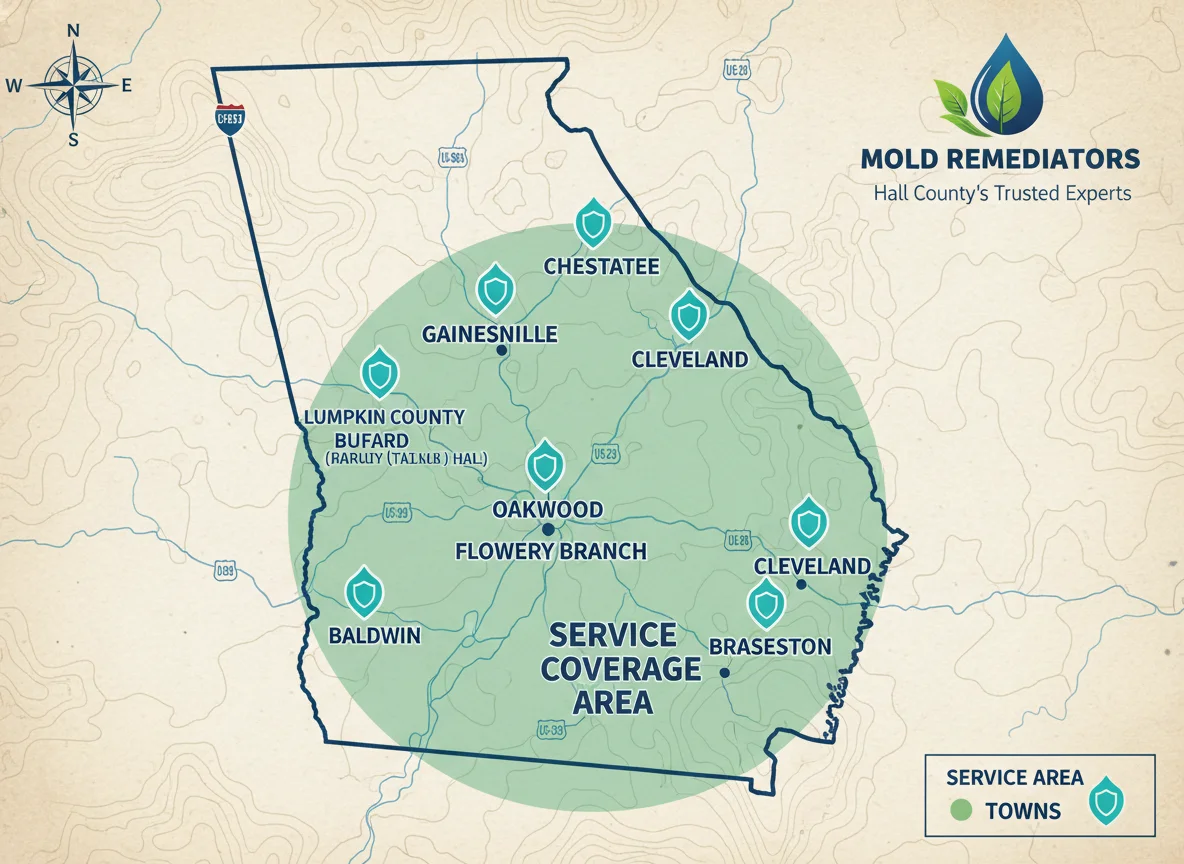
Mold Remediation Hotline provides inspection, testing, and full remediation services to every community in Hall County. Our team understands the specific moisture challenges of each town, from Lake Lanier shoreline properties to rural north-county farmhouses. We are familiar with Hall County permit requirements, local building codes, and the unique climate patterns that make North Georgia one of the most mold-prone regions in the United States. If you suspect mold in your Hall County home, do not wait. Small problems become expensive ones when given time and Georgia humidity.
Related Resources
- How to Choose a Mold Removal Company in Gainesville, GA
- 7 Signs Your Home Has Mold
- Mold Inspection vs. Testing: What's the Difference?
- Seasonal Mold Prevention Tips for Hall County
Need Professional Mold Removal in Hall County?
Call Mold Remediation Hotline at (332) 220-0303 for a free, no-obligation estimate. We serve every town in Hall County, GA.