Georgia Humidity and Mold: Why Exterior Walls Are at Risk
If you live in Hall County, you know humidity is not an occasional weather event — it is a near-constant presence for half the year. What many homeowners do not realize is how that humidity silently works against their exterior walls, creating the perfect conditions for mold growth behind furniture, inside closets, and within wall cavities. Understanding why this happens is the first step to stopping it.
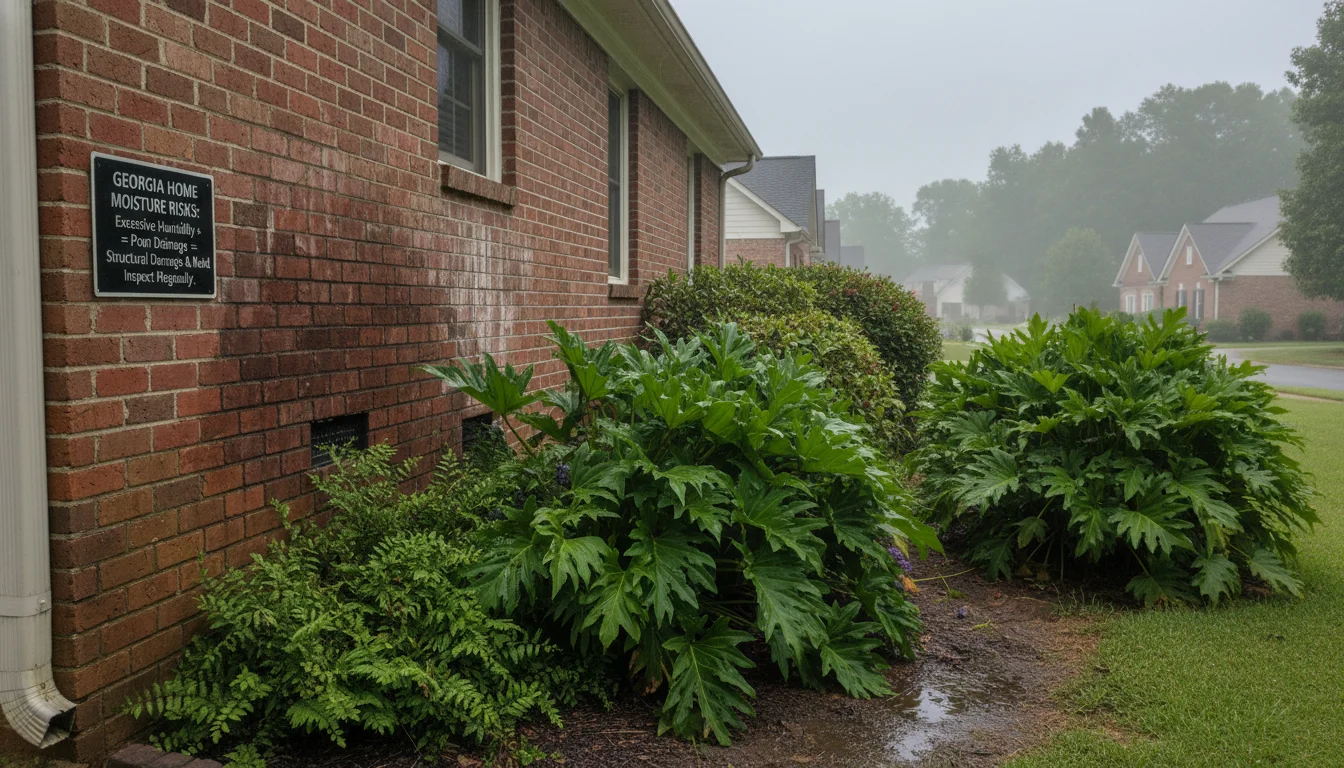
Georgia's Humid Subtropical Climate — By the Numbers
Georgia sits squarely in the humid subtropical climate zone (Köppen classification Cfa), which means hot, muggy summers and mild but damp winters. In Gainesville and Hall County specifically, average morning relative humidity runs between 80% and 90% throughout the year, while afternoon humidity typically drops to the 50% to 65% range — still well above what most building materials can tolerate indefinitely without moisture management. The dew point — the temperature at which water vapor condenses into liquid — regularly exceeds 65°F from May through September, and frequently hits the low 70s during July and August.
What this means for your home: any surface that is cooler than the dew point will collect condensation. In a Georgia summer, with air conditioning keeping your interior at roughly 72°F to 75°F, the temperature of your exterior walls can be significantly lower than the dew point of outdoor air seeping in. The result is invisible condensation inside wall cavities and on the back side of drywall — exactly the moisture mold needs.
Why Exterior Walls Are the Problem Zone
Exterior walls face a double assault: outdoor humidity pressing inward and indoor temperature differences pulling moisture through the wall assembly. Here is how the mechanism works:
The Condensation Trap Behind Furniture
One of the most common mold discoveries in Hall County homes happens when a homeowner moves a large piece of furniture — a dresser, a bookshelf, a sofa — that has been sitting against an exterior wall for a year or more and finds a dark, moldy patch on the wall behind it. What happened? The furniture blocked air circulation against the wall, allowing the surface temperature of that section of drywall to drop below the room's dew point. Warm, humid indoor air met the cool wall surface behind the furniture, and condensation formed — night after night, month after month, invisible behind the furniture that was blocking it. Mold had a constant moisture supply, darkness, and an organic food source (the paper facing on the drywall).
Closets on Exterior Walls
Closets built into exterior walls are another high-risk zone. They are typically the coldest interior spaces because they are unheated, receive no direct airflow from HVAC registers, and have a door that stays closed most of the time. Combine that with the fact that people store shoes, clothes, and boxes against the back wall of the closet — blocking the only circulation that would reach that surface — and you have a recipe for hidden mold. In Gainesville area homes, we frequently discover mold on the back wall of master bedroom closets that share an exterior wall, especially on the north side of the house that receives less direct sun.
Bathroom and Kitchen Exterior Walls
Bathrooms and kitchens on exterior walls combine humidity from within (showers, cooking, dishwashing) with humidity from without (Georgia's ambient moisture). When a bathroom exhaust fan is undersized, unvented to the outside, or simply not used for long enough after a shower, the warm, moisture-laden air migrates to the coolest surface in the room — often an exterior wall or the ceiling directly above it. In kitchens, boiling water and running the dishwasher produce significant indoor humidity that follows the same pattern.
Hall County-Specific Risk Factors
Several features of our local geography and housing stock intensify the exterior-wall mold risk:
- Lake Lanier proximity: Homes within a mile of Lake Lanier experience consistently higher ambient humidity than homes farther inland, especially during summer mornings when the lake releases moisture into the air. The "lake effect" can push local relative humidity 5% to 10% higher than the county average.
- Older housing stock: Many homes in downtown Gainesville and surrounding Hall County neighborhoods were built between 1950 and 1985, before modern vapor barrier codes and house-wrap standards were widely adopted. These homes often lack the continuous exterior insulation and air sealing that newer construction provides, making them more permeable to outdoor moisture.
- Brick veneer construction: Brick-veneer homes, which are extremely common throughout North Georgia, have an air gap between the brick exterior and the structural wall behind it. When this cavity is not properly ventilated with weep holes and receives wind-driven rain or ground splash-back, it becomes a humid microclimate that drives moisture directly into the wall assembly from the outside.
- Crawlspace-to-wall moisture transfer: As noted in our mold warning signs guide, the stack effect draws air from the crawlspace upward into the living space. If the crawlspace has high humidity or standing moisture, that damp air travels through wall cavities, continuously feeding exterior-wall mold colonies.
Prevention: How to Protect Your Exterior Walls
1. Manage Indoor Humidity Aggressively
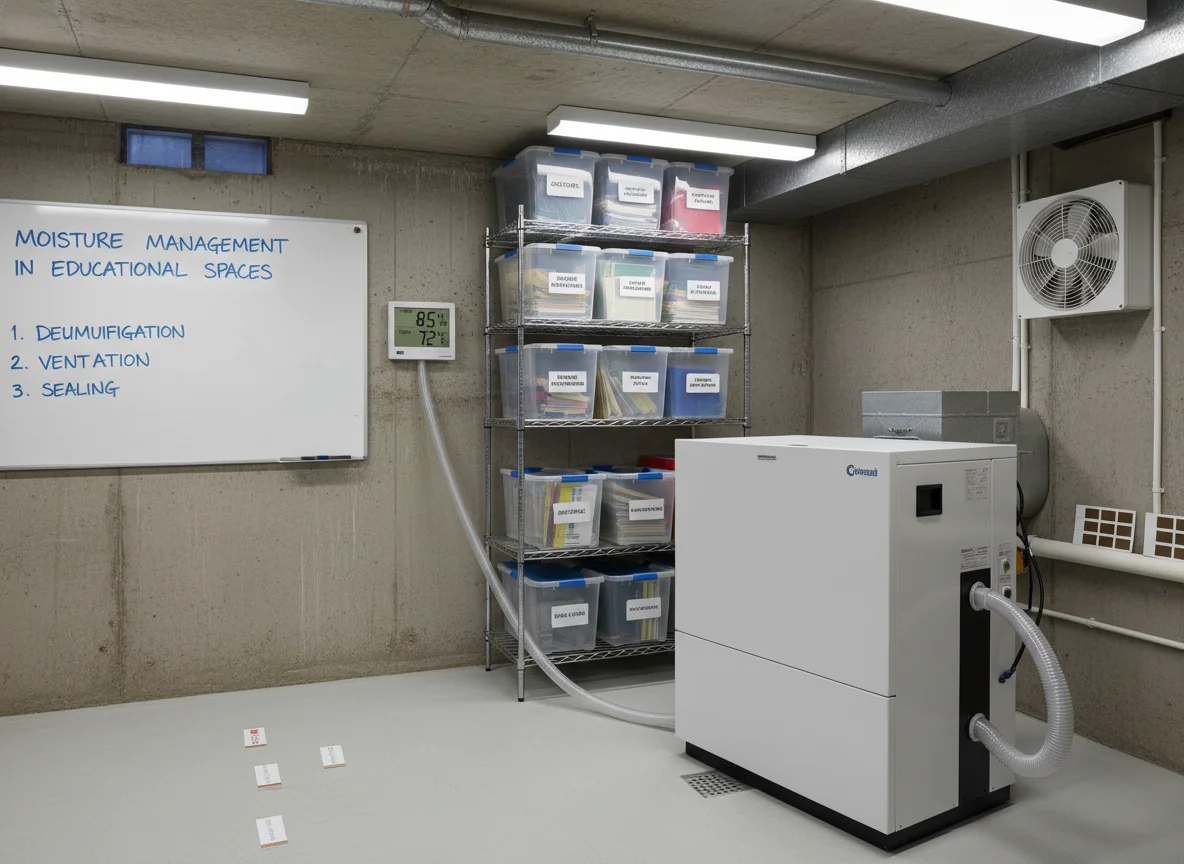
Keep indoor relative humidity between 30% and 50% year-round. For most Hall County homes, this requires a dehumidifier running during the warm months — and often a whole-house dehumidifier integrated with the HVAC system rather than a single portable unit. Portable dehumidifiers are useful for target rooms (basements, large closets) but rarely keep an entire house within range during a Georgia July. A whole-house system connected to your HVAC ductwork keeps every room in range automatically.
2. Create Air Gap Behind Furniture
Pull large furniture (dressers, bookshelves, sofas, bed headboards) at least three to four inches away from exterior walls. This small gap allows air to circulate behind the furniture and keeps the wall surface temperature close to the room temperature, reducing condensation. It may feel unnatural to have your bed not pressed flush against the wall, but the alternative is a mold colony you will not see until you move the bed a year later.
3. Improve Ventilation in High-Moisture Rooms
Bathroom exhaust fans should be vented to the outside (not into the attic, which is a depressingly common shortcut in older Georgia construction), should move at least 50 cubic feet per minute for a typical bathroom, and should run for at least 20 minutes after a shower. Kitchen range hoods should vent to the outside and be used whenever boiling water or running the dishwasher. If your laundry room is on an exterior wall, ensure the dryer vent is sealed tightly at the wall penetration — a loose dryer vent dumps warm, humid air into the wall cavity with every cycle.
4. Maintain Your HVAC System
Air conditioning removes humidity as well as heat — but only if the system is properly sized and maintained. An oversized AC unit cools the house quickly and then shuts off, without running long enough to dehumidify. A dirty evaporator coil or clogged condensate drain reduces dehumidification efficiency significantly. Change filters every 30 to 60 days during heavy-use months and have the system professionally serviced at the start of each cooling season. For HVAC-related mold problems, remediation is significantly more expensive than prevention.
5. Inspect and Seal the Building Envelope
Walk the exterior of your home twice a year and check for gaps, cracks, and failed sealant around windows, doors, hose bibs, dryer vents, and exterior outlets. Even a tiny gap allows humid outdoor air to enter the wall cavity. Inside, check that outlet covers and switch plates on exterior walls have foam gaskets behind them — a $2 fix that measurably reduces humid air infiltration. For brick homes, verify that weep holes at the bottom of the brick course are not blocked by mulch, soil, or debris.
Georgia Mold Risk Calendar: When to Be Most Vigilant
June – August
PEAK RISK
Dew points 68–74°F. Outdoor humidity and AC-driven condensation at maximum. Monitor all exterior walls monthly.
September
HIGH RISK
Still hot and humid. Hurricane remnants can bring days of rain. Foundation seepage risk peaks.
April – May
MODERATE RISK
Spring rains, rising humidity. Check crawlspaces after heavy storms. AC start-up service recommended.
October – November
MODERATE RISK
Humidity drops but rain continues. Leaf-clogged gutters cause water intrusion at eaves and foundation.
December – February
LOWER RISK
Cold, drier air. Condensation on poorly insulated walls still possible. Frozen-pipe burst risk during cold snaps.
March
LOWER RISK
Transition month. Check for winter storm damage. Prepare dehumidifiers for spring.
When to Call a Professional
If you move furniture away from an exterior wall and discover discoloration, staining, or a fuzzy-looking growth, do not attempt to clean it yourself with bleach and a rag. Scrubbing mold on drywall releases spores into your breathing air and drives moisture deeper into the gypsum core. The mold you can see is often just the tip of the iceberg — the colony may extend well behind the drywall into the wall cavity, where it has been feeding on the paper backing for months.
A professional remediation company will set up containment around the affected area, remove the contaminated drywall without spreading spores, treat the framing behind it, and ensure the underlying moisture problem is corrected so the mold does not return. For residents in Gainesville, Oakwood, Flowery Branch, and throughout Hall County, Mold Remediation Hotline provides free exterior-wall inspections with no obligation to proceed.
Worried About Mold on Your Exterior Walls?
Call Mold Remediation Hotline at (332) 220-0303 to schedule a free inspection in Hall County. We will identify the source of the moisture, assess the extent of any mold growth, and provide a transparent plan to fix it.