7 Signs You Need Professional Mold Remediation in Hall County
Mold doesn't always announce itself with a big black patch on the wall. In Hall County, Georgia — where summer humidity rarely dips below 70% and older homes are the norm — mold often grows quietly behind walls, under flooring, or inside ductwork for months before anyone notices. If you recognize any of these seven signs in your Gainesville-area home, it is time to call a professional remediation company.
1. 1 Visible Mold Growth
This one sounds obvious, but visible mold is not always as dramatic as you might expect. It does not always appear as the jet-black splotches shown in stock photos. Mold can present as fuzzy white patches, greenish speckling along baseboards, pink or orange staining in shower corners, or a fine gray dusting across attic sheathing. In Hall County crawlspaces, we frequently find white or yellowish mold colonies spreading across floor joists — easily mistaken for efflorescence or simple discoloration by an untrained eye.
If you can see any discoloration that you suspect is mold, do not disturb it by scrubbing or wiping — that releases spores into your breathing air. Instead, call a professional to assess it. Even a small visible patch sometimes indicates a much larger colony on the reverse side of the drywall or deeper inside the wall cavity. Homes near Lake Lanier, where ambient moisture is consistently higher, are particularly prone to hidden mold spreading well beyond what is visible from the living space.
2. 2 Musty or Earthy Odors That Will Not Go Away
A persistent musty smell — often described as earthy, damp, or similar to wet cardboard — is one of the most reliable indicators of hidden mold. Mold releases microbial volatile organic compounds (MVOCs) as part of its metabolic process, and these compounds produce that distinctive odor even when no mold is visible.
In Hall County homes, we often get calls from homeowners who say "the house smells fine when I walk in, but the bedroom closet always has this weird smell" or "the basement has an earthy smell no matter how much I air it out." That localized, persistent odor is the mold colony broadcasting its location. Pay particular attention to areas near plumbing fixtures, under sinks, around windows that get condensation, in closets on exterior walls, and in any room below a bathroom. In older Gainesville homes with pier-and-beam foundations, the musty smell may be drifting up from the crawlspace through gaps in the subfloor.
3. 3 History of Water Damage or Leaks
If your home has ever experienced any of the following, you may have mold even if everything looks dry today: a roof leak (common after Hall County's spring thunderstorms), a plumbing leak inside a wall or ceiling, an overflowing bathtub or sink, a washing machine hose that burst while you were away, a hot water heater that leaked before replacement, stormwater intrusion through a foundation crack, or a toilet that overflowed onto carpeted flooring.
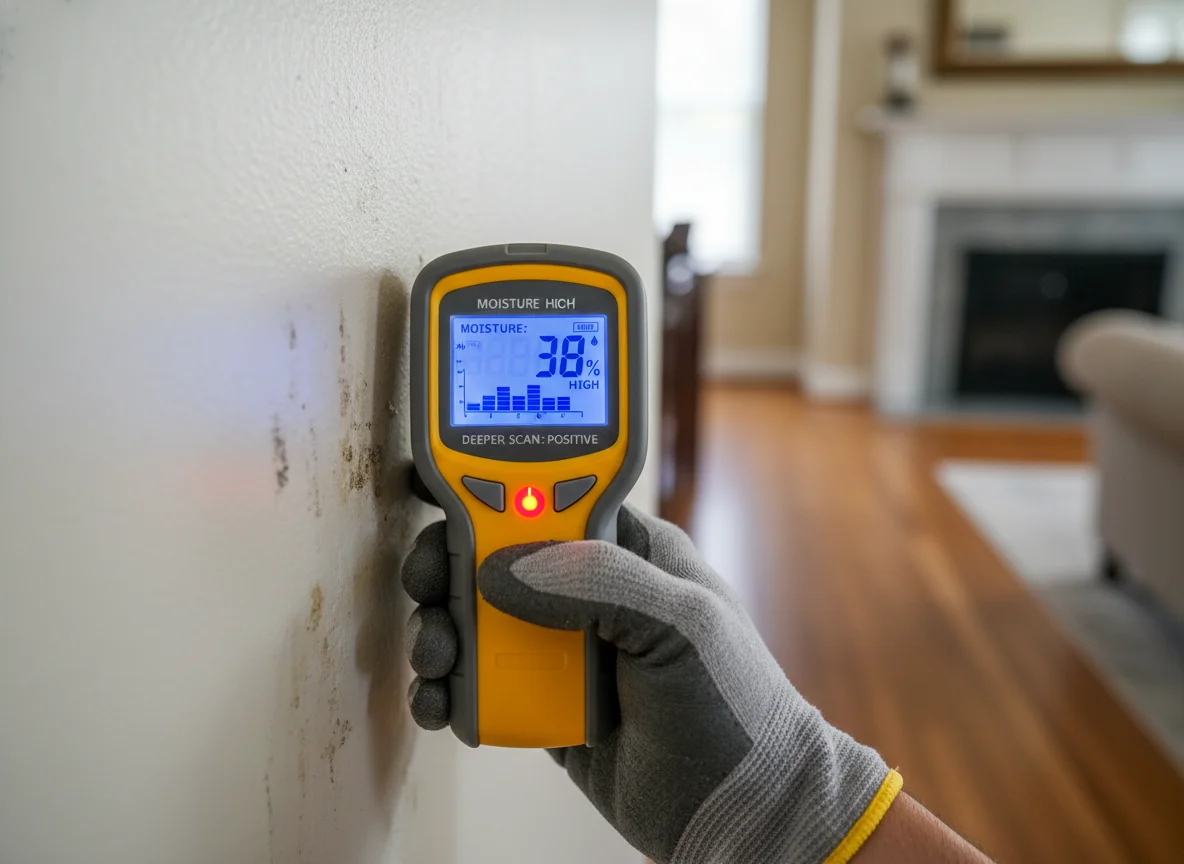
Mold can begin colonizing damp organic material in as little as 24 to 48 hours. The critical variable is not how long the water flowed but how long materials stayed wet afterward. If the water-damaged area was not professionally dried with industrial air movers and dehumidifiers within 48 hours, the odds are high that mold has taken hold — even if the surface feels dry to the touch now. This is especially true in Georgia's summer months, when warm, humid air accelerates fungal growth dramatically.
4. 4 Unexplained Health Symptoms in Your Household
Mold exposure affects people differently. Some individuals experience severe reactions while others in the same house notice nothing at all. This variability often leads families to dismiss a mold problem because "only one person is sick." The key red flag is symptoms that improve when you leave the house and worsen when you return.
Common mold-related symptoms include: persistent nasal congestion or sinus pressure, frequent sneezing, itchy or watery eyes, dry cough or throat irritation, skin rashes or hives, worsening asthma, and unexplained fatigue or headaches that do not respond to typical remedies. The very young, the elderly, and anyone with a compromised immune system, existing respiratory condition, or mold allergy are at elevated risk. If a family member has developed new or worsening respiratory issues since you moved into a home — especially an older Hall County property — mold should be on your list of suspects.
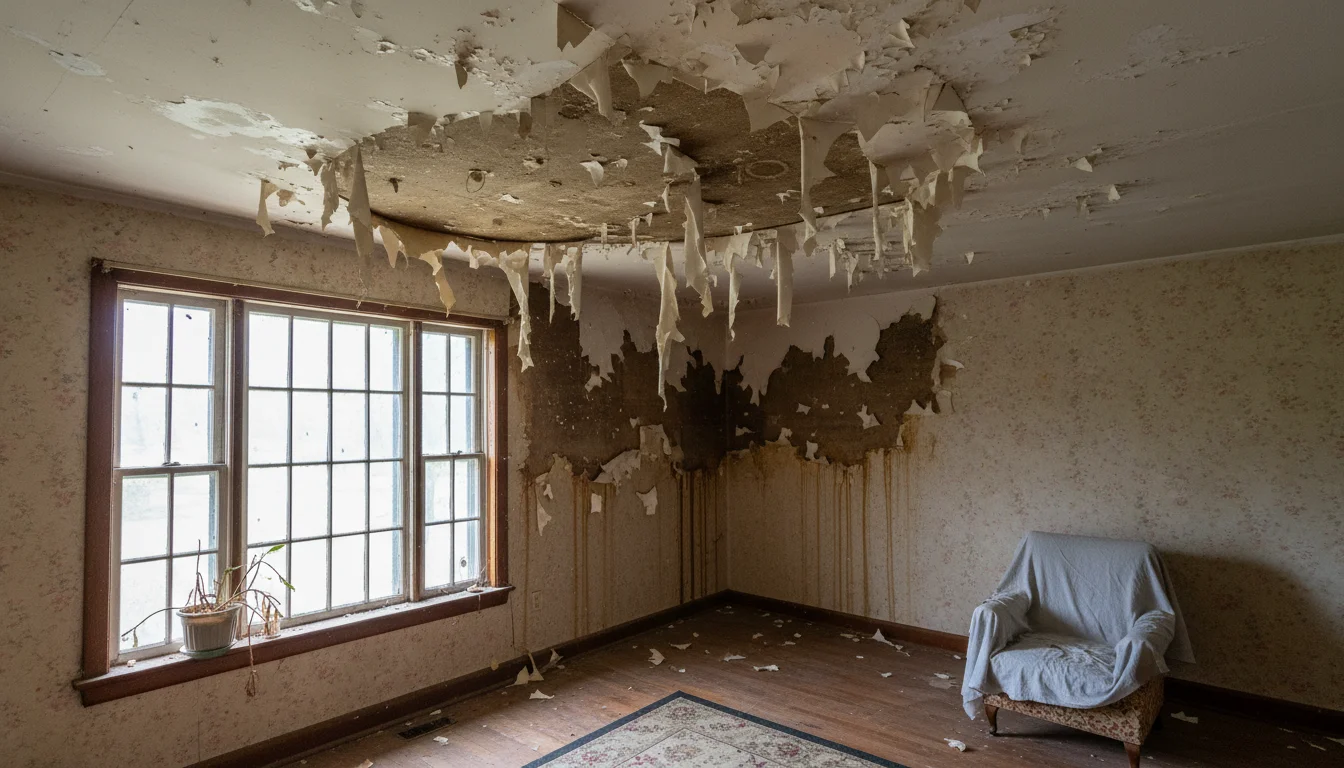
5. 5 Warped Walls, Peeling Paint, or Ce Niling Stains
Water-damaged building materials often show visual clues before visible mold appears. Look for: drywall that feels soft or spongy to the touch, bubbling or peeling paint (especially on ceilings below bathrooms or roofs), wallpaper that is separating at the seams, discolored rings or yellow-brown stains on ceilings and walls, baseboards that have pulled away from the wall, or flooring that is buckling, cupping, or lifting.
These signs indicate sustained moisture behind or within the material — and where there is sustained moisture in North Georgia, mold is almost certainly present. A brown ceiling stain that has gone through multiple wet-dry cycles (common after a recurring roof leak through several rain seasons) is particularly likely to harbor a well-established mold colony above the drywall.
6. 6 Persistently High Indoor Humidity
Gainesville's average relative humidity runs between 65% and 80% for large stretches of the year, and outdoor humidity inevitably finds its way indoors. If your indoor humidity consistently measures above 60% — which you can check with an inexpensive hygrometer from any hardware store — you are providing the exact conditions mold needs to thrive.
Pay attention to: condensation forming on the inside of windows, especially in the morning, a general feeling of "stickiness" or dampness in the air inside your home, closets and cabinets that smell faintly musty when opened, and visible condensation on HVAC registers or ductwork. Homes with inadequate crawlspace vapor barriers or poorly sealed crawlspace vents are particularly vulnerable — the stack effect draws humid crawlspace air upward through the entire house. Many Hall County homes built before vapor barrier codes were widely enforced fall into this category.
7. 7 Past Flooding History
Hall County is defined by Lake Lanier and its watershed. With a shoreline stretching nearly 700 miles and numerous creeks and tributaries feeding into the lake, many Gainesville-area homes sit in flood-prone zones — not all of which require flood insurance. Even homes well outside the official FEMA floodplain can experience water intrusion during the heavy, prolonged rain events that Georgia sees several times each year.
If your home has ever flooded, even partially (an inch of water in the finished basement), and the affected materials were not completely removed and replaced within 48 hours, mold is a near certainty. The same applies to homes that have experienced sewer backups, sump pump failures, or foundation seepage after heavy rains. In these situations, mold often colonizes behind baseboards, inside wall cavities, and under flooring — places you will never see without professional inspection equipment.
What to Do If You Recognize These Signs
If one or more of these seven signs applies to your Hall County home, your next step is a professional mold inspection. Do not attempt to investigate behind walls yourself — cutting into drywall without containment can release a massive spore load into your living space. A professional inspector uses moisture meters, thermal imaging cameras, and borescopes to assess what is happening behind surfaces without unnecessary demolition.
Mold Remediation Hotline provides free inspections to homeowners throughout Hall County, including Gainesville, Oakwood, Flowery Branch, Buford, Braselton, Lula, Clermont, and Murrayville. We come to your home, assess the situation thoroughly, and provide a written report with our findings and recommendations — with zero pressure and zero obligation. For more on what professional mold removal costs in Gainesville, see our detailed cost guide.
Think You Have Mold? Get a Free Inspection Today
Call Mold Remediation Hotline at (332) 220-0303 to schedule your free, no-obligation mold inspection in Hall County. We serve Gainesville and all surrounding North Georgia communities.