Best Mold Removal Companies in Gainesville, GA: How to Choose
Finding mold in your home is unsettling. Finding the right company to remove it can feel nearly as stressful. Gainesville and Hall County have no shortage of companies offering mold services, but they are not all equal. Some are general contractors who handle mold on the side. Some are inspection-only firms that cannot perform remediation. Some are full-service remediation companies with specialized equipment and training. This guide will help you sort through the options and choose a company you can trust with your home and your family's health.
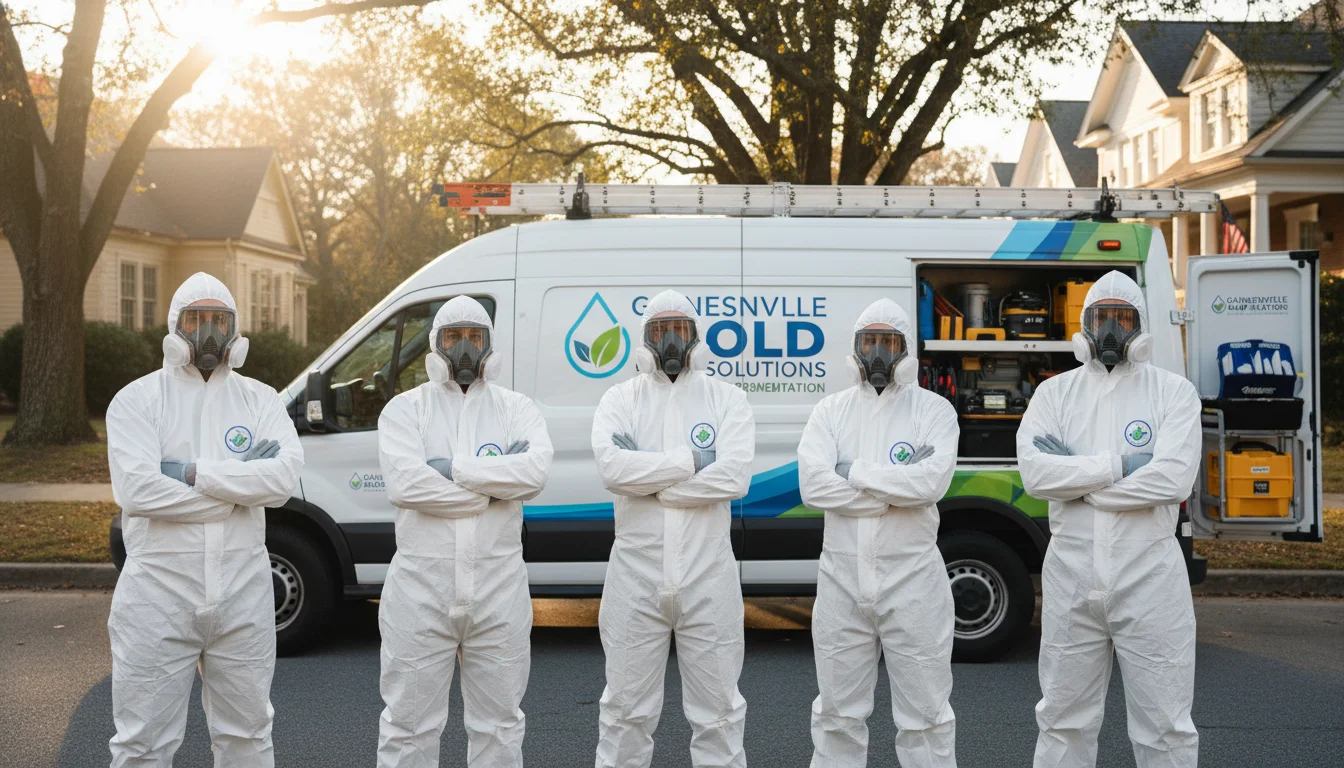
What to Look For in a Mold Remediation Company
IICRC Certification
The Institute of Inspection, Cleaning and Restoration Certification (IICRC) is the recognized standard-setting body for the remediation industry. IICRC certification, specifically in Applied Microbial Remediation (AMRT) or Water Damage Restoration (WRT), indicates that a company's technicians have completed rigorous training and passed examinations covering industry-standard procedures. The IICRC S520 Standard for Professional Mold Remediation is the definitive reference document for proper mold remediation, and any reputable company should be familiar with it and work in accordance with its guidelines. Ask specifically: "Are your technicians IICRC-certified in AMRT or WRT?" and "Do you follow IICRC S520 standards for all remediation projects?"
Georgia Business License and Insurance
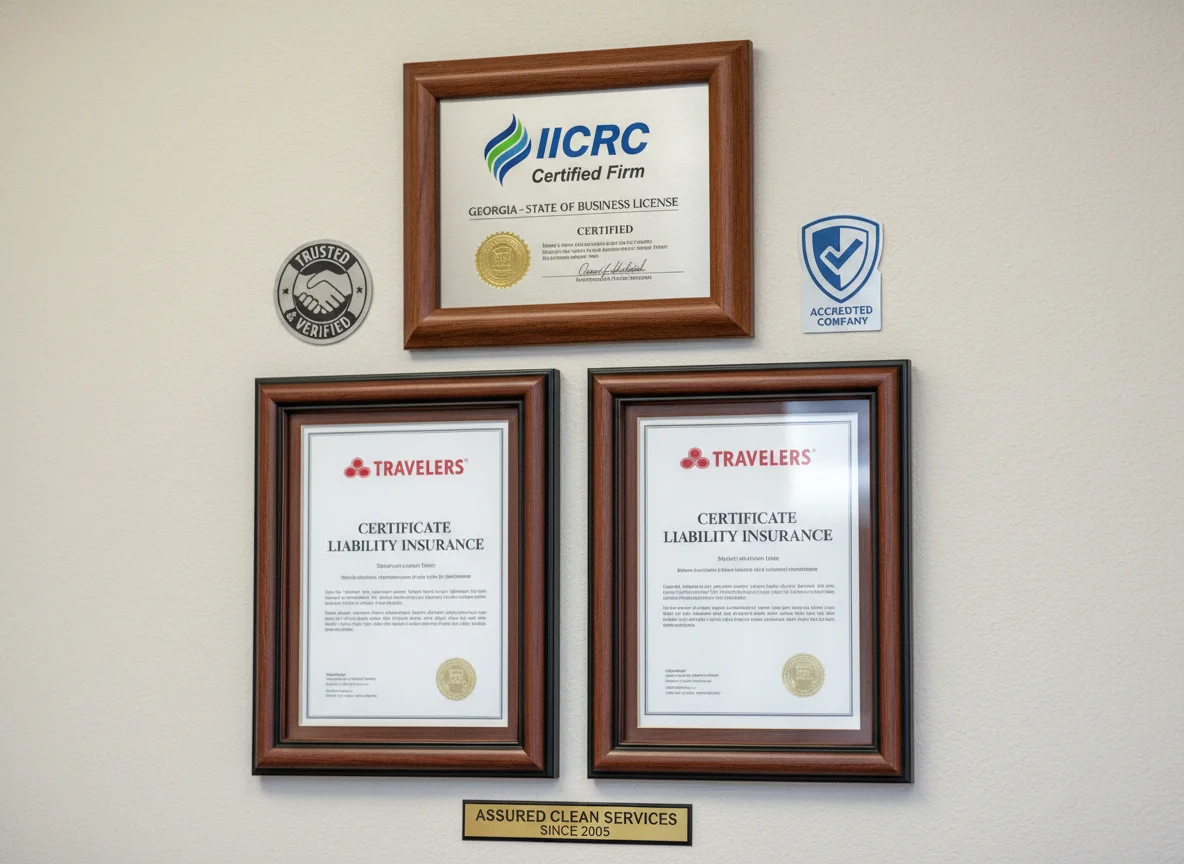
Any company operating legally in Georgia must hold a valid business license. For Hall County, this means registration with both the Georgia Secretary of State and Hall County. Verify that the company carries general liability insurance (minimum $1 million is standard) and workers' compensation insurance for all employees who will be on your property. Ask for a certificate of insurance and call the insurer to verify coverage is active. Uninsured contractors expose you to significant financial risk if a worker is injured on your property or if the remediation work causes unintended damage. In Georgia, if a contractor does not carry workers' compensation insurance and an employee is injured on your job, you, the homeowner, could be held liable for medical costs and lost wages.
Local References and Track Record
A company that has been working in Hall County for years will have a portfolio of completed projects and a list of references. Ask for contact information for at least three recent clients in the Gainesville area and actually call them. Ask those references: Was the work completed on time and on budget? Did the company communicate clearly throughout the process? Was post-remediation testing performed, and did it confirm the mold was removed? Would you hire this company again? Also check online reviews, but read them critically — look for patterns across multiple reviews rather than fixating on any single review, and be aware that reviews on company-owned platforms may be curated.
Transparent Pricing and Free Estimates
A reputable mold remediation company will provide a free, no-obligation on-site estimate with a detailed written scope of work. The estimate should break down costs by category (containment, demolition, cleaning, testing, reconstruction if applicable) and should explain what is included and what, if anything, might result in additional charges. Be wary of companies that provide quotes over the phone without inspecting the property or that give a single "all-in" number without explaining what it covers. Transparent pricing protects both parties and sets clear expectations.
Warranty on Work
Ask what warranty or guarantee the company provides on its remediation work. A standard warranty period is one to five years and should cover the recurrence of mold in the remediated area, provided the homeowner maintains the property and addresses any new moisture sources. Understand the warranty terms: does it cover labor only, or labor and materials? Does it require annual inspections? Is it transferable if you sell the home? A company that stands behind its work with a written warranty demonstrates confidence in its process.
15 Questions to Ask Any Remediation Company
Before signing a contract, ask every company you are considering these fifteen questions. The answers will reveal a great deal about their professionalism, experience, and approach:
1. Are your technicians IICRC-certified in mold remediation (AMRT or WRT)?
2. Do you carry general liability insurance and workers' compensation insurance? May I see a certificate?
3. How long have you been performing mold remediation in Hall County specifically?
4. Do you perform both inspection and remediation, or do you use an independent third-party inspector?
5. What containment procedures do you use to prevent cross-contamination during the job?
6. Do you use HEPA air filtration and negative air pressure during remediation?
7. Will you provide a detailed, written scope of work with itemized pricing before starting?
8. Do you handle the Hall County permit process if structural demolition or repair is required?
9. What post-remediation testing do you perform to verify the mold has been successfully removed?
10. Do you use an independent third-party lab for mold testing, or do you test in-house?
11. Will you identify and address the moisture source that caused the mold, not just remove the mold itself?
12. What warranty do you provide on your remediation work, and what are the specific terms?
13. How long will the project take, and what are the working hours?
14. Can you provide references from at least three recent clients in Gainesville or Hall County?
15. Do you have experience working with Georgia homeowners insurance claims for mold remediation?
Red Flags to Avoid
Certain behaviors should immediately disqualify a company from consideration, no matter how attractive their price may be.
No physical inspection before quoting. A company that provides a fixed price without visiting your property and assessing the actual conditions cannot possibly know the scope of work required. Mold is often hidden, and a thorough inspection is essential to developing an accurate estimate.
Recommending "mold killer" sprays or fogging as the primary remediation method. Dead mold is still allergenic and can still produce health effects. Proper remediation involves physical removal of mold-contaminated materials and HEPA vacuuming of surfaces, not simply applying chemicals to kill mold in place.
No containment plan. If a company does not describe how it will isolate the work area to prevent spores from spreading to the rest of your home, walk away. Proper containment with plastic sheeting and negative air pressure is a fundamental requirement of professional remediation.
Unwillingness to provide proof of insurance or licensing. This is non-negotiable. Any legitimate company will readily provide documentation of its insurance and licenses.
High-pressure sales tactics or scare tactics. A company that tells you your home is a "toxic disaster" and pressures you to sign a contract immediately is manipulating fear, not providing professional service. Take time to get multiple estimates and make an informed decision.
No post-remediation verification. A company that says testing after remediation is unnecessary cannot prove its work was successful. Post-remediation verification with air sampling and surface sampling analyzed by an independent lab is standard industry practice.
Inspection-Only vs. Remediation-Only vs. Full-Service Companies
Mold companies generally fall into three categories. Inspection-only firms perform mold assessments, take samples, and provide a report identifying the mold type, extent, and recommended remediation scope. Because they do not perform the actual remediation work, they have no financial incentive to exaggerate the problem. Many homeowners prefer to hire an independent inspector first and then use the inspector's report to obtain remediation bids from multiple companies. Remediation-only companies do the actual cleanup work but rely on an outside inspector for the initial assessment and post-remediation clearance testing. Full-service companies handle both inspection and remediation. This can be more convenient and can reduce overall project cost, but it creates a potential conflict of interest: the company performing the post-remediation testing is also the company that performed the remediation and has an incentive to declare the job successful. If you choose a full-service company, ask whether they use an independent third-party laboratory for all mold analysis, which provides an objective check on their work.
Why Local Matters in Hall County
Mold remediation is not a generic service that can be performed identically in any location. Hall County has specific environmental conditions that affect both the causes of mold and the most effective remediation approaches. A local company understands Lake Lanier's influence on shoreline humidity and how it affects moisture intrusion patterns in nearby homes. They know that Hall County's red clay soil retains water and creates hydrostatic pressure against foundations in ways that sandy coastal soils do not. They are familiar with the common construction types in Gainesville's older neighborhoods versus Flowery Branch's newer subdivisions and how each presents different mold vulnerabilities.
A local company knows the Hall County permitting process and has relationships with the building inspections office, which can prevent delays. They understand that Hall County has adopted specific amendments to the International Building Code and can ensure remediation work, especially structural repairs, complies with local requirements. They are familiar with local subcontractors for specialized work like foundation waterproofing, crawlspace encapsulation, and HVAC modifications, all of which may be necessary as part of a comprehensive mold solution. And a local company has a reputation to maintain in the community, which creates accountability that an out-of-town company simply does not have.
Understanding Different Remediation Approaches
When comparing estimates, you may see different remediation methodologies proposed. Surface cleaning with HEPA vacuuming and antimicrobial treatment is appropriate for non-porous surfaces (metal, glass, hard plastic) and semi-porous surfaces (wood, concrete) where mold has not deeply penetrated. Material removal and replacement is necessary for porous materials (drywall, insulation, carpet, ceiling tiles) where mold has grown into the material itself and cannot be fully cleaned. Soda blasting or dry ice blasting may be proposed for wood framing or other structural elements where mold needs to be removed without damaging the substrate. Chemical antimicrobial application is used after physical cleaning to kill any remaining spores and provide residual protection. Encapsulation involves sealing remaining mold stains on wood or concrete with a specialized paint or sealant after cleaning, but this should only be done after the mold has been physically removed, not as a substitute for removal. A good estimate will specify which methods will be used for each affected area and explain why.
Typical Cost Ranges in Hall County
Mold remediation costs vary widely based on the extent of contamination, the materials involved, and the accessibility of the affected area. In Hall County, a small, contained remediation (a single bathroom wall, for example) might range from $500 to $1,500. A medium-sized job, such as a crawlspace or a single room, typically ranges from $2,000 to $6,000. Large-scale remediation involving multiple rooms, structural drying, and material replacement can cost $10,000 to $30,000 or more. These are general ranges, and your specific situation will determine the actual cost. Get at least three written estimates and compare them line by line, not just by the bottom-line number.
Related Resources
- How to Avoid Mold Remediation Scams in Georgia
- DIY vs. Professional Mold Removal: Cost Comparison
- What to Expect During Professional Mold Remediation
- How to Prepare for a Mold Inspection
Ready to Talk to a Trusted Gainesville Mold Professional?
Mold Remediation Hotline offers free, detailed estimates with transparent pricing. Call (332) 220-0303 to schedule your inspection.