Mold Inspection vs. Mold Testing: What Gainesville Homeowners Need to Know
"Do I need an inspection or testing?" It is the second question homeowners ask — right after "how much will it cost?" The terms are often used interchangeably, but they refer to two very different services with different purposes, different costs, and different providers. Understanding the distinction will help you spend your money on the right service at the right time.
What Is a Mold Inspection?
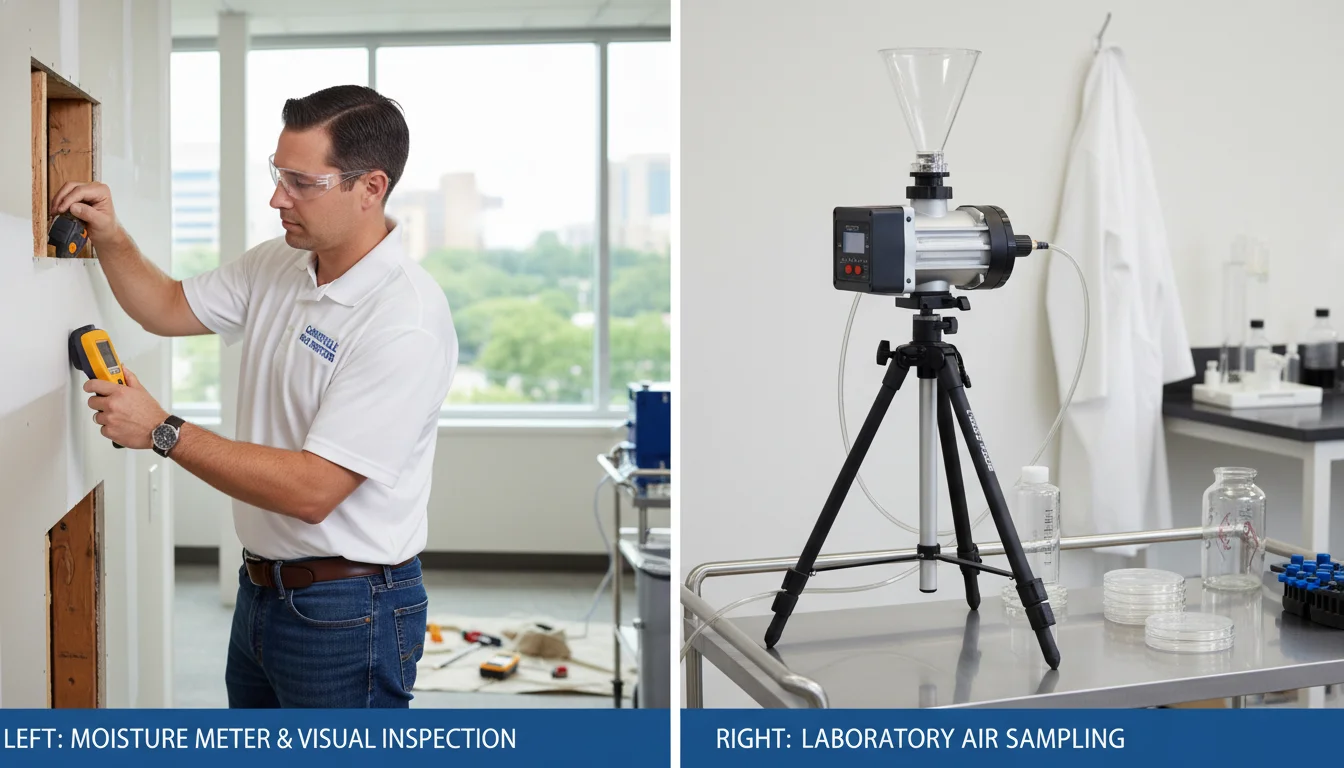
A mold inspection is a comprehensive visual assessment of a property to determine whether mold is present, where it is located, and — critically — what is causing it. The inspector is looking for the moisture source that is driving the mold, because removing mold without fixing the moisture problem is like bailing water from a boat without patching the hole.
A professional mold inspection typically includes: a walkthrough of the entire property (interior and exterior), moisture meter readings of walls, floors, and ceilings, thermal imaging with an infrared camera to detect temperature anomalies that indicate hidden moisture behind surfaces, visual inspection of the attic, crawlspace, and basement, examination of the HVAC system including the air handler and visible ductwork, and a detailed written report summarizing findings, moisture readings, and remediation recommendations.
An inspection answers the questions: "Is there mold? Where is it? How big is the problem? What is causing the moisture? What needs to be done to fix it?"
What Is Mold Testing?
Mold testing — also called mold sampling — involves collecting physical samples from the air or from surfaces and sending them to a laboratory for analysis. The lab identifies the genus and sometimes the species of mold present and, in the case of air samples, quantifies the spore count per cubic meter of air.
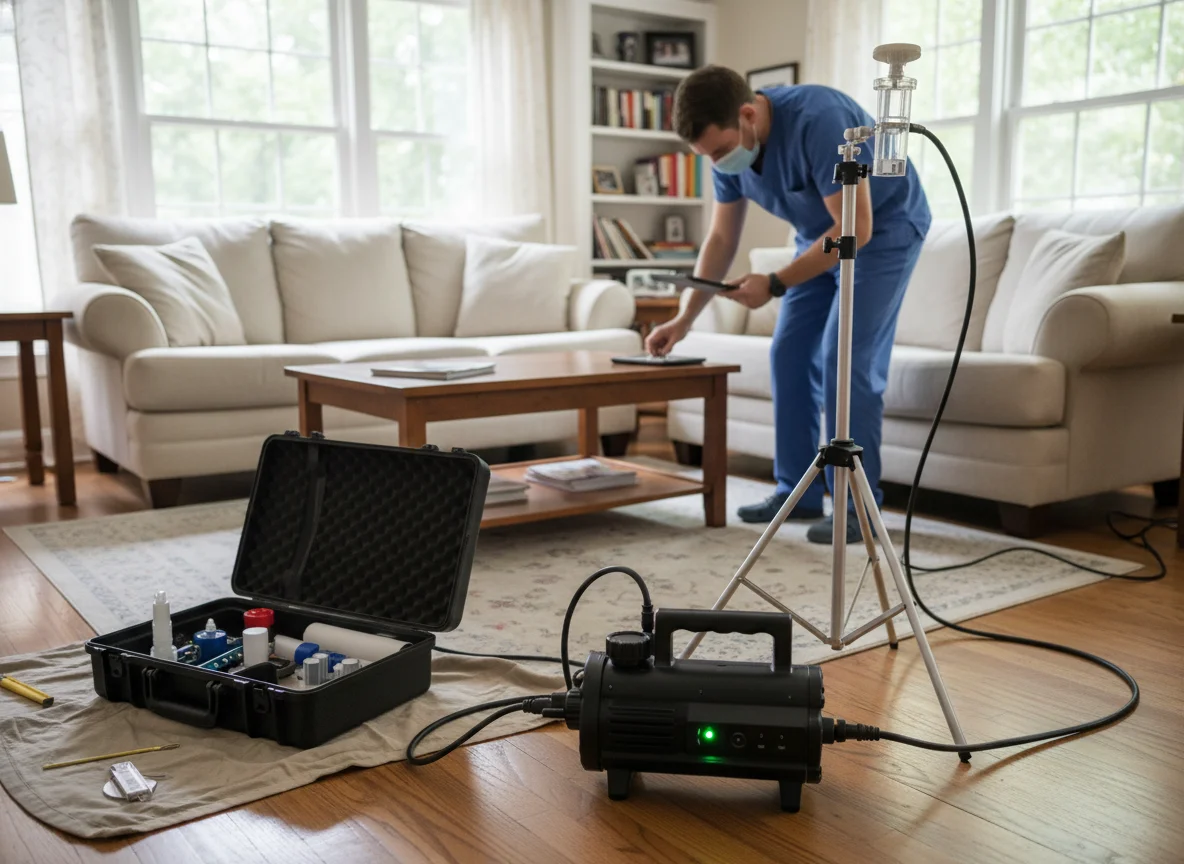
There are several types of mold tests: air sampling (a calibrated pump pulls a known volume of air through a collection cassette, typically taken indoors and outdoors for comparison), surface sampling (a swab or tape lift collects mold from a visible colony for species identification), and bulk sampling (a small piece of the affected material is removed and sent to the lab).
Testing answers the questions: "What type of mold is this? Is it a species associated with health risks? Is the indoor airborne spore count elevated compared to outdoor levels? Has a remediation job been completed successfully?"
Key Differences at a Glance
| Mold Inspection | Mold Testing | |
|---|---|---|
| Primary Purpose | Find mold and identify the moisture source | Identify mold species and quantify airborne spore levels |
| Who Performs It | Remediation contractor or independent inspector | Independent environmental professional or testing-only hygienist |
| Equipment Used | Moisture meters, thermal cameras, borescopes, visual inspection tools | Air sampling pumps, collection cassettes, swabs, tape lifts |
| Typical Cost in GA | $200 to $600 (often free through remediation companies like MRH) | $400 to $1,200 depending on number of samples |
| Lab Results | No lab results — immediate findings | Yes — lab report returned in 3 to 7 business days |
| When to Get It | Any time you suspect mold or moisture issues | When mold type matters for health, legal, or verification reasons |
When You Need a Mold Inspection
For the vast majority of Hall County homeowners who suspect mold, an inspection is the right first step. You need an inspection if:
- You are buying or selling a home. A mold inspection before closing protects the buyer from buying a moldy property and protects the seller from post-sale liability claims. In Gainesville's real estate market, where older homes are common, a pre-purchase mold inspection is a wise investment.
- You can see something that looks like mold. Before spending money on lab testing to identify the species, you need to know the extent of the problem and what is causing it. An inspection answers those questions first.
- You or a family member has unexplained respiratory symptoms that improve when away from home — as described in our signs of mold guide.
- Your home has a history of water damage — a past roof leak, a plumbing leak inside a wall, a flooded basement — and you want to confirm that mold has not developed in hidden areas.
- You smell a persistent musty odor but cannot find the source. A thermal camera during an inspection can often locate the moisture behind walls that is producing the smell.
When You Need Mold Testing
Testing adds cost and time, so it should be done with a specific purpose. You need mold testing if:
- A physician has requested species identification because a family member has a diagnosed mold allergy or sensitivity, and knowing the specific mold species present will guide treatment decisions.
- You are involved in a legal dispute — a landlord-tenant disagreement over habitability (see our Georgia tenant rights guide), a real estate non-disclosure claim, or an insurance bad-faith dispute. Lab results carry weight in court that a visual inspection report alone does not.
- You need post-remediation clearance verification. After a large remediation project, air sampling provides independent documentation that the indoor environment has returned to normal fungal ecology — i.e., that the remediation was successful. This is standard practice for large commercial projects and increasingly common for major residential jobs.
- You are concerned about a specific mold type such as Stachybotrys chartarum (often called "black mold") and need lab confirmation to guide the remediation protocol. Some mold species warrant more aggressive containment and personal protective equipment standards than others.
The Conflict-of-Interest Issue: Why Inspection and Testing Should Be Separate
This is one of the most important concepts for any homeowner to understand. A company that performs both mold testing and mold remediation has a financial incentive to find problems during testing and then sell you the remediation to fix them. For this reason, many industry standards — including the IICRC S520 Standard for Professional Mold Remediation — recommend that assessment and remediation be performed by independent parties.
At Mold Remediation Hotline, we provide inspection and remediation services. We do not perform laboratory mold testing or air sampling. If your situation requires lab analysis, we recommend you hire an independent indoor environmental professional (IEP) who works on a testing-only basis and has no financial interest in the remediation outcome. That separation ensures the test results you receive are objective.
A red flag for any homeowner: a company that offers "free mold testing" and then immediately pivots to a remediation contract — especially if the "free" testing fee is waived when you sign. This is a sales tactic, not a diagnostic service. We cover these and other warning signs in detail in our guide to avoiding mold remediation scams.
What Happens During Each Process: Step by Step
Mold Inspection Process
- Client interview: The inspector asks about your concerns, any water events, health symptoms, and specific areas of the home you are worried about.
- Exterior assessment: The inspector walks the outside of the home, checking grading and drainage, gutter and downspout condition, foundation cracks, and any signs of water intrusion from outside.
- Interior walkthrough: Every room is examined visually. The inspector checks windows for condensation, examines baseboards and ceilings for staining, looks behind furniture against exterior walls, and inspects under sinks and around plumbing fixtures.
- Moisture mapping: Using a moisture meter, the inspector takes readings from walls, floors, and ceilings throughout the home. Elevated readings are documented and flagged.
- Thermal imaging: An infrared camera scans walls and ceilings for temperature anomalies that indicate hidden moisture. A cold spot behind a drywall surface often means water is present inside the cavity.
- Attic and crawlspace inspection: These are the two most common locations for hidden mold in Hall County homes. The inspector checks for roof leaks, ventilation issues, standing water, and visible mold on sheathing, framing, and insulation.
- HVAC inspection: The air handler, evaporator coil, condensate pan, and visible ductwork are examined for signs of moisture, microbial growth, or standing water.
- Report and recommendations: The inspector provides a written report with findings, moisture readings, photos, and clear recommendations for next steps.
Mold Testing Process
- Baseline outdoor air sample: The tester collects an air sample outside the home to establish the natural outdoor fungal ecology, which serves as the comparison baseline for indoor samples.
- Indoor air samples: One or more indoor air samples are collected, typically in the area of concern and in a control area (a room where mold is not suspected). The pump runs for a standardized time and volume.
- Surface samples (if desired): The tester may take a swab or tape lift from a visible mold colony or a dust sample from a surface where mold deposition is suspected.
- Chain of custody: Samples are sealed, labeled, and logged on a chain-of-custody form before being shipped to the laboratory.
- Lab analysis: The lab cultures or microscopically examines the samples, identifies mold genera and species, and provides spore count quantification.
- Results interpretation: Indoor spore counts are compared to the outdoor baseline. If indoor counts are significantly higher than outdoor counts, or if mold species appear indoors that were not present outdoors, the indoor environment has an abnormal fungal condition that requires remediation.
Cost Comparison for Gainesville-Area Homeowners
In the Hall County market, a professional mold inspection from a remediation company typically runs $200 to $600 when charged — though Mold Remediation Hotline and several other reputable local companies offer inspections at no charge as part of the estimate process. An independent testing consultant (IEP) typically charges $400 to $1,200 depending on the number of samples taken. Each additional air sample usually adds $100 to $175. Surface sample analysis adds $50 to $100 per sample.
If you are dealing with what you suspect is a straightforward visible mold issue and want to know what it will cost to fix, start with the free inspection and estimate. If you need lab documentation for medical, legal, or post-remediation clearance purposes, budget for independent testing. For a breakdown of what remediation itself costs at various scales, see our Gainesville mold removal cost guide.
Schedule a Free Mold Inspection in Gainesville, GA
Call Mold Remediation Hotline at (332) 220-0303 to arrange a no-cost, no-obligation inspection of your Hall County home. We will assess the situation thoroughly, explain your options in plain English, and provide a written estimate if remediation is needed.