Crawlspace Mold in Georgia: Prevention and Complete Removal Guide
If your Georgia home has a crawlspace, you almost certainly have, have had, or will have a mold problem beneath your feet. Crawlspace mold is the single most common mold issue in Hall County and across North Georgia, and it is also the most commonly overlooked. Because the crawlspace is out of sight, mold can grow for years before homeowners notice symptoms inside the living space. This guide explains why Georgia crawlspaces are so vulnerable, how to recognize the problem, and what it takes to fix it permanently.
Why Crawlspaces in Georgia Are Mold-Prone
The combination of Georgia's climate and its soil creates near-perfect conditions for crawlspace mold. The state's humid subtropical climate means that outdoor air is warm and moisture-laden for much of the year. When that humid air enters a cool, shaded crawlspace through foundation vents — which were historically considered necessary for ventilation — it cools down, and its relative humidity rises. Cool air holds less moisture than warm air, so the moisture condenses on cooler surfaces: foundation walls, floor joists, subfloor, plumbing pipes, and HVAC ductwork. This condensation provides the moisture that mold needs, and the wood framing provides the food source.
Georgia's heavy red clay soil compounds the problem. Clay soil holds water far longer than sandy or loamy soils. After a rain, clay soil in a crawlspace can remain visibly damp for days or weeks, continuously releasing moisture into the crawlspace air through evaporation. Hall County's average annual rainfall of 52 inches means that, for much of the year, the ground under your home is at or near saturation. Even when the soil surface appears dry, moisture is evaporating upward into the crawlspace. This is why the traditional approach of ventilating crawlspaces with foundation vents actually makes the problem worse in Georgia: vents admit humid outside air that then condenses on cool surfaces inside, while the soil below continues to evaporate moisture. The result is a crawlspace that is cooler than outside air, warmer than outside air at different times of day, and constantly cycling through condensation events.
Older Pier-and-Beam Foundations: A Hall County Legacy
Many older homes in Gainesville and throughout Hall County were built with pier-and-beam foundations rather than solid concrete slabs. This construction method elevates the house on a grid of piers (concrete or brick columns) supporting wooden beams that carry the floor joists. These homes often have dirt-floor crawlspaces with foundation vents around the perimeter. While pier-and-beam construction provides excellent access for plumbing and electrical work and is well-suited to Georgia's expansive clay soils (which can crack rigid slab foundations), it is a worst-case scenario for mold.
Historic homes in Gainesville's Green Street, West Academy Street, and Riverside Drive neighborhoods frequently feature these foundations. Many were built in the 1920s through 1950s, before vapor barriers, before crawlspace encapsulation was understood, and when foundation vents were considered standard and desirable. Over decades, the dirt floors in these crawlspaces have absorbed moisture season after season, and the wooden floor joists and subfloor above have been exposed to constantly elevated humidity. Even homes that have been beautifully renovated above the floor line often have crawlspaces that have never been addressed, meaning the new hardwood floors and fresh paint are sitting above an active mold reservoir.
Signs of Crawlspace Mold
Because the crawlspace is not a living area, the signs of mold are often noticed in the home above before they are seen below. Be alert for these indicators:
Prevention Strategies
Vapor Barriers
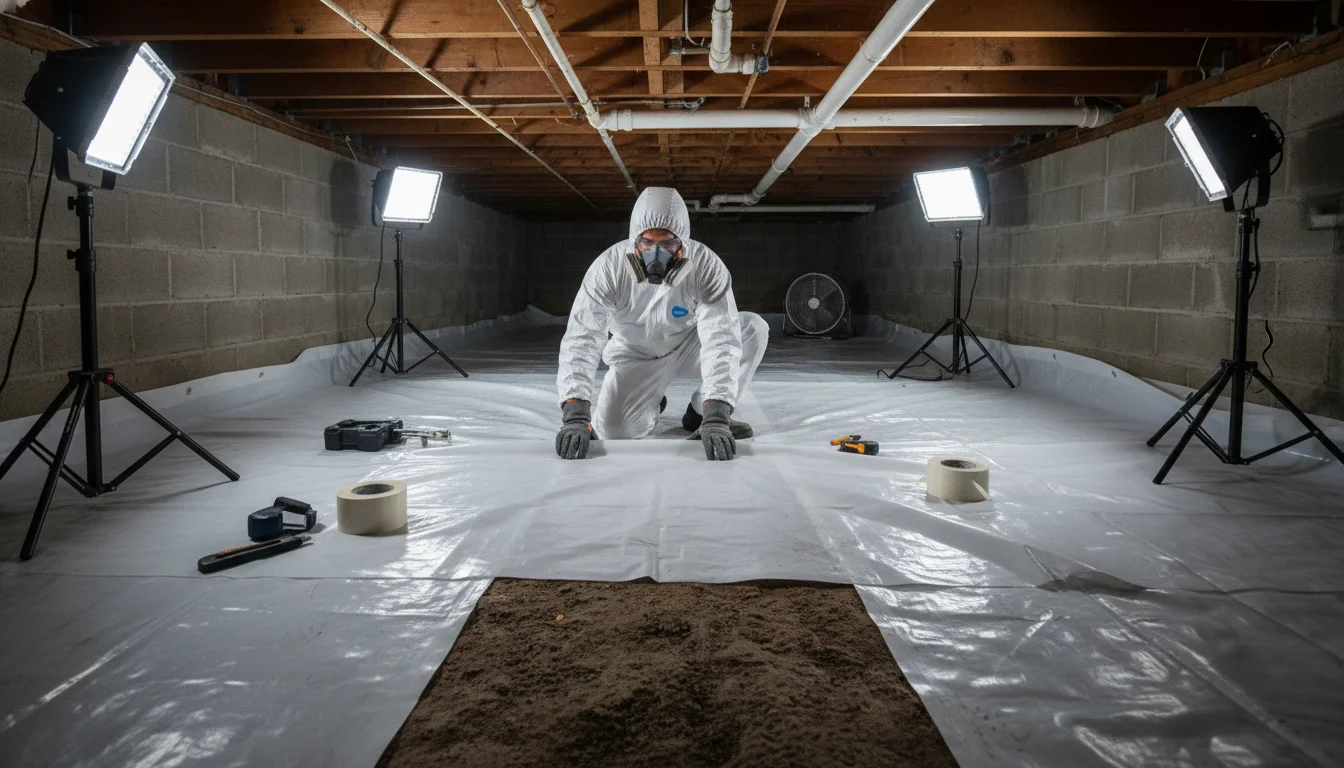
A vapor barrier is a heavy polyethylene sheet, typically 6-mil to 20-mil thick, laid across the entire crawlspace floor and extended partially up foundation walls. It physically blocks soil moisture from evaporating into the crawlspace air. A proper vapor barrier installation includes overlapping seams sealed with tape, edges secured to foundation walls above the exterior grade line, and careful fitting around piers, plumbing, and other penetrations. For Georgia crawlspaces, a minimum 10-mil barrier is recommended, with 20-mil being preferred for long-term durability. The vapor barrier is the foundation of any crawlspace moisture management plan and the most cost-effective single improvement most Georgia homeowners can make.
Proper Ventilation vs. Encapsulation
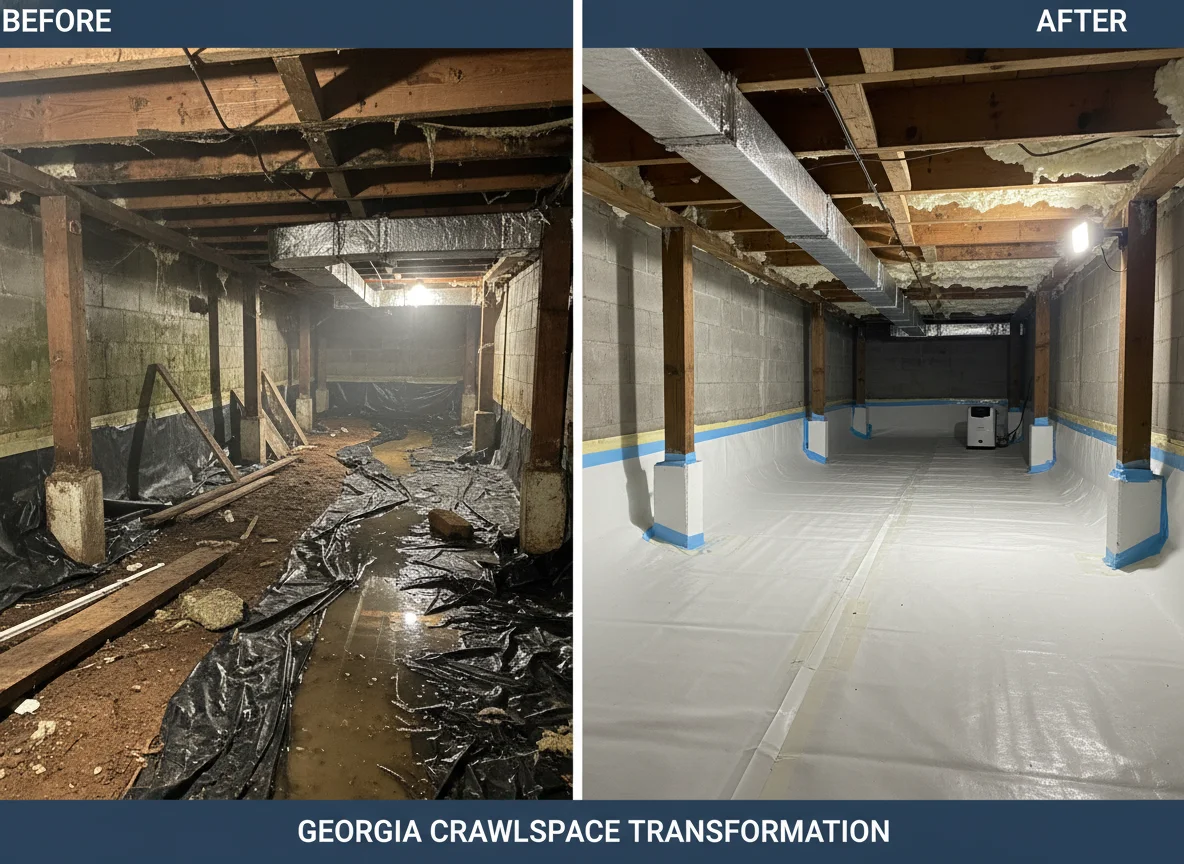
The traditional approach of ventilating crawlspaces through foundation vents is now understood to be counterproductive in humid climates like Georgia's. Research by building scientists has demonstrated that in the Southeastern United States, open foundation vents admit more moisture than they release for much of the year. The current best practice is crawlspace encapsulation: sealing all foundation vents, installing a full-coverage vapor barrier on the floor and up the walls, insulating foundation walls rather than the floor above, and conditioning the crawlspace air with a dedicated dehumidifier or by connecting it to the home's HVAC system. An encapsulated crawlspace becomes a conditioned, semi-finished space that stays dry year-round.
Dehumidifiers
In an encapsulated crawlspace, a dedicated crawlspace dehumidifier maintains relative humidity at or below 55%, the threshold below which mold cannot grow. These units are designed for the harsh crawlspace environment, with durable components, gravity drainage that routes condensate outside, and built-in humidistats that cycle the unit automatically. A standard residential dehumidifier from a hardware store is not suitable for crawlspace use; it will not have the capacity or durability for continuous operation in that environment. Professional-grade crawlspace dehumidifiers cost more but last far longer and perform reliably.
Grading and Drainage
Water should always flow away from your foundation, never toward it. The soil around your home should slope away at a grade of at least 6 inches of drop over the first 10 feet. Downspouts should discharge at least 6 feet from the foundation, ideally into buried drain lines that carry water well away from the house. French drains installed along foundation walls can intercept groundwater before it reaches the crawlspace. These exterior drainage improvements are essential because no amount of interior vapor barrier can fully compensate for water actively flowing toward and under the home.
Gutter Maintenance
Gutters that are clogged with leaves, pine needles, or debris overflow during rain, dumping water directly against the foundation. In Hall County, where abundant hardwood and pine trees shed heavily each fall, gutter maintenance is not optional — it is a critical part of crawlspace moisture management. Clean gutters at least twice per year (spring and fall), ensure downspouts are connected and functional, and consider gutter guards if your property has heavy tree cover. Water that cascades over clogged gutters saturates the soil directly adjacent to the foundation, and that moisture migrates into the crawlspace.
The Crawlspace Mold Removal Process
When crawlspace mold is discovered, professional remediation follows a structured process tailored to the unique challenges of below-floor spaces.
Assessment and Source Identification
The first step is a full crawlspace inspection to determine the extent of mold growth, the moisture source or sources, and any structural damage that has occurred. Technicians will check for plumbing leaks (supply lines, drain lines), HVAC condensate drainage issues, groundwater intrusion through foundation walls or the dirt floor, exterior drainage problems, and ventilation deficiencies. The inspection must be comprehensive because crawlspace moisture often has multiple contributing factors, and addressing only one will not solve the problem.
Containment and Safety
Even though the crawlspace is separate from the living space, containment measures are taken to prevent spores from being blown into the home during remediation. The crawlspace access door or hatch is sealed with plastic sheeting around the work period. Technicians wear full personal protective equipment (PPE): Tyvek suits, gloves, and full-face respirators with P100 filters. If the HVAC system has ductwork in the crawlspace, those ducts are sealed at the registers inside the home to prevent the system from pulling contaminated air into the living space.
Mold Removal
Removal methods in a crawlspace depend on the surfaces involved. For wood framing (joists, beams, subfloor), dry ice blasting or soda blasting is often the most effective method. These techniques use compressed air to propel dry ice pellets or sodium bicarbonate particles at the wood surface, physically knocking mold off without water and without damaging the wood. The process produces dust and debris that is captured by HEPA-filtered vacuums or negative air machines. For foundation walls, wire brushing followed by HEPA vacuuming and antimicrobial treatment removes surface mold. For insulation in the floor cavities above, mold-contaminated fiberglass batts must be removed and discarded; they cannot be cleaned. Any vapor barrier that is moldy or deteriorated is also removed.
Antimicrobial Treatment
After physical removal, all surfaces in the crawlspace are treated with an EPA-registered antimicrobial solution applied by spray or fogging. This kills remaining spores and provides residual protection. In Georgia's climate, an antimicrobial with extended residual effectiveness is preferred because the crawlspace environment will continue to experience humidity fluctuations even after remediation.
Drying and Dehumidification
After cleaning, industrial dehumidifiers and air movers are placed in the crawlspace to bring the space to an acceptable moisture level. Wood moisture content is measured with a moisture meter, and drying continues until framing members are below 16% moisture content. This can take 24–72 hours depending on how wet the space was.
Encapsulation (If Chosen)
Many Hall County homeowners choose to encapsulate their crawlspace as the permanent solution following mold remediation. Encapsulation involves: installing a heavy-duty vapor barrier across the entire floor and extending up the foundation walls to within 6 inches of the sill plate, sealing all foundation vents with rigid foam insulation and sealant, insulating foundation walls with rigid foam board (not fiberglass batts in the floor joists, which would trap moisture), and installing a dedicated crawlspace dehumidifier. A fully encapsulated crawlspace becomes a dry, conditioned space that remains mold-free indefinitely as long as the dehumidifier operates and the vapor barrier remains intact.
Cost Ranges for Crawlspace Mold Remediation in Georgia
Crawlspace work costs vary based on the size of the crawlspace, the extent of mold, and the specific treatments performed. In Hall County and throughout North Georgia, homeowners can expect the following general ranges:
- Basic treatment (vapor barrier replacement, surface cleaning, antimicrobial): $1,500–$3,500 for a typical 1,200-square-foot crawlspace
- Full remediation (mold removal from framing, insulation removal, treatment, new vapor barrier): $4,000–$8,000 for the same space
- Full remediation plus encapsulation (including dehumidifier, foundation wall insulation, vent sealing): $8,000–$15,000 depending on crawlspace size and accessibility
- Structural repairs (replacement of rot-damaged joists, beams, or subfloor): $2,000–$10,000+ depending on extent
These are estimates, and each property must be individually assessed. A crawlspace with good access, average size, and moderate mold is at the lower end of these ranges. A difficult-access crawlspace with extensive mold, structural damage, and complex moisture sources will be at the higher end. Reputable remediation companies will provide a detailed written estimate after inspecting your specific crawlspace.
Long-Term Maintenance
Once your crawlspace has been professionally remediated and encapsulated, maintenance is straightforward but essential. Check the dehumidifier regularly to ensure it is running; most units have indicator lights or digital displays. Inspect the vapor barrier annually for tears, pulled-away edges, or areas where it has been disturbed during plumbing or HVAC work. Keep gutters clean and ensure exterior drainage continues to direct water away from the foundation. Check the crawlspace access door or hatch to make sure it seals tightly. With these simple steps, a properly remediated and encapsulated crawlspace will remain mold-free for decades.
Related Resources
- 7 Signs Your Home Has Mold
- Mold Inspection vs. Testing: What's the Difference?
- Water Damage to Mold: Timeline & Prevention
- Lake Lanier Waterfront Homes: Special Mold Risks
Worried About Crawlspace Mold in Your Georgia Home?
Call Mold Remediation Hotline at (332) 220-0303 for a free crawlspace inspection and expert remediation plan tailored to your Hall County home.