Lake Lanier Waterfront Homes: Special Mold Risks and Solutions
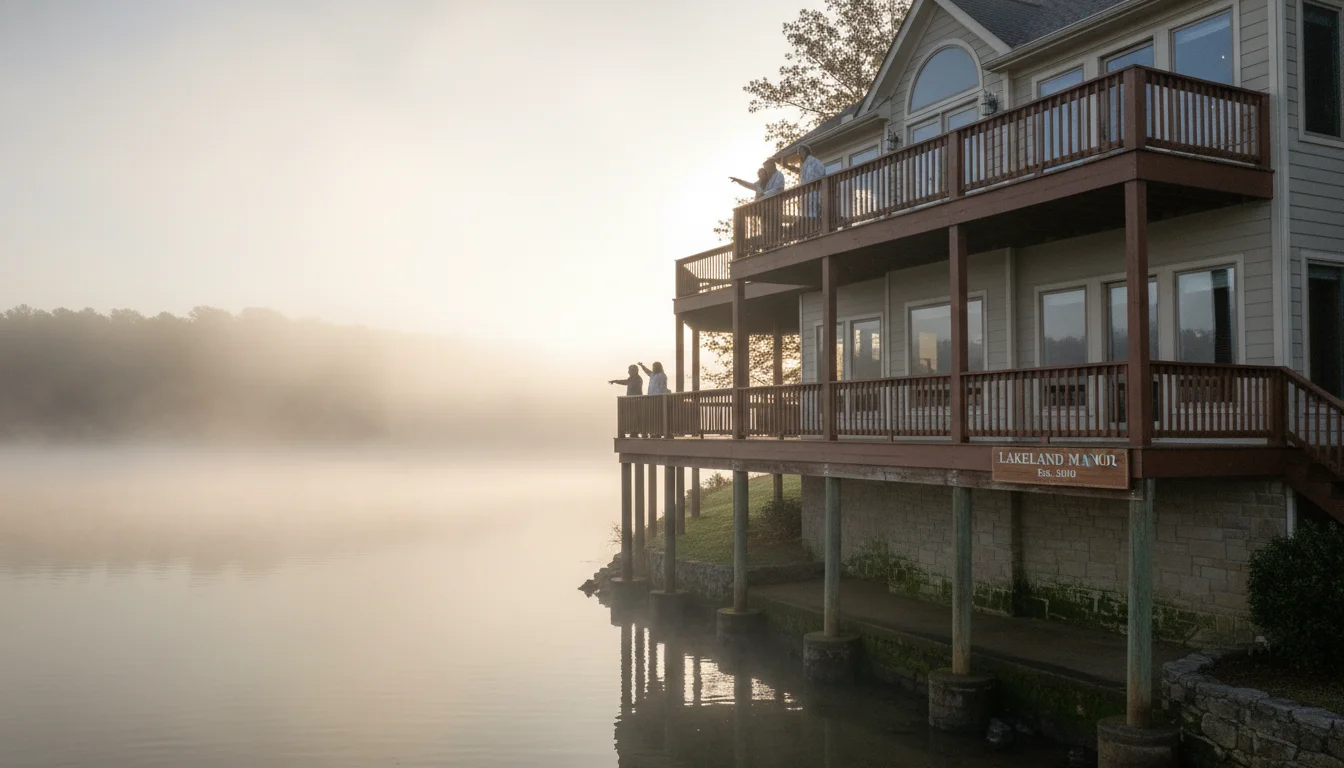
Owning a home on Lake Lanier is a dream for thousands of Georgia families. The views, the boating, the lifestyle — it is one of the most desirable places to live in the Southeast. But lakefront living comes with a hidden adversary: moisture. Lake Lanier's 692 miles of shoreline are home to some of the most mold-vulnerable properties in North Georgia, and understanding these risks is essential for any lake homeowner.
Why Lakefront Properties Face Elevated Mold Risk
Lake Lanier, a U.S. Army Corps of Engineers reservoir completed in 1956, holds approximately 38,000 acres of water at full pool. That is roughly 1.3 trillion gallons of water sitting directly adjacent to thousands of homes. Water evaporates constantly from the lake surface, especially during Georgia's long, hot summers, creating a microclimate along the shoreline with humidity levels that can be 10–15% higher than properties just half a mile inland.
This elevated ambient humidity is the single biggest mold driver for lake homes. Mold spores, which are present in outdoor air everywhere, require three things to colonize indoor spaces: organic food material (wood, drywall paper, carpet fibers), temperatures between 40°F and 100°F, and sustained moisture. Lake Lanier properties provide all three in abundance.
Beyond ambient humidity, lake homes contend with wave splash, storm-driven rain, and the simple reality that any structure built within a few hundred feet of a massive body of water faces moisture exposure that inland homes never experience.
Specific Risks for Lake Lanier Properties
Lake House Basements and Lower Levels
Many Lake Lanier homes are built on sloped lots that descend toward the water, meaning the lowest floor is often partially or fully below grade on the uphill side and at or near grade on the lake side. This design places living spaces in direct contact with soil moisture from the uphill side while exposing them to ambient lake humidity on the downhill side. Hydrostatic pressure from saturated hillside soil pushes moisture through concrete foundation walls, and without robust exterior waterproofing and interior vapor barriers, this moisture feeds mold growth inside wall cavities, behind baseboards, and under flooring.
Walkout basements at lake level are particularly vulnerable. Even when finished with drywall and carpet, these spaces frequently register humidity readings above 65% in summer months — well into the danger zone for mold colonization.
Vacation Homes and Seasonal Properties
A significant percentage of Lake Lanier homes are second homes or vacation rentals that sit empty for weeks or months at a time. When nobody is present to run the air conditioning, open windows for ventilation, or notice a small leak, minor moisture problems become major mold infestations. A slow drip under a sink that would be caught and repaired in days in a primary residence can, in a vacant lake house, run for an entire off-season, saturating cabinetry, flooring, and the subfloor below. An HVAC system turned off during winter months means no dehumidification, allowing interior humidity to track outdoor levels — which around Lake Lanier rarely drops below 50%, even in January.
Boathouse Structures and Docks
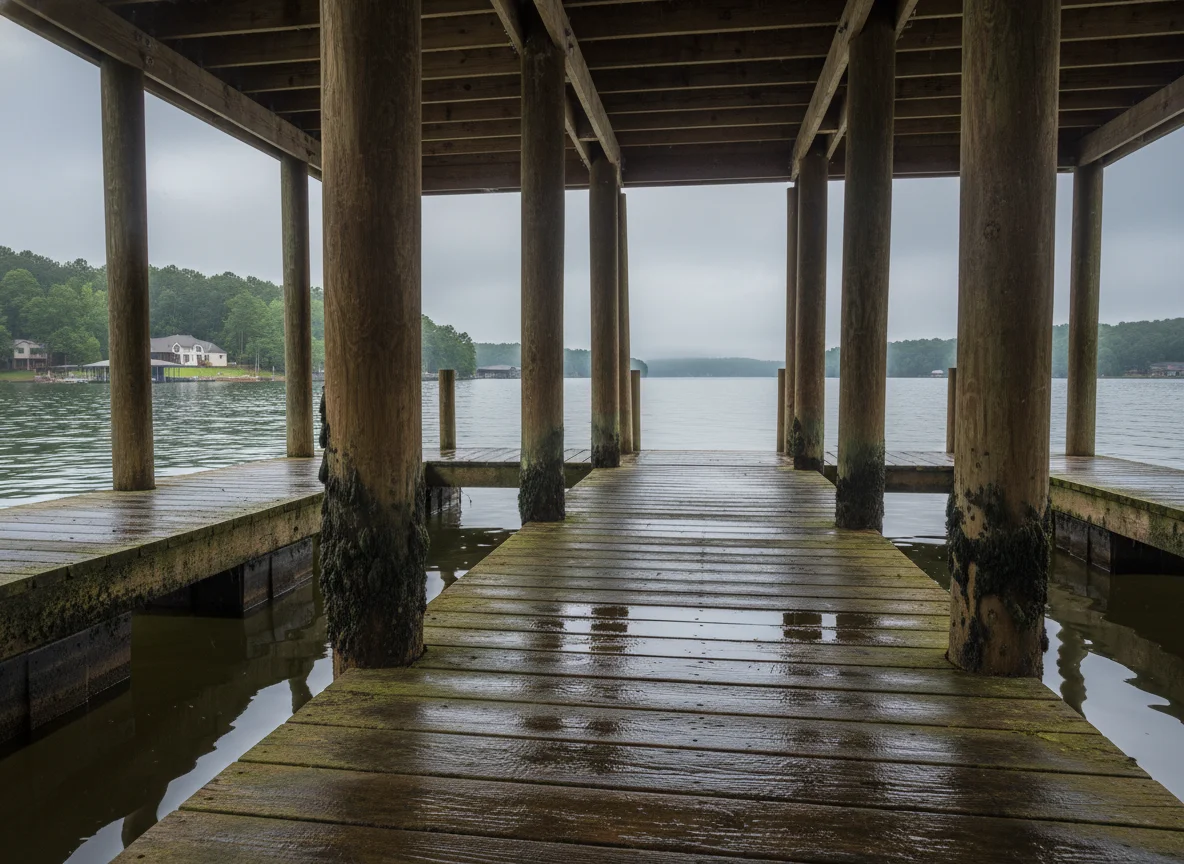
Lake Lanier has thousands of private boathouses, many of which are two-story structures with boat slips below and storage or living space above. These structures face an extraordinarily aggressive moisture environment: direct water contact below, constant wave splash, limited ventilation, and full sun exposure that creates a daily cycle of heating and condensation. Boathouse interiors commonly develop mold on exposed framing, stored watercraft, seat cushions, life jackets, water skis, and any other porous materials left inside.
Metal components in boathouses, including boat lifts, cables, and fasteners, corrode faster in the lake environment, and as they degrade, they can create structural openings that admit more moisture. Wooden dock and boathouse pilings constantly wick water upward through capillary action, maintaining a perpetually damp environment even during dry weeks.
Boat Storage Areas
Boats stored on lifts, in boathouses, or even on trailers near the water bring moisture into enclosed spaces. After a day on the lake, a boat's interior — carpet, upholstery, storage compartments — is saturated with humidity, and if stored in an attached garage or enclosed boathouse, that moisture transfers to the structure. Pontoon boats, with their large carpeted decks that hold water for hours after being pulled from the lake, are particularly problematic.
Lake Lanier Water Levels and Shoreline Moisture
Lake Lanier's water level fluctuates seasonally and annually. The U.S. Army Corps of Engineers manages the lake level with a target full pool of 1,071 feet above sea level, but levels routinely drop 5–10 feet during summer drawdowns and can fall much further during drought years. The record low of 1,050.79 feet was set in December 2007 during a historic Southeastern drought.
These water level changes affect shoreline property moisture in several ways. When the lake is high, hydrostatic pressure against shoreline foundations and retaining walls increases, forcing more moisture through any vulnerabilities in waterproofing. When the lake drops, previously submerged soil is exposed and dries out, but the drying process releases significant moisture into the air immediately above the shoreline. Properties with red clay shoreline banks, common around Lanier, are particularly affected because clay retains water far longer than sandy soils and releases it slowly over weeks and months.
The seasonal cycle also means that homes close to the water may experience rising damp through their foundations during spring and early summer when the lake is typically at its highest, followed by a different set of moisture dynamics as the lake drops through late summer and fall.
Prevention Strategies for Lake Lanier Homes
Whole-Home Dehumidification Systems
A standard air conditioning system removes some moisture as a byproduct of cooling, but it is not designed as a dedicated dehumidifier. Lake Lanier homes benefit significantly from standalone whole-home dehumidification systems that are integrated into the HVAC ductwork. These systems can maintain interior relative humidity at 45–50% regardless of outdoor conditions, well below the 60% threshold where mold growth accelerates. For lake-level basements and lower floors, a dedicated dehumidifier for that zone alone is often the single most effective mold prevention investment.
Moisture Barriers and Vapor Retarders
Crawlspace encapsulation — covering the entire crawlspace floor and foundation walls with a heavy-duty polyethylene vapor barrier — is particularly important for lake homes. The barrier blocks soil moisture from rising into the crawlspace air, which then migrates into the living space above. For homes with basements, exterior foundation waterproofing membranes and interior vapor barriers on walls that contact soil are essential. Many older Lake Lanier homes were built without these features, and retrofitting them should be a priority.
Off-Season Maintenance and Monitoring
If your lake home sits vacant for any period, invest in a smart humidity monitor that sends alerts to your phone when levels exceed a set threshold. Leave the HVAC system running in a humidity-control mode even when you are away — setting the thermostat to 78°F with the fan on "auto" and a dehumidifier running is far cheaper than remediating a mold infestation. Arrange for a local caretaker or neighbor to walk through the property at least once every two weeks, checking under sinks, around windows, and in basements for any signs of moisture or mold. Turn off the main water supply when leaving for extended periods to eliminate the risk of plumbing leaks.
Proper Ventilation for Lake-Level Rooms
Lake-level rooms, including finished basements, boathouse storage, and ground-floor bedrooms, need active ventilation. Exhaust fans should vent directly outside (not into an attic or crawlspace), and they should run on humidistat controls that activate automatically when humidity exceeds a set threshold. For boathouses, passive ventilation through screened vents on multiple walls creates cross-flow that dramatically reduces mold-friendly conditions. Avoid storing porous materials directly on concrete floors in lake-level rooms — use shelving or pallets to create an air gap.
Grading and Drainage
The slope of your property should direct water away from the foundation, not toward it. Many Lake Lanier homes sit at the bottom of a slope, with the yard and driveway sloping down toward the house and the lake beyond. In these situations, surface water from rain flows directly toward the foundation. Installing French drains, swales, and properly graded landscaping can intercept this water and route it around the structure. Gutters and downspouts must be kept clear and discharge at least 6 feet from the foundation, ideally into buried drain lines that carry water to the lake or a lower area of the property.
Signs Your Lake Home Has a Mold Problem
In lake homes, the usual mold warning signs are often present but can be masked by the lake environment itself. A musty odor is easy to dismiss as "just the lake smell." Slightly warped baseboards or doors that stick seasonally are common in humid environments and might not raise alarms. Be alert for: persistent condensation on windows, especially on the lake-facing side of the home, visible discoloration or staining on ceilings, walls, or around windows, peeling paint or wallpaper that suggests moisture behind the surface, an unexplained increase in allergy symptoms or respiratory issues among family members while at the lake home, and any musty smell that gets stronger, not weaker, when the house is closed up.
When Remediation Is Necessary
If you find visible mold growth larger than a dinner plate, or if musty odors persist despite thorough cleaning and dehumidification, professional assessment is warranted. Lake Lanier homes have interconnected moisture dynamics — mold on a boathouse wall may have originated from a crawlspace leak 30 feet away — so a comprehensive inspection that traces moisture to its source is critical. Surface cleaning alone, without addressing the underlying moisture pathway, guarantees the mold will return, often within a single humid Georgia summer.
Professional remediation for lake homes typically involves not just mold removal but also identification and correction of the moisture source, which may include foundation waterproofing, crawlspace encapsulation, drainage improvements, or HVAC modifications. This holistic approach is the only way to achieve lasting results in the demanding lakefront environment.
Related Resources
- Mold Removal in Hall County: Complete Guide
- Crawlspace Mold in Georgia: Prevention & Removal Guide
- Water Damage to Mold: Timeline & Prevention
- Mold Removal in Flowery Branch, GA
Protect Your Lake Lanier Investment
Call Mold Remediation Hotline at (332) 220-0303 for specialized lakefront mold inspection and remediation. We understand Lake Lanier homes.