How Much Does Mold Removal Cost in Gainesville, GA? (2026 Guide)
If you've discovered mold in your Gainesville or Hall County home, your first question is probably "how much is this going to cost me?" The answer depends on several factors — but having a realistic picture of pricing before you pick up the phone makes all the difference. Here's what North Georgia homeowners should expect to pay for professional mold removal in 2026.

Average Mold Removal Costs by Job Size
In Gainesville and throughout Hall County, professional mold remediation costs typically break into three tiers based on the scope of the infestation. These figures reflect what reputable, licensed mold removal companies charge in the North Georgia market as of early 2026.
Small Jobs: $500 – $2,000
Small-scale mold problems are the most common and the most manageable. This tier includes isolated patches of surface mold — think a bathroom ceiling corner, the area under a single sink with a slow-drip leak, or a closet wall where humidity collected behind stored boxes. At this level, the mold is typically confined to a non-structural surface and covers less than 30 square feet.
What's included at this price point: a thorough inspection of the affected area, containment using plastic sheeting to prevent spore spread, HEPA vacuuming of the surfaces, antimicrobial treatment, and a post-remediation visual check. Most small jobs are completed in a single visit lasting 2 to 5 hours. If the mold has penetrated drywall or insulation at this scale, expect pricing toward the upper end of the range to account for material removal and replacement.
Medium Jobs: $2,000 – $10,000
Medium-scale remediation involves mold covering multiple surfaces or an area between 30 and 200 square feet. Common scenarios in Hall County homes include crawlspace mold colonies (especially in older pier-and-beam homes common in the New Holland and downtown Gainesville historic districts), mold behind walls or under flooring after a supply line leak, or attic mold triggered by a roof leak combined with poor ventilation.
At this tier, the remediation process typically spans 1 to 3 days. It involves full containment with negative air pressure, removal and disposal of affected drywall and insulation, HEPA air scrubbing throughout containment, thorough antimicrobial fogging, and structural drying. If moisture barriers in crawlspaces need replacement or attic baffles require installation to correct the root cause, those costs are usually quoted separately or bundled into the job total. Gainesville's high water table and proximity to Lake Lanier make crawlspace moisture issues especially common at this job size.
Large Jobs: $10,000 – $30,000+
Large-scale remediation means the mold has spread across a significant portion of the home — typically more than 200 square feet — or has compromised structural materials like floor joists and roof trusses. These jobs are most common after major water events: a burst washing machine hose that sat over a weekend, storm flooding in a finished basement, or a long-term HVAC condensate leak inside walls the homeowner never noticed.
Large jobs often run 5 to 14 days and include full-room containment with multiple negative-air machines, demolition and disposal of large amounts of drywall, flooring, and insulation, structural wood treatment with commercial-grade biocides, full HVAC system decontamination, and repeated post-remediation air sampling to verify clearance. Mold Remediation Hotline has handled large jobs across Hall County where lake-effect humidity and extended roof leaks combined to create wall-to-wall contamination — and we walk every homeowner through the process step by step so there are no surprises.
| Job Size | Area Affected | Typical Cost Range | Typical Duration |
|---|---|---|---|
| Small | < 30 sq ft, single surface | $500 – $2,000 | 2–5 hours |
| Medium | 30–200 sq ft, multiple surfaces | $2,000 – $10,000 | 1–3 days |
| Large | 200+ sq ft, structural involvement | $10,000 – $30,000+ | 5–14 days |
| HVAC Contamination | Ductwork & air handler | $3,000 – $7,000 | 2–5 days |
| Crawlspace Encapsulation | Full crawlspace | $5,000 – $15,000 | 3–7 days |
Georgia-Specific Factors That Affect Your Cost
1. Humidity-Driven Recurrence Risk
Gainesville sits in USDA Hardiness Zone 8a with a humid subtropical climate. Average relative humidity hovers between 68% and 78% for much of the year — especially May through September, when dew points regularly exceed 70°F. This means that even after remediation, the conditions that caused your mold can return quickly if the underlying moisture source is not addressed. Reputable Hall County contractors — ourselves included — will always include recommendations for dehumidifiers, crawlspace vapor barriers, or ventilation upgrades as part of the remediation estimate. Skipping those steps saves money in the short term and virtually guarantees the mold will return.
2. Crawlspace Prevalence
A significant percentage of single-family homes in Gainesville, Oakwood, Flowery Branch, and surrounding Hall County communities are built over crawlspaces rather than slabs. Crawlspace mold remediation typically costs 30% to 50% more than interior work of the same square footage because of access challenges, confined-space safety protocols, and the near-certainty that vapor barrier replacement will be needed. If your crawlspace has standing water after heavy rain — not uncommon given Hall County's clay-heavy soils and seasonal downpours — drainage correction adds to the total.
3. Home Age and Construction Materials
Gainesville's housing stock spans from early-1900s bungalows in the Green Street historic area to new construction in Mundy Mill and Sterling on the Lake. Older homes frequently contain plaster-and-lath walls (more difficult and expensive to remediate than drywall) and may have layers of lead paint requiring special abatement procedures. Homes built before 1978 should always be treated with lead-safe work practices during any demolition, which adds a moderate cost premium.
4. Mold Type and Testing Requirements
Not all mold carries the same remediation protocol. While the mold color alone does not determine toxicity, certain species — particularly Stachybotrys chartarum (often called "black mold") — are treated with heightened containment protocols because of the potential health risks from mycotoxins. If your remediation contractor recommends independent lab testing to identify the mold species (which is a best practice, but not always legally required), expect to add roughly $300 to $700 for sample collection and lab analysis. We cover the difference between mold inspection and testing in a separate guide.
Does Homeowners Insurance Cover Mold Removal?
The short answer: it depends entirely on the source of the moisture. Most standard homeowners insurance policies in Georgia will cover mold remediation only when the mold results from a "covered peril" — a sudden and accidental event like a burst pipe, an appliance overflow, or firefighting water damage. They will typically deny claims for mold caused by ongoing neglect, long-term leaks, flood damage (unless you carry separate flood insurance), or high humidity without a specific triggering event.
Even when coverage applies, most Georgia policies impose a mold sub-limit — commonly $5,000 to $20,000 — regardless of your overall dwelling coverage amount. Some insurers offer a "fungi, mold, or wet rot" endorsement that raises this limit for an additional premium. We dig deeper into this topic in our Georgia homeowners insurance and mold guide.
If you are planning to file a mold claim, document everything with photos and videos before any cleanup begins. Keep receipts for any emergency mitigation (like water extraction) that you pay for out of pocket. And get a detailed written estimate from a licensed remediation contractor — your adjuster will need it.
What's Included in a Professional Mold Removal Estimate?
When Mold Remediation Hotline provides a written estimate for your Gainesville-area property, you will see line items for each component of the job — never a vague lump sum. A thorough estimate should include:
- Inspection and moisture mapping — Using thermal imaging and moisture meters to find the full extent of the water damage driving the mold, not just the visible growth
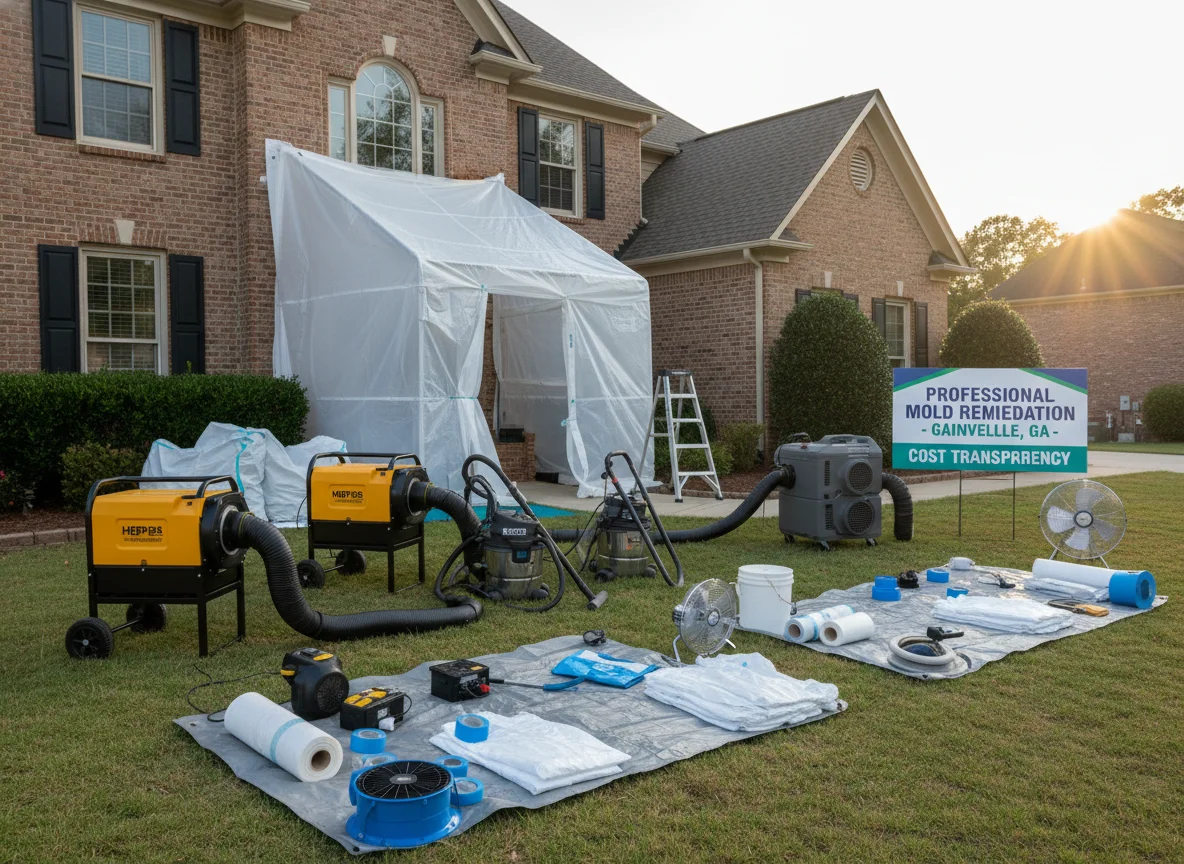
- Containment setup — Plastic sheeting, negative air machines, and zippered entryways to keep spores from spreading during work
- Removal and disposal — Cutting out and bagging affected drywall, insulation, carpet, or other porous materials, with landfill fees included
- HEPA cleaning — Detailed HEPA vacuuming of all surfaces within the containment zone plus air scrubbing with commercial HEPA filtration units
- Antimicrobial treatment — Application of EPA-registered antimicrobial and fungicidal products to all affected framing and surfaces
- Drying and dehumidification — Industrial air movers and dehumidifiers running until moisture readings return to acceptable levels
- Post-remediation verification — Visual inspection and, if desired, independent air sampling to confirm the job is complete
Be wary of any contractor who refuses to itemize their estimate or who gives you a quote over the phone without seeing the property. As we discuss in our guide to avoiding mold remediation scams, transparency in pricing is one of the clearest signs you are dealing with an honest company.
Is It Worth Trying to Save Money With DIY?
For very small patches of mold on non-porous surfaces — think a windowsill or bathroom tile — DIY cleaning with diluted bleach or a commercial mold cleaner can be effective and cost under $50. But the EPA and CDC both recommend professional remediation for mold covering more than 10 square feet, and for any case where the HVAC system may be contaminated, or where sensitive individuals (infants, elderly, immunocompromised, or those with respiratory conditions) live in the home.
In our experience serving Hall County, we have seen dozens of cases where a homeowner spent $300 to $600 on rental equipment and cleaning products attempting a DIY fix on a 40-square-foot patch, only to call us six months later when the musty smell returned because the moisture source was never properly identified and corrected. We compare the numbers in detail in our DIY vs. professional mold removal cost comparison.
Get Your Free Mold Removal Estimate in Gainesville, GA
Call Mold Remediation Hotline today at (332) 220-0303 to schedule a no-obligation inspection and written estimate. We serve all of Hall County and North Georgia with licensed, insured, and transparent mold remediation services.