Does Homeowners Insurance Cover Mold in Georgia? (2026)
The question comes up in nearly every initial consultation: "Will my insurance pay for this?" The answer is not a simple yes or no — it depends entirely on what caused the mold, the specific language in your policy, and whether you took reasonable steps to prevent the damage. Here is what Georgia homeowners need to understand about insurance and mold in 2026.
The Core Rule: Mold Coverage Depends on the Cause
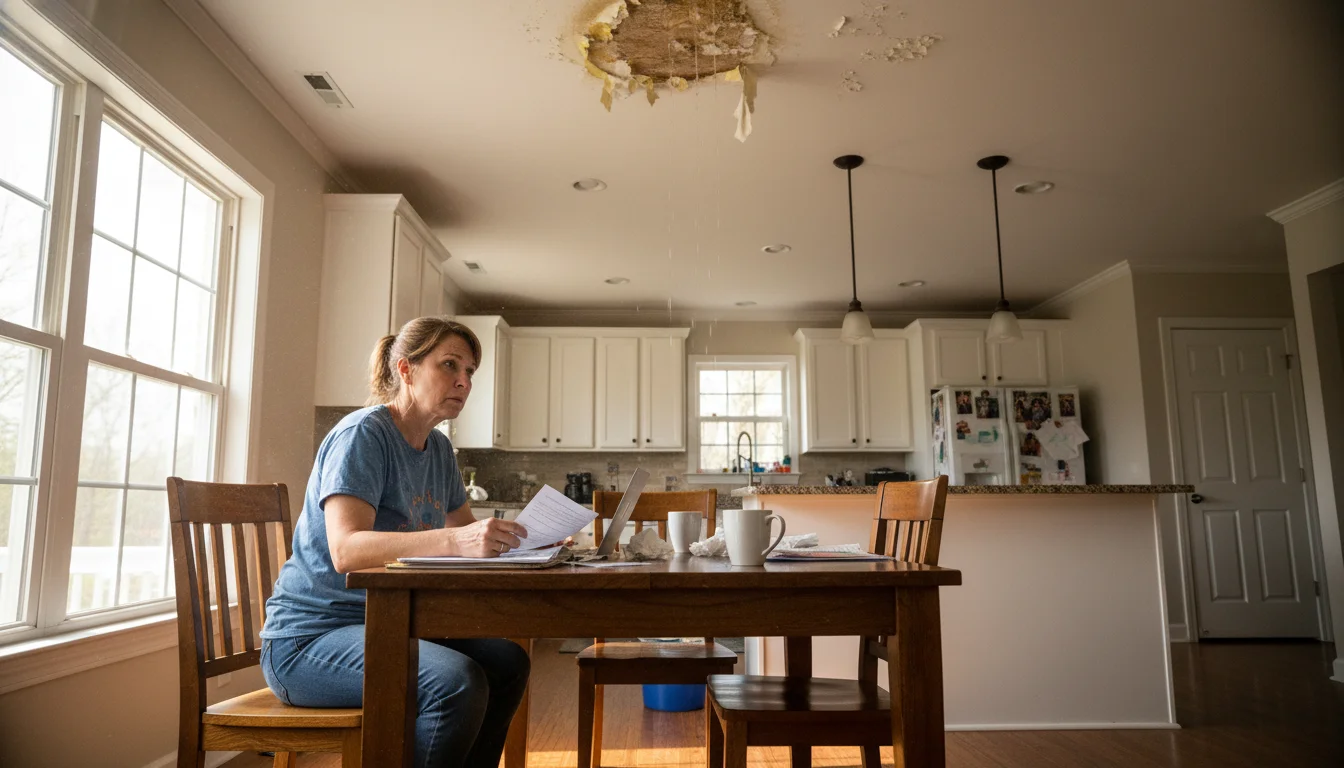
Insurance policies are designed to cover sudden and accidental losses, not ongoing maintenance issues or long-term neglect. This principle is the dividing line for mold coverage. If the mold in your home resulted from a covered peril — a sudden, accidental event listed in your policy — the remediation may be covered. If the mold resulted from a long-term leak you should have noticed, high humidity you did not manage, or flood damage, your claim will almost certainly be denied.
Most standard homeowners policies in Georgia (HO-3, the most common form) include language limiting mold coverage to $5,000 or $10,000, regardless of your overall dwelling coverage limit, and only pay when the mold is caused by a covered water damage event. Understanding this distinction before you pick up the phone to your adjuster can save you significant frustration.
When Insurance Typically Covers Mold
1. Sudden Pipe Burst
If a frozen pipe bursts during a Georgia cold snap (more common in Hall County than many residents expect — temperatures occasionally dip into the teens overnight), and the resulting water damage leads to mold before restoration can be completed, your policy should cover both the water damage and the resulting mold remediation up to your mold sub-limit. This is the most straightforward covered scenario and the least likely to be contested by the adjuster.
2. Appliance or Fixture Failure
A washing machine hose that bursts, a water heater that suddenly fails and floods the utility closet, or a dishwasher supply line that ruptures — these are all classic covered-peril events. The key word is "sudden." If the hose had been dripping slowly for months and you did not notice, the insurer may argue that the water damage was not sudden and therefore not covered.
3. Firefighting Water Damage
If a fire in your home is extinguished by the fire department and the water used to fight the fire causes mold before the property dries out, the mold remediation is typically covered as part of the fire claim. Fire damage claims are among the most comprehensive in standard policies.
4. Storm Damage That Breaches the Roof or Windows
If a tree falls through your roof during a Hall County thunderstorm and rain enters the home, leading to mold before repairs can be completed, the resulting mold remediation should be covered. The triggering event — the fallen tree — was sudden and accidental, and the water intrusion was a direct consequence.
When Insurance Typically Denies Mold Claims
1. Long-Term or Slow Leaks
This is the most common denial scenario in Hall County. A slow drip under a bathroom sink that has been leaking for six months — mold can start in as little as 24 hours of sustained moisture, a pinhole leak in a copper pipe inside a wall that went unnoticed, a roof leak that has been dripping into the attic during every rain for a year — none of these are considered "sudden and accidental." The insurer will argue that the homeowner had a duty to discover and repair the leak before mold developed, and that the mold is therefore a maintenance failure, not a covered loss.
2. High Humidity or Condensation Without a Specific Event
If the mold in your home developed because of Georgia's naturally high humidity and inadequate dehumidification — not because of a specific water release event — your insurance will not cover it. This is the scenario for many exterior-wall mold colonies described in our humidity and exterior walls guide. The insurer treats ambient humidity as a condition the homeowner is responsible for managing.
3. Flood Damage
Standard homeowners insurance does not cover flood damage at all — mold-related or otherwise. If your home floods from a rising creek, a Lake Lanier overflow, or heavy rain that enters through foundation cracks, neither the water damage nor the resulting mold is covered unless you carry a separate flood insurance policy through the National Flood Insurance Program or a private flood insurer. Many Hall County homeowners in flood-prone areas near the lake and its tributaries are required by their mortgage lenders to carry flood insurance for exactly this reason.
4. Neglect or Failure to Mitigate
Even if a covered event occurs, you have a duty under your policy to take reasonable steps to prevent further damage. If a pipe bursts and you do not shut off the water or call a restoration company for a week because you are out of town, the insurer may deny the mold portion of your claim on the grounds that you failed to mitigate the loss. This is why most policies require you to report a claim "promptly" and take immediate steps to stop the water and begin drying.
The Mold Sub-Limit: What It Means and Why It Matters
Even when mold is covered, most Georgia homeowners policies impose a "fungi, mold, or wet rot" sub-limit — a cap on how much the insurer will pay for mold-related claims, regardless of your overall dwelling coverage. The most common sub-limit we see in Hall County policies is $10,000, though some policies cap mold coverage as low as $5,000 or as high as $20,000.
This means that even if you have $400,000 in dwelling coverage and a covered burst pipe causes $25,000 in mold remediation, the insurer may only pay up to the mold sub-limit. The water damage portion of the claim (extracting standing water, drying the structure, and repairing the burst pipe) is typically paid under your full dwelling coverage, while the mold-specific remediation is subject to the lower cap. This distinction matters enormously when budgeting for remediation — you may need to cover out-of-pocket costs above the sub-limit.
The "Fungi, Mold, or Wet Rot" Endorsement
Many Georgia insurers offer an optional endorsement that increases the mold sub-limit — sometimes up to $50,000 or more — for an additional annual premium. If you live in an older Hall County home, a home near Lake Lanier, or a home with a history of water issues, this endorsement may be worth the cost. The added premium varies by insurer but is often reasonable relative to the increased coverage.
Additionally, some insurers now offer a "hidden water" or "slow leak" endorsement that covers damage from leaks that were not immediately discoverable — such as a pinhole leak inside a wall cavity. This endorsement is less common and more expensive, but it bridges the gap between "sudden burst" (covered) and "slow leak" (denied) that frustrates so many Georgia homeowners.
We recommend reviewing your policy's mold-related language with your insurance agent at renewal time. Ask specifically: "What is my mold sub-limit? Is a fungi endorsement available for this policy? Does my policy cover damage from leaks that were not visible or discoverable?" The answers will tell you whether you need additional coverage.
How to File a Mold Claim in Georgia: Step-by-Step
Step 1: Stop the Water and Document Everything
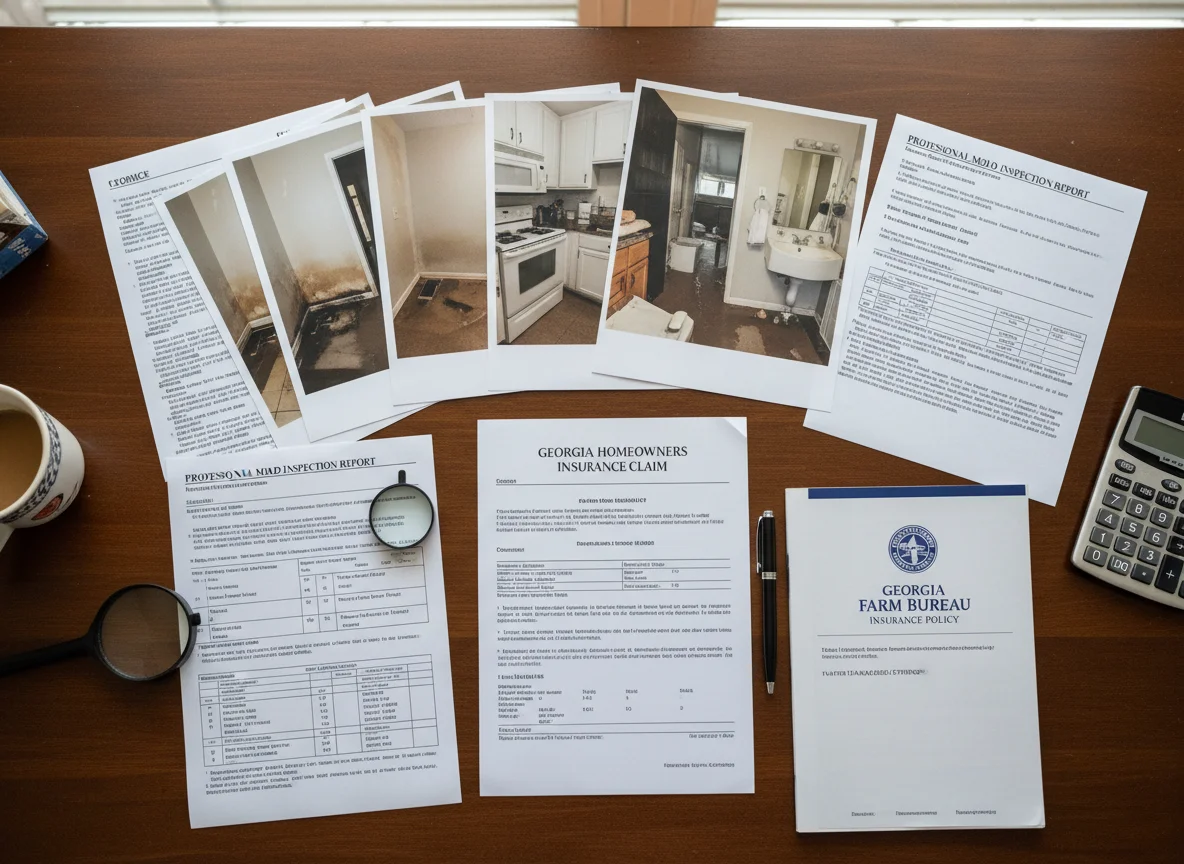
Before you touch anything, take photos and videos. Wide shots showing the affected area in context, and close-ups showing the mold, the water source, and any visible damage. Photograph the water meter, the burst pipe, the appliance serial tag — anything that demonstrates what happened and when. These photos are your evidence, and adjusters rely heavily on them.
Step 2: Mitigate Immediately
Shut off the water at the source or at the main valve. Remove standing water with a wet-dry vacuum if it is safe to do so. Set up fans and dehumidifiers if you have them. Call a water damage restoration company for emergency extraction and drying if the damage is extensive. Keep receipts for everything you spend on emergency mitigation — these are part of your claim. Failure to mitigate may reduce or eliminate your coverage.
Step 3: Call Your Insurance Company
Report the claim as soon as possible. Clearly describe the covered event that caused the water damage (the burst pipe, the appliance failure, the storm damage). Do not volunteer that the leak "might have been going on for a while" or speculate about how long mold has been present. State the facts: "A pipe burst in the utility closet on Tuesday, and we discovered mold on the drywall when we began cleanup on Thursday."
Step 4: Get a Professional Remediation Estimate
Obtain a detailed, itemized written estimate from a licensed mold remediation contractor before the adjuster arrives. This estimate gives you a benchmark against which to evaluate the insurer's settlement offer. Mold Remediation Hotline provides detailed written estimates for insurance claim purposes to homeowners throughout Hall County.
Step 5: Meet With the Adjuster
Walk the adjuster through the damage. Show your photos. Provide your remediation estimate. Be cooperative but informed — you are not required to accept the adjuster's first settlement offer if it does not fully cover the documented remediation cost. If the adjuster's estimate and your contractor's estimate differ significantly, ask for a line-by-line explanation of the difference.
Step 6: Hire the Remediation Contractor
Once the claim is approved, you select the remediation contractor — not the insurance company. Georgia law does not permit insurers to require that you use a specific contractor. Choose a company you trust, with transparent pricing and local references. For an idea of what remediation costs in the Gainesville area, see our mold removal cost guide.
A Note About Pre-Existing Mold and Policy Changes
If mold was present in the home before your current policy period began, it will not be covered under a claim on the current policy — even if you were not aware of it. This is another reason why a professional mold inspection before buying a home (discussed in our inspection vs. testing guide) is so important. Discovering mold after closing may mean you have no insurance recourse and must pay out of pocket — know your rights under Georgia mold disclosure laws.
It is also worth noting that several major insurers in Georgia have reduced or eliminated mold coverage in their base policies over the past decade, shifting it to optional endorsements. If you have been with the same insurer for many years without reviewing your policy, you may have less mold coverage than you assume.
Need a Mold Remediation Estimate for Your Insurance Claim?
Call Mold Remediation Hotline at (332) 220-0303 for a detailed written estimate you can submit to your adjuster. We serve all of Hall County and North Georgia with transparent pricing and thorough documentation.