DIY Mold Removal vs. Hiring a Pro: Cost Comparison for Georgia Homeowners
A bottle of mold cleaner costs twelve dollars. A professional remediation might run into the thousands. The temptation to handle it yourself is understandable. But the gap between those two numbers is not a measure of price gouging — it reflects the difference between cleaning a surface and solving a moisture problem. Here is what you actually save (and risk) with DIY mold removal.
When DIY Mold Removal Is Safe and Effective
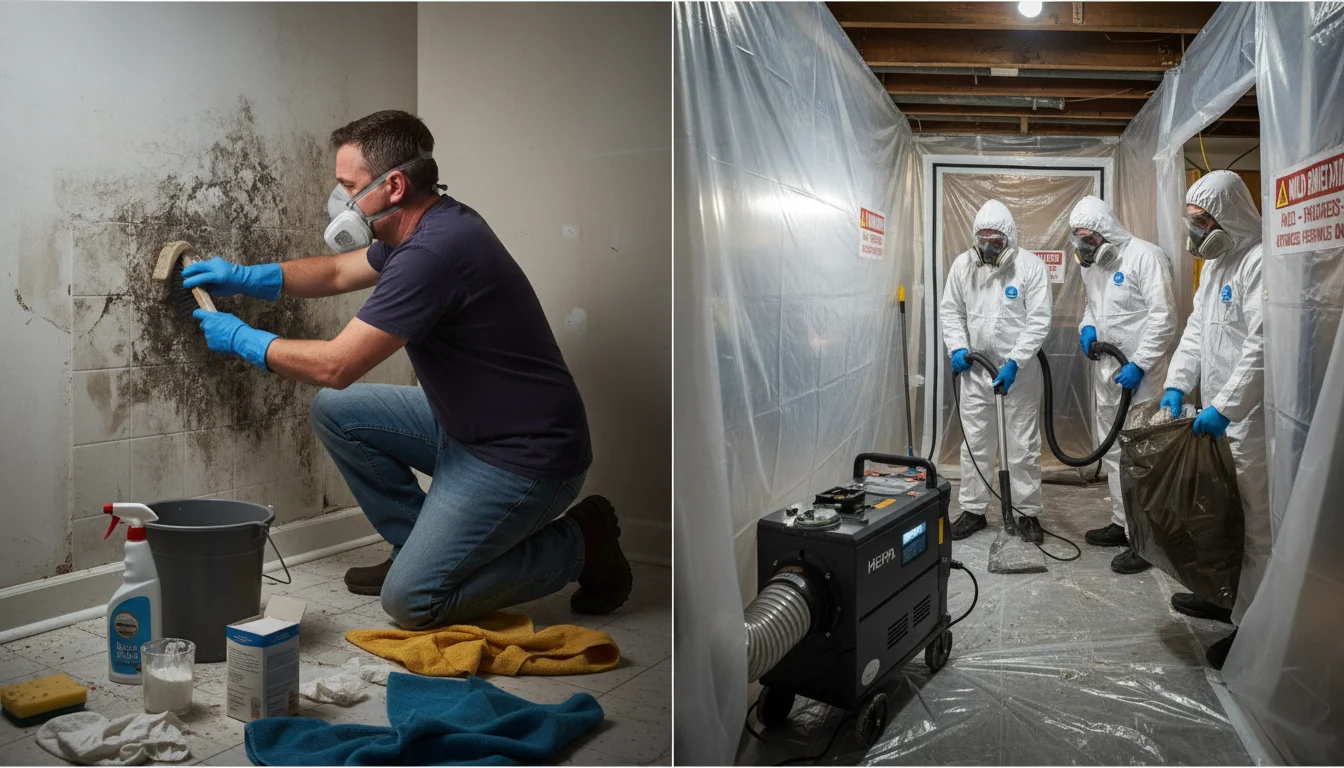
The EPA and CDC both draw the line at 10 square feet: if the mold covers less than roughly a three-foot-by-three-foot area, and it is on a non-porous surface, and no one in the home is immunocompromised or has a respiratory condition, DIY removal can be appropriate. Here are the specific scenarios where rolling up your sleeves makes sense:
- Bathroom tile and grout: Small patches of mildew or mold on shower tiles, bathtub caulking, or around the base of a sink where condensation collects. These are non-porous surfaces that do not absorb mold into a substrate.
- Window sills and tracks: Condensation on windows during Georgia winters often leaves small mold patches on painted wood or vinyl sills. If the underlying material is solid and the moisture is seasonal condensation, a cleaning with diluted detergent and thorough drying is sufficient.
- Exterior doors and thresholds: The bottom edge of an exterior door or the threshold plate can accumulate greenish mildew from rain splash-back. This is surface-level and easily cleaned.
- Concrete or block walls: Efflorescence and surface mold on unfinished basement concrete walls can be cleaned with a stiff brush and appropriate cleaners, provided the moisture source (typically exterior grading or a leaking foundation wall) is also corrected.
- Kitchen surfaces under a leak that was caught early: If a sink supply line dripped for a day or two and you caught it before the cabinet bottom swelled, cleaning the cabinet interior with a mold-specific cleaner and thoroughly drying the area may be sufficient.
The Hidden Costs of DIY Mold Removal
A DIY mold removal project that appears to cost $50 to $150 in cleaning supplies often carries hidden costs that homeowners do not account for:
| DIY Cost Item | Typical Range | Notes |
|---|---|---|
| Mold cleaner (concrobium, bleach solution, etc.) | $10 – $45 | Bleach is not recommended for porous surfaces — it does not penetrate and may add moisture |
| HEPA shop vacuum rental | $40 – $80 per day | Standard shop vacs blow spores out the exhaust; only HEPA-filtered units are safe for mold |
| Dehumidifier rental | $40 – $70 per day | Needed for at least 48–72 hours after cleaning to ensure materials dry completely |
| PPE (N95 mask, gloves, goggles, disposable coveralls) | $25 – $70 | Standard dust masks are insufficient; respirator-grade protection is recommended |
| Containment plastic and tape | $30 – $60 | 6-mil polyethylene sheeting and painter's tape to isolate the work area |
| Replacement materials (drywall, insulation, paint) | $50 – $500+ | If you find the mold penetrated drywall, you are cutting and replacing — and material costs add up |
| Disposal fees | $20 – $100 | Moldy drywall and insulation must be bagged and disposed of properly |
| Total DIY Cost (Small Job) | $215 – $925 | Plus your time — typically 1 to 3 full days for a complete small job |
Now compare this to the entry-level professional cost: $500 to $2,000 for a small job of similar scope — as detailed in our Gainesville mold removal cost guide. The professional price includes containment, commercial HEPA air scrubbing, proper disposal, antimicrobial treatment, and post-remediation moisture verification. The DIY price does not include the most expensive risk: incomplete removal that lets the mold return.
When You MUST Hire a Professional
1. Mold Covering More Than 10 Square Feet
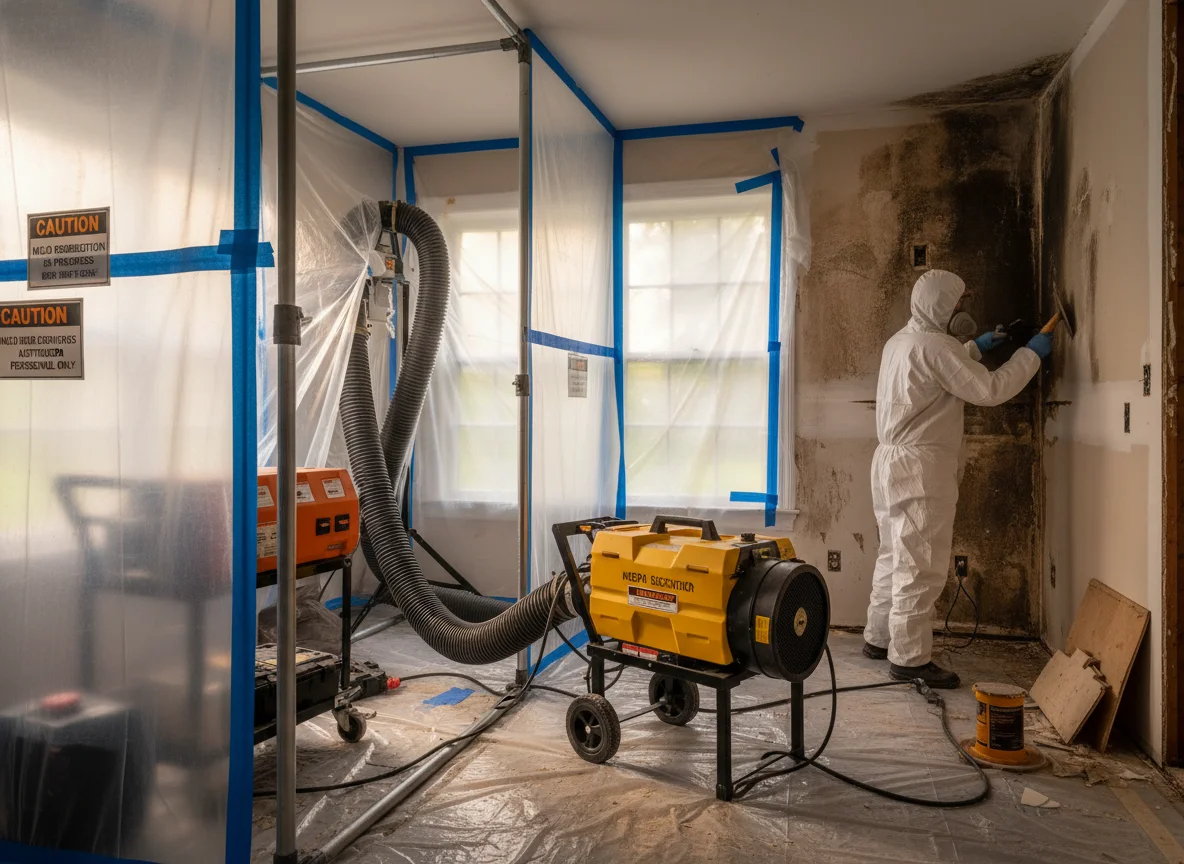
This is the EPA's widely referenced threshold. Above 10 square feet, the volume of spores that will be released during removal requires professional containment and air filtration. Without negative air pressure and HEPA air scrubbing, you risk spreading mold spores into every room in the house — including rooms that were previously mold-free.
2. HVAC System Contamination
If mold is present on or inside your HVAC ductwork, air handler, evaporator coil, or return plenum, the system is actively distributing spores throughout the home every time it runs. Cleaning ductwork and treating the air handler requires specialized equipment and techniques — and if not done correctly, can make the problem worse by dislodging mold colonies deep inside the duct runs. Georgia's humid climate makes HVAC mold especially common because condensation on the evaporator coil provides constant moisture during cooling season.
3. Structural Mold — Framing, Floor Joists, Roof Trusses
When mold has colonized wooden structural members in your attic, crawlspace, or inside wall cavities, the wood typically requires professional treatment with commercial-grade antimicrobial and encapsulant products. Surface scrubbing will not reach mold that has penetrated into the wood grain, and if the wood has been compromised (softened or decayed), it may require sistering or replacement — work that requires a contractor familiar with structural repairs.
4. Known or Suspected Toxic Mold Species
If lab testing has confirmed the presence of Stachybotrys chartarum or other species known to produce mycotoxins, professional remediation with full containment, negative air pressure, and appropriate PPE is necessary. DIY attempts at cleaning toxic mold species expose you and your family to concentrated spore loads and mycotoxin-containing dust without adequate protection. As we discuss in our scam prevention guide, not every black mold is Stachybotrys, but when Stachybotrys is confirmed, the remediation protocol is serious.
5. Post-Water-Event Mold in Porous Materials
If your Hall County home experienced a significant water event — a burst pipe, a flooded basement, a roof leak that saturated attic insulation — and mold has developed in drywall, insulation, carpet, or carpet pad — mold can start within 24 hours of water exposure, those materials must be removed and replaced, not cleaned. Porous materials that have been wet for more than 48 hours and have visible mold cannot be effectively "cleaned" of mold; the hyphae penetrate too deeply into the material matrix. A professional remediation company identifies which materials must be removed and which can be treated, preventing the common DIY mistake of treating material that should have been replaced.
6. Health-Vulnerable Occupants
If anyone living in the home is an infant, elderly, pregnant, immunocompromised (chemotherapy, organ transplant, autoimmune disorder), or has a diagnosed respiratory condition (asthma, COPD, hypersensitivity pneumonitis), do not attempt DIY mold removal. The elevated spore levels during even a properly conducted DIY removal pose a health risk to vulnerable individuals that is not worth taking.
Georgia Building Code and Permit Considerations
For larger remediation jobs that involve structural repairs, Georgia building codes come into play. If mold-damaged structural members (floor joists, roof rafters, load-bearing wall studs) require replacement or sistering, a building permit is typically required through the Hall County Building Department or the City of Gainesville Planning Department, depending on jurisdiction. The permit ensures that the structural repair is inspected and meets current code.
A licensed contractor is familiar with the local permitting process and handles it as part of the job. A DIY homeowner attempting structural remediation without permits risks code enforcement issues and complications when selling the home later — undisclosed unpermitted structural work is a frequent source of real estate transaction problems.
Additionally, Georgia follows the International Residential Code (IRC) with state-specific amendments. The 2018 Georgia State Minimum Standard One and Two Family Dwelling Code governs moisture and ventilation requirements that may affect how a remediation project is conducted. For example, crawlspace ventilation and vapor barrier requirements under IRC Section R408 are frequently relevant to Hall County mold remediation jobs — and a licensed local contractor knows these requirements.
The Real Cost of Getting It Wrong
We have seen this pattern many times in Hall County: a homeowner discovers a 40-square-foot mold patch on a basement exterior wall, spends $400 on rental equipment and cleaning supplies over a weekend, and feels satisfied that the dark staining is gone. Six months later — usually in May or June when Georgia humidity ramps back up — the musty smell returns. The mold has regrown because the moisture source (a foundation crack, poor exterior grading, or a missing vapor barrier) was never addressed.
The homeowner now pays for professional remediation of the original 40 square feet plus whatever additional area the mold has colonized during the intervening months — often twice the initial scope and cost. The $400 "savings" on DIY turned into an extra $3,000 in professional remediation to fix the compounded problem. Understanding how Georgia humidity drives mold on walls is essential to avoiding this outcome.
Making the Right Call for Your Hall County Home
The decision between DIY and professional remediation is not just about cost — it is about certainty. A professional remediation company provides containment, proper material removal, antimicrobial treatment, moisture source correction, and post-remediation verification that the problem is solved. DIY provides cleaning products and hope.
If your mold problem falls within the DIY Safe Zone defined above, by all means handle it yourself — and be thorough about finding and fixing the moisture source. If your problem is larger than 10 square feet, involves HVAC or structural materials, or affects a home with vulnerable occupants, get at least one professional estimate before deciding. Mold Remediation Hotline provides free estimates to Hall County homeowners, so you can compare the professional price to your DIY budget with real numbers — not guesses.
Get a Professional Assessment Before You Decide
Call Mold Remediation Hotline at (332) 220-0303 for a free mold inspection and written estimate in Gainesville and Hall County. We will help you understand the scope of the problem so you can make the right call — DIY or pro — with confidence.