How to Prepare for a Mold Inspection in Your Gainesville Home
You've noticed a musty smell in the basement. Or your allergies flare every time you're in the guest bedroom. Or you spotted a dark patch spreading along the baseboard after last month's heavy rain. You booked a mold inspection. Now what? A properly prepared home yields a more accurate inspection, a more useful report, and a faster path to a clean bill of health. Here's exactly how to prepare for a mold inspection in your Gainesville home — and what every Hall County homeowner should know before the inspector arrives.
Why Preparation Matters for Your Mold Inspection
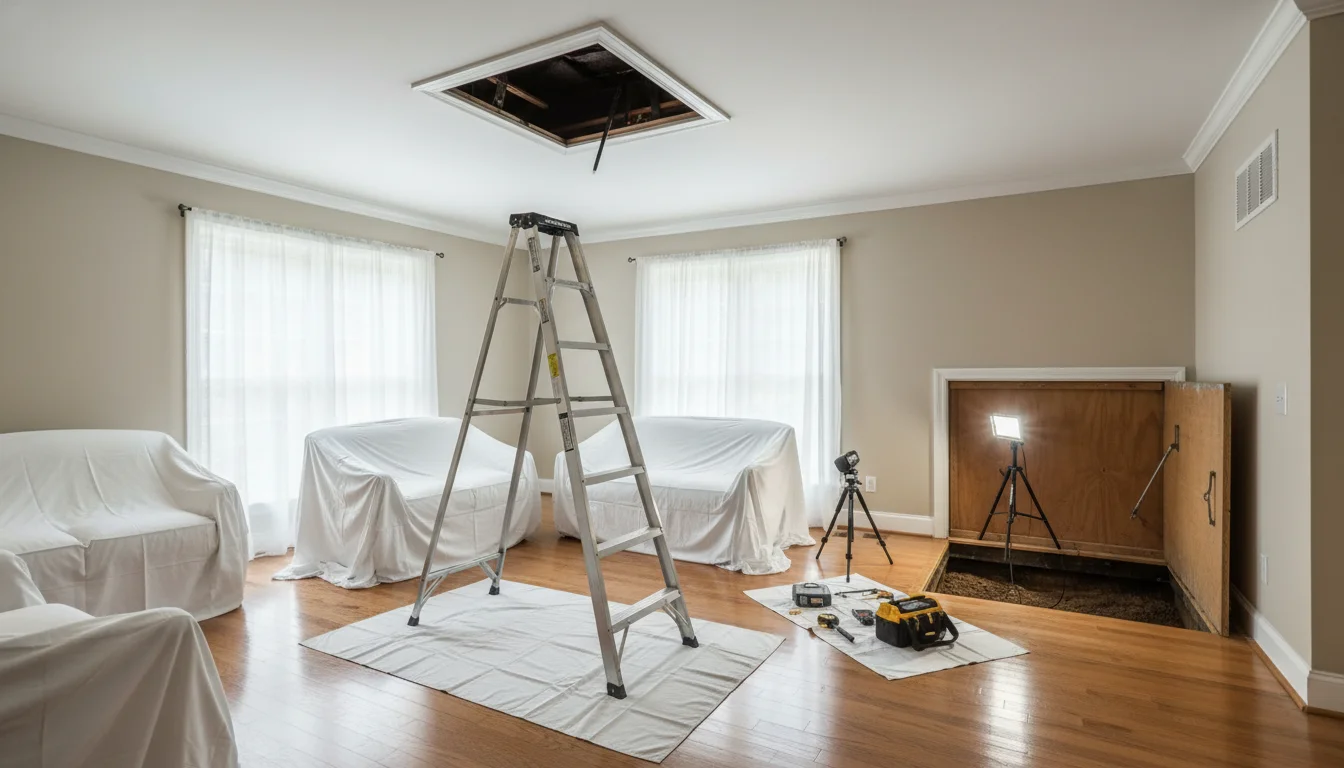
Many Gainesville homeowners treat a mold inspection like a passive event: the inspector shows up, does their thing, and you get a report. But preparation directly affects the quality of the inspection. An inspector who can't access your attic because boxes block the hatch, or who can't check your crawlspace because the access door is sealed shut, will deliver an incomplete report. Worse, an inspector working in a home where you've just scrubbed every surface with bleach may find artificially low spore counts that mask a real problem.
In Hall County, where our humid climate makes mold growth a near-constant threat in poorly ventilated homes, a thorough inspection is not a luxury — it's a critical diagnostic tool. Whether you're concerned about health symptoms, preparing a home for sale, verifying that a previous remediation job was completed correctly, or simply want peace of mind after a water intrusion event, your preparation directly impacts the inspector's ability to find and document every problem area.
Pre-Inspection Checklist: What to Do Before the Inspector Arrives
One Week Before: Gather Documentation
- Compile water damage history. Write down every water-related event you can remember: roof leaks, plumbing leaks, appliance overflows, AC condensate pan overflows, basement seepage, crawlspace pooling, exterior grading issues that directed water toward the foundation. Include approximate dates. This history gives the inspector a roadmap of where to look first.
- List all health symptoms. Note who in the household experiences symptoms, what those symptoms are (congestion, coughing, skin irritation, headaches, fatigue, asthma flare-ups), and whether symptoms improve when away from the home for extended periods. This pattern of "sick at home, better elsewhere" is one of the strongest indicators of an indoor air quality problem.
- Collect relevant documents. Previous inspection reports, remediation records, insurance claims, contractor invoices for roof repairs or plumbing work — any paper trail that tells the story of your home's moisture history.
- Note areas of concern. Walk through your home and make a list of every area where you've seen staining, discoloration, efflorescence on masonry, peeling paint or wallpaper, warped flooring, or condensation on windows. Mark the locations of any known past or present water intrusion.
Two Days Before: Physical Preparation
- Clear access to the attic hatch or pull-down stairs. If holiday decorations, luggage, or storage boxes block the attic access, move them. The inspector needs a clear, safe path to enter the attic. In most Gainesville homes, the attic access is in a hallway ceiling or master bedroom closet — make sure nothing obstructs it.
- Clear access to the crawlspace entry. Many Hall County homes have crawlspace access through an exterior hatch or a closet floor panel. If yours is outside, trim back shrubs and remove debris around the entry. If inside, empty the closet floor so the inspector can enter.
- Provide clear access to the HVAC air handler and furnace. The inspector will examine the air handler cabinet, the evaporator coil, the condensate drain pan, and the ductwork for visible mold, standing water, or excessive dust accumulation that creates a mold-friendly environment. Clear a three-foot work zone around the unit.
- Provide access to all rooms, closets, and bathrooms. Every room should be accessible — including guest rooms, storage rooms, and utility closets. The inspector won't open closed drawers or cabinets without permission, but they need to see every space. If a room is locked, unlock it.
- Secure pets. Dogs, cats, and even excitable birds can interfere with equipment, knock over sampling pumps, or simply distract the inspector. Arrange for pets to be in a kennel, a closed room the inspector has already examined, or off-site during the inspection. This also prevents pet dander from complicating air sample analysis.
The Day of Inspection: Final Steps
- Turn off the HVAC system two hours before the inspection. This is critical for accurate air sampling. When the HVAC runs, it stirs up settled spores and creates artificially elevated counts in air samples. Conversely, running the system at high filtration levels can scrub the air and produce artificially low counts. Turning off the system for two hours allows airborne particles to settle to their natural equilibrium state, giving the inspector a representative snapshot of what occupants are actually breathing.
- Close all exterior windows and doors for at least two hours before the inspection. Outdoor air carries mold spores (especially in Georgia, where outdoor spore levels can reach 50,000+ spores per cubic meter during peak season). An open window confounds indoor sampling with outdoor background levels and makes it impossible to determine whether spores originated inside the home.
- Leave interior doors open. The inspector needs to move freely through the home. Open doors also allow air to circulate naturally between rooms, which supports accurate sampling across the entire conditioned space.
- Do not clean suspected mold areas before the inspection. This is the most common mistake homeowners make. You want the inspector to see the problem areas as they truly exist. If you've already wiped down visible mold with bleach or cleaning products, the inspector loses critical visual evidence, and surface sampling may return false-negative results. Leave everything as-is.
- Do not run air purifiers, dehumidifiers, or exhaust fans for at least two hours before the inspection for the same reason as the HVAC shutdown — these devices alter the airborne particle profile the inspector is trying to measure.
- Make a list of questions. Write them down so you don't forget during the inspection walkthrough.
What the Mold Inspector Will Examine
Understanding what the inspector looks at helps you prepare more effectively. A comprehensive mold inspection in a Gainesville home typically covers these areas:
Exterior Examination
The inspector starts outside, looking for conditions that drive moisture into the home. They'll examine roof condition (missing shingles, damaged flashing, clogged valleys), gutter and downspout function (are downspouts discharging at least six feet from the foundation?), grading around the foundation (does soil slope away from the house, or does water run toward it?), and exterior wall condition (cracked stucco, failing caulk, gaps in siding). In Hall County, where we receive about 54 inches of rain annually, even small exterior deficiencies can channel hundreds of gallons of water against and into your home over a single season.
Interior Visual Inspection
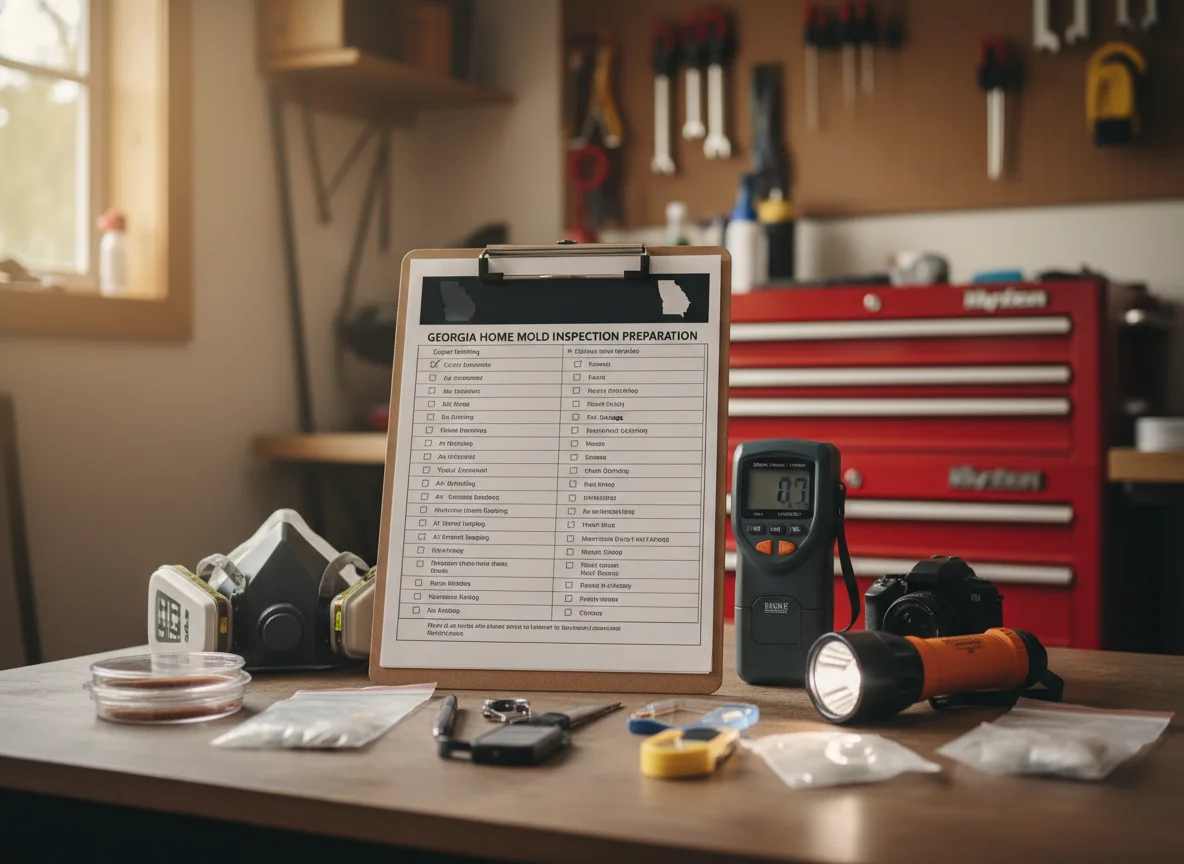
Inside, the inspector systematically examines walls, ceilings, floors, windows, and plumbing fixtures in every accessible room. They'll use a high-powered flashlight angled against surfaces to highlight texture differences that indicate past or present moisture. They'll check under sinks for slow leaks that homeowners often miss. They'll examine window sills and frames for condensation staining. They'll look at bathroom exhaust fans to verify they vent outside — not into the attic, an alarmingly common code violation in older Hall County homes that dumps shower moisture directly into the attic space.
Attic Inspection
In the attic, the inspector examines roof sheathing for dark staining that indicates past or active roof leaks, looks for condensation on the underside of the roof deck (a sign of inadequate ventilation), checks that bathroom and kitchen exhaust fans vent through the roof or a gable end (not into the attic), inspects insulation for moisture damage or compression, and looks for soffit vents that have been blocked by insulation. In Georgia's climate, proper attic ventilation is one of the most critical mold prevention measures; a poorly ventilated attic can reach 140°F in summer while holding moisture from everyday household activities, creating ideal mold conditions on the underside of the roof sheathing.
Crawlspace or Basement Examination
For Hall County homes with crawlspaces — and there are many, particularly in older Gainesville neighborhoods — this is often where the most significant mold problems are found. The inspector checks for standing water, visible mold on floor joists and subflooring, proper vapor barrier coverage on the ground, foundation vent function, and plumbing leaks in the crawlspace. A surprising percentage of crawlspace mold problems in our area trace back to a slow, unnoticed plumbing leak or an HVAC condensate line that discharges under the house instead of outside.
Moisture Mapping
Using a moisture meter, the inspector measures the moisture content of building materials. Drywall should read below 12% moisture content; wood should read below 16%. Elevated readings in areas with no visible mold indicate hidden moisture that could support future growth. The inspector maps these readings to identify moisture patterns — a band of high moisture at the base of a wall suggests groundwater wicking or a plumbing leak, while a ceiling stain suggests a roof leak or an upstairs plumbing leak.
Sampling (When Indicated)
Not every inspection requires sampling. The inspector may recommend air sampling, surface sampling (tape lift or swab), or bulk sampling if they find visible mold that needs species identification, if there's a musty odor with no visible source, or if health symptoms suggest a mold problem that isn't visually apparent. Sampling adds cost but provides objective data for remediation decisions and legal documentation. A typical air sample runs $75-$150 per sample in the Gainesville market.
Questions to Ask During the Inspection
An inspection is a two-way conversation. Ask your inspector these questions to get maximum value:
- "Where is the moisture coming from?" Mold is a symptom; moisture is the disease. If the inspector identifies mold but can't trace it to a moisture source, the root problem hasn't been found.
- "What is the priority order for repairs?" An honest inspector will tell you what needs immediate attention versus what can wait. A crawlspace vapor barrier tear is less urgent than an active roof leak.
- "Are there conditions here that will cause future mold even if we fix what's visible now?" This gets at the ventilation, grading, and drainage issues that created the problem in the first place.
- "What can I do myself versus what requires a professional?" Some issues — cleaning a bathroom exhaust fan, improving downspout drainage — are DIY-friendly. Others require professional equipment and expertise.
- "Do you have any conflict of interest?" Some mold inspectors also work for or receive commissions from remediation companies. You want an inspector whose only financial interest is providing an accurate, unbiased report. Independent third-party inspection is the gold standard.
Understanding Your Mold Inspection Report
After the inspection, you'll receive a written report. A quality report should include:
- Executive summary with the inspector's overall assessment and prioritized recommendations.
- Moisture map showing elevated moisture readings with locations and measurements.
- Visual findings with photographs of every area of concern.
- Sampling results with laboratory analysis, including spore types identified and counts per cubic meter or per sample area. The report should compare indoor samples to an outdoor control sample taken simultaneously, because outdoor spores naturally infiltrate every home. Indoor spore counts that are higher than outdoor counts, or the presence of mold types indoors that were absent outdoors, indicate an indoor amplification source.
- Moisture source identification for each mold-affected area.
- Recommended remediation scope if mold is found, specifying which areas need treatment and what the treatment should entail.
- Prevention recommendations specific to your home's conditions.
What Mold Inspections Cost in the Gainesville Area
Expect to pay between $200 and $600 for a comprehensive mold inspection in Hall County, depending on the size of your home, the number of areas inspected (attic, crawlspace, interior), and whether sampling is included. A basic visual-only inspection without sampling typically falls in the $200-$350 range for an average Gainesville home of 1,500-2,500 square feet. Adding two to four air samples typically brings the total to $400-$600. Larger homes, homes with multiple HVAC systems, or inspections that require extensive crawlspace work may exceed $600.
This is money well spent. A proper inspection either gives you a clean bill of health with documentation to prove it, or identifies problems early when remediation costs are measured in hundreds or low thousands rather than tens of thousands for advanced structural mold damage. For a deeper look at what full remediation might cost after an inspection identifies problems, see our mold remediation cost guide for Georgia homeowners.
When Inspection Should Lead to Testing, and Testing to Remediation
A common point of confusion: inspection and testing are not the same thing. An inspection is a visual assessment plus moisture mapping. Testing involves collecting physical samples for laboratory analysis. The inspector will recommend testing when visual evidence doesn't provide enough information to guide remediation decisions.
If testing confirms elevated mold levels or problematic species (such as Stachybotrys chartarum, the toxigenic "black mold"), the next step is professional remediation. Our mold inspection services can connect you with certified inspectors across Hall County, and our remediation network handles everything from small contained projects to whole-home decontamination. Call (332) 220-0303 to discuss your situation.
Ready to Schedule Your Gainesville Mold Inspection?
Call Mold Remediation Hotline at (332) 220-0303. We'll connect you with an independent, certified mold inspector serving Hall County, or dispatch our remediation team if you've already identified a problem.
Free phone consultation. Weekend appointments available. Serving Gainesville, Oakwood, Flowery Branch, and all surrounding communities.