How to File a Homeowners Insurance Claim for Mold in Georgia
Discovering mold in your home is stressful enough. The added uncertainty of whether your homeowners insurance will cover remediation can make an already difficult situation feel overwhelming. The truth is, mold coverage in Georgia depends almost entirely on the cause of the mold, how your policy is written, and how well you document and present your claim. This guide walks you through every step of the process.
Understanding Mold Coverage in Georgia
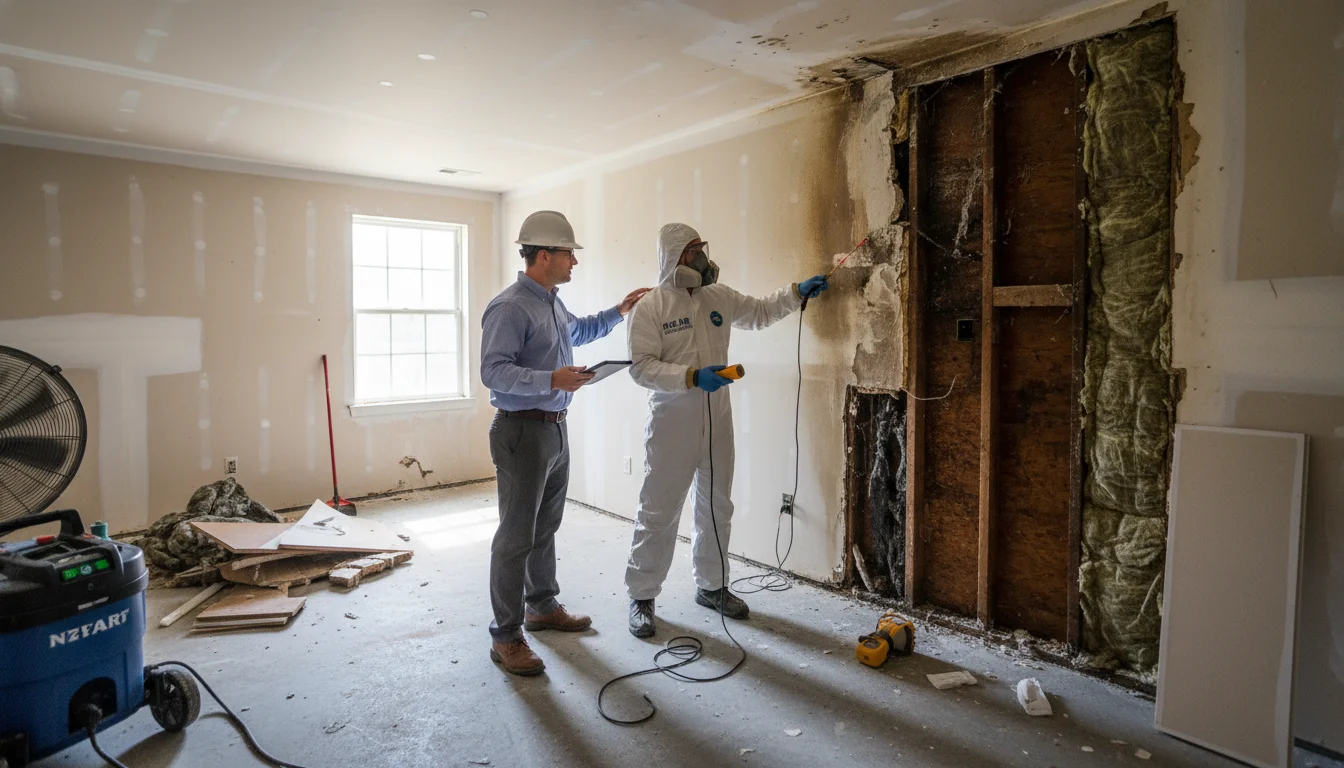
Georgia is not a mandatory mold-coverage state. Unlike some states that require insurers to offer mold coverage as part of standard homeowners policies, Georgia leaves coverage decisions entirely to the insurance companies. What this means in practice is that standard HO-3 policies (the most common type in Georgia) typically cover mold remediation only when the mold is the direct result of a covered peril.
A covered peril is a specific, sudden, and accidental event listed in your policy. Common covered perils include: sudden plumbing leaks (a burst pipe, not a slow drip that has been going for months), water damage from extinguishing a fire, accidental overflow from an appliance (washing machine, water heater), storm damage that allows water intrusion (wind-driven rain through a damaged roof), and ice dam damage. What is generally not covered: mold resulting from long-term humidity, condensation, or poor ventilation, mold from deferred maintenance (a roof you knew was leaking for years), flood-related mold (flood insurance is a separate policy), and mold from groundwater seepage through foundation walls.
The critical distinction Georgia adjusters look for is whether the water event was sudden and accidental versus gradual and maintenance-related. This single distinction determines the outcome of most mold claims in the state. Even when mold is covered, most Georgia policies include a mold sub-limit — typically $5,000 to $10,000 for mold remediation specifically, even if the overall water damage claim is much larger.
Step-by-Step Claim Process
Step 1: Document the Damage Thoroughly
Before you touch anything, document everything. Take clear, well-lit photos of all visible mold, the affected areas, and the moisture source if you can identify it. Use your phone to take a video walkthrough, narrating what you see and when you first noticed it. Photograph the water source if visible: a leaking pipe, a water stain on the ceiling, standing water in a basement. Take close-up photos of the mold and wide-angle photos that show the affected area in context of the room. If there is a musty odor, document that in writing with dates. Download a humidity monitoring app or buy an inexpensive hygrometer and record readings. The more evidence you have, the harder it is for an adjuster to minimize the scope of damage.
Step 2: Mitigate Further Damage Immediately
Every homeowners policy in Georgia includes a duty to mitigate — meaning you are required to take reasonable steps to prevent additional damage once you become aware of a problem. If a pipe is actively leaking, shut off the water and call a plumber. If water is pooling, use towels, a wet-dry vacuum, or buckets to remove it. Set up fans and dehumidifiers to begin drying the affected area. Keep receipts for everything: the plumber's invoice, the rental dehumidifier, the fans you bought at the hardware store. These mitigation expenses are typically reimbursable as part of your claim, but only if you can document them. Do not begin actual mold removal or demolition before the adjuster inspects unless the situation poses an immediate health risk — and if you do, photograph every step.
Step 3: Review Your Policy for Mold Coverage
Before calling your insurer, pull out your policy declarations page and the full policy document. Look for: the named perils section, which lists what is covered, the exclusions section, which lists what is not covered, any mold, fungus, or rot endorsement or sub-limit, and your deductible amount. Many Georgia homeowners discover at this stage that they have a mold exclusion or a low sub-limit that they were not aware of. If you have an agent, call them first for a frank conversation about what your policy covers before initiating a formal claim. An agent can explain your coverage without the conversation being recorded as a claim.
Step 4: Contact Your Insurer Promptly
Most Georgia policies require you to report a claim "promptly" or "as soon as reasonably possible." Do not delay. When you call, have your policy number ready, be prepared to describe exactly what happened and when, and state clearly that you are reporting a water damage claim that has resulted in mold. Stick to the facts: describe the covered peril that caused the water (the burst pipe, the storm damage, the appliance overflow), and explain that mold has developed as a direct consequence. Avoid speculation about how long the mold has been present or whether it might be from another source. The insurer will assign a claim number and an adjuster who will contact you, typically within 24–48 hours for water damage claims, which most carriers treat as a priority.
Step 5: Get Professional Mold Assessment and Estimate
While waiting for the adjuster, contact a professional mold remediation company for an independent assessment and written estimate. This serves two purposes: it gives you a professional, third-party evaluation of the scope of work that you can provide to the adjuster, and it establishes a baseline for what the remediation should cost, which helps you evaluate whether the insurer's settlement offer is fair. Choose a company that is IICRC-certified and experienced in working with insurance claims. Mold Remediation Hotline provides free estimates and detailed scope-of-work documents suitable for insurance claim submission.
Step 6: Work with the Adjuster
The adjuster will schedule an inspection. Be present for this appointment. Walk through the entire affected area with the adjuster and point out every location where you have seen mold, smelled musty odors, or noticed water staining. Provide copies of your documentation: photos, videos, your professional remediation estimate, and receipts for mitigation expenses. Ask the adjuster to explain your coverage as it applies to this specific situation, including any sub-limits. Take notes during the inspection, including the adjuster's name, contact information, and any statements they make about coverage. If the adjuster says something is not covered, ask them to cite the specific policy language. After the inspection, you will receive a written estimate and settlement offer. Review it carefully against the independent estimate you obtained.
Step 7: Appeal If Denied
If your claim is denied or the settlement offer is substantially below your independent estimate, you have options. First, request a written explanation of the denial with the specific policy language cited. Second, ask for a second adjuster or supervisor review — this is a reasonable request that carriers will often grant. Third, if the insurer's estimate differs significantly from your contractor's, arrange a joint inspection where your remediation contractor and the adjuster walk the property together and reconcile their scopes. Fourth, if you remain unsatisfied, you can file a complaint with the Georgia Office of Insurance and Safety Fire Commissioner, which regulates insurance companies operating in the state. Their Consumer Services Division can be reached at (800) 656-2298 and will investigate complaints about claim handling practices. As a last resort, you may need to consult a Georgia attorney who specializes in insurance bad faith claims.
What Documentation Insurers Require
Insurance companies in Georgia typically require: photos and videos of the damage before any cleanup or demolition, photos of the moisture source if identifiable, a written description of when and how you discovered the problem, receipts for any emergency mitigation work performed, receipts for any repairs or remediation, a professional mold assessment and remediation estimate from a certified contractor, and proof that the cause of the mold was sudden and accidental rather than the result of deferred maintenance or long-term neglect. The burden of proof is on you, the homeowner, to demonstrate that the mold resulted from a covered peril. Insurers are not required to prove that it did not. This is why documentation, especially early documentation, is so critical.
How to Work with a Remediation Company During the Claim Process
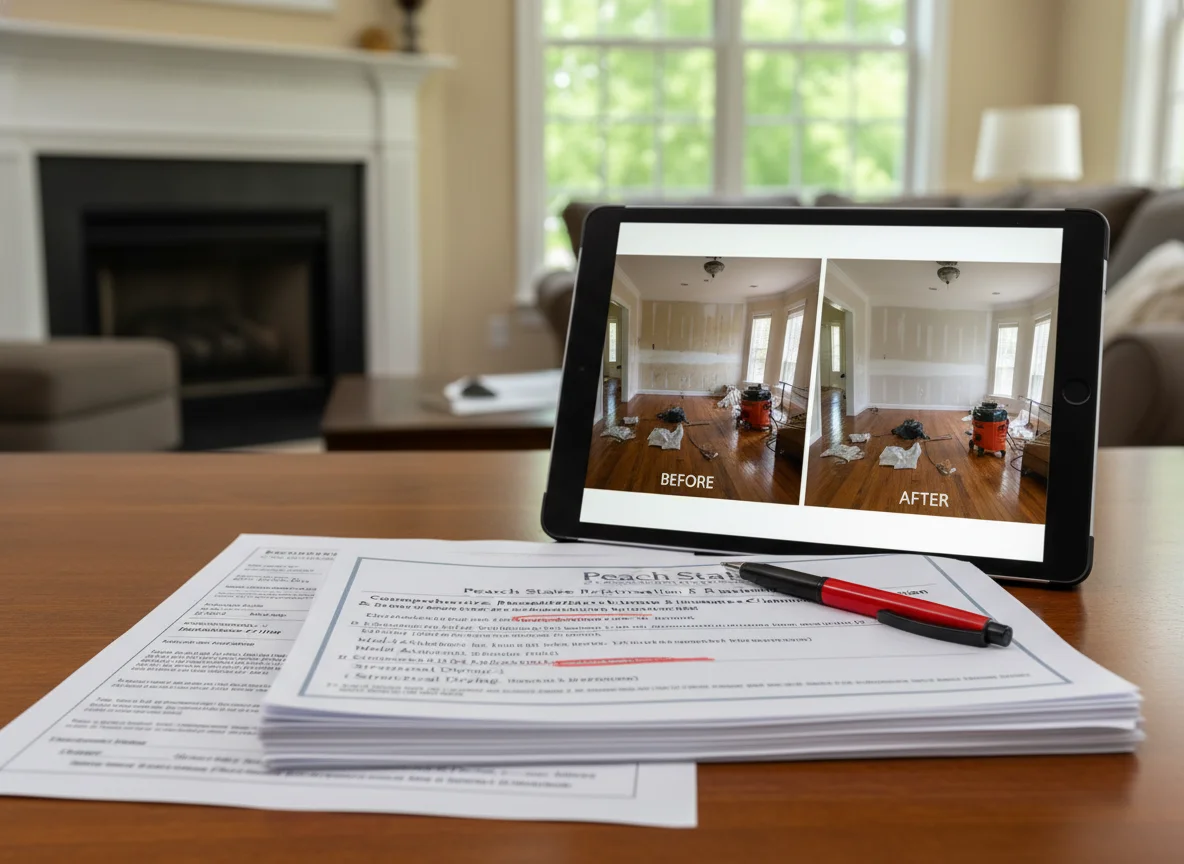
Professional remediation companies that are experienced with insurance claims can be your strongest ally. A reputable company will provide a detailed scope of work that uses industry-standard pricing software like Xactimate, which is the same software most insurance adjusters use. This alignment makes it much harder for an insurer to claim the estimate is inflated. Many remediation companies will communicate directly with your adjuster to explain the scope of work and the medical or structural necessity of each component. They can also provide documentation of IICRC S520 standards (the industry standard for professional mold remediation), which establishes that the recommended work is consistent with accepted professional practice. At Mold Remediation Hotline, we work regularly with Georgia insurance adjusters and understand the documentation and communication standards they expect. We can also provide post-remediation verification testing to confirm that the mold has been successfully removed, which insurers often require before closing a claim.
Tips for Getting Claims Approved
The homeowners who have the most success with Georgia mold claims share several common practices. They report claims immediately, not weeks or months after discovering the problem. They link the mold explicitly to a sudden, covered water event, even if that event occurred weeks before the mold became visible. They document the chain of causation: this pipe burst on this date, we dried the visible water but did not realize moisture had penetrated the wall cavity, mold became visible on this date. They do not use the word "mold" as the initial description of the claim — they describe it as water damage from a covered peril that has resulted in mold, which frames it within the covered portion of their policy. They maintain their home and can demonstrate it — a well-maintained HVAC system, clean gutters, good grading around the foundation, no signs of neglect. And they advocate persistently but professionally, treating the adjuster as a partner in solving the problem rather than an adversary.
Georgia-Specific Resources
The Georgia Office of Insurance and Safety Fire Commissioner oversees insurance regulation in the state and provides consumer resources for navigating claims. Their website at oci.georgia.gov offers guides on homeowners insurance rights, complaint forms, and a searchable database of licensed insurance companies and agents. They also publish an annual consumer complaint ratio that shows which carriers have the highest and lowest complaint rates in Georgia, which can be useful information when choosing an insurer. For Hall County residents, the local Georgia Department of Public Health office can provide information on mold and health concerns that may support your claim documentation.
Related Resources
- Homeowners Insurance and Mold: What Georgia Policies Cover
- Black Mold Exposure Symptoms: Health Risks to Know
- What to Expect During Professional Mold Remediation
- Mold Disclosure Requirements in Georgia Real Estate
Need Help with a Mold Insurance Claim in Georgia?
Mold Remediation Hotline provides professional assessments and detailed estimates suitable for insurance claim submission. Call (332) 220-0303 for a free consultation.