Dealing with pink mold on your ceiling can be a nuisance, but understanding the basics makes it manageable. Here are the main points to remember:
Key Takeaways
- Pink mold isn’t actually mold; it’s a type of bacteria, often Serratia marcescens, that likes damp, warm places.
- It typically shows up on ceilings and walls due to excess moisture, poor ventilation, and leftover soap or body oils.
- While not as dangerous as true black mold, it can cause health issues for some people, especially those with weaker immune systems.
- You can often clean small spots with household cleaners like vinegar or a mild bleach solution, but always ventilate the area.
- Preventing pink mold means controlling moisture, improving airflow, and cleaning regularly to remove its food sources.
Understanding Pink Mold on Ceiling
Seeing a pinkish or reddish film on your ceiling can be a bit unsettling. You might immediately think "mold!" and start worrying about the health risks. But here’s a little secret: what we often call "pink mold" isn’t actually a mold at all. It’s typically a type of bacteria, most commonly Serratia marcescens. True molds are fungi, but this pinkish intruder is a different kind of organism altogether. It loves the same damp, cozy spots that fungi do, but it’s technically crashing the party. This bacterial growth forms a kind of slimy coating, and it really likes environments where there’s moisture and something to feed on, like soap scum or body oils. That’s why bathrooms, with all their steam and residue, are prime real estate for it.
What Is Pink Mold?
So, to be clear, when you spot that pinkish hue on your ceiling, you’re likely looking at a colony of bacteria. While it might share some growth habits with actual mold, it’s biologically different. Think of it like this: a dog and a cat are both pets, but they’re not the same animal. Pink bacteria, like Serratia marcescens, thrive in moist conditions and can feed on organic matter. This is a key distinction because understanding what you’re dealing with helps in figuring out how to get rid of it and, more importantly, how to stop it from coming back. It’s not a fungus, but it can still cause issues if left to grow.
What Does Pink Mold Look Like?
Visually, pink mold can vary a bit. It often shows up as a soft, pinkish-orange to reddish film. Sometimes it looks wet and slimy, almost like a thin gel. Other times, especially if it’s been there a while and started to dry out, it might appear more like a powdery or crusty layer. It’s not usually fuzzy like some true molds. You might first notice it as a faint blush in corners or along edges where moisture tends to collect. Don’t ignore it just because it’s not black or green; its presence signals a problem. It can spread surprisingly fast if the conditions are right, so catching it early is always best. It can look a bit like dried-on food residue at first glance, but it’s usually more uniform and persistent.
Is Pink Mold Actually Mold?
This is the big question, and the answer is generally no. As mentioned, the common culprit, Serratia marcescens, is a bacterium. However, there are some less common instances where a yeast-like fungus, like Aureobasidium pullulans, might cause a similar pinkish appearance. Regardless of whether it’s bacteria or yeast, the underlying issue is usually excess moisture and available nutrients. The term "pink mold" is more of a common name that stuck because it appears in similar damp locations as true molds and can look somewhat alike. For practical purposes in your home, you should treat it with the same caution you would any unwanted growth. If you’re unsure about what you’re seeing, it might be worth getting a professional assessment to determine the exact type of growth.
The key takeaway here is that while the name "pink mold" might be a bit of a misnomer, its presence on your ceiling is a clear indicator of an environmental issue, usually related to moisture, that needs to be addressed promptly to prevent further growth and potential problems.
Causes of Pink Mold Growth
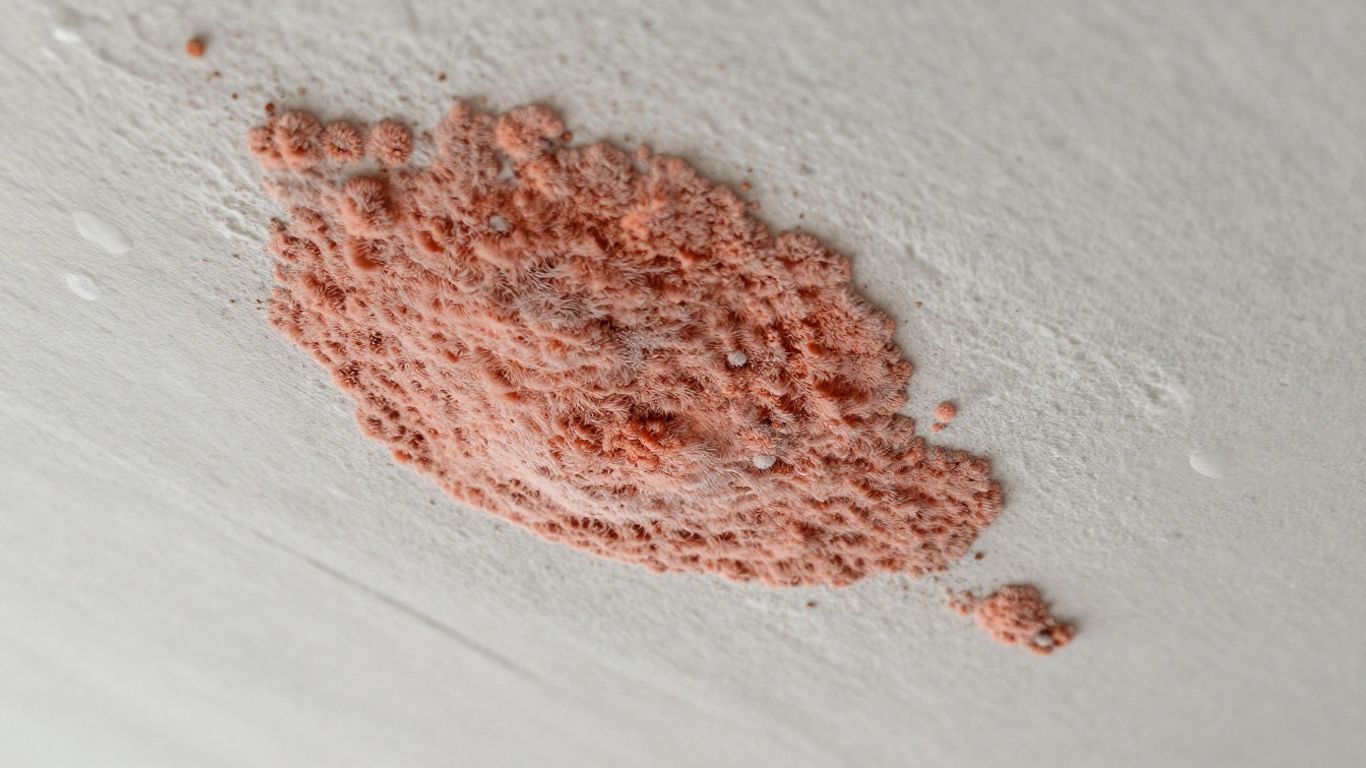
So, you’ve spotted that tell-tale pinkish hue on your ceiling or in the bathroom. It’s easy to just think, "Ugh, mold," but understanding why it’s there is the first step to getting rid of it for good. Turns out, this isn’t even true mold, but a bacteria called Serratia marcescens that’s basically throwing a party in your damp spots. It needs a few things to get going, and once you know what they are, you can start to fight back.
Excess Moisture and Humidity
This is the big one, folks. Pink bacteria absolutely loves moisture. Think about places in your home where water tends to hang around. Bathrooms are obvious culprits, with all the steam from showers and baths. But it can also show up under sinks, around leaky pipes, or anywhere condensation builds up. If the humidity in a room stays above 60% for too long, you’re basically inviting this stuff to set up shop. It forms these slimy layers, called biofilms, that stick to wet surfaces and create a perfect little home for itself. It can even survive in a pretty wide range of temperatures, so don’t think a cool room is safe if it’s also damp.
The key takeaway here is that persistent dampness is the primary driver. If a surface isn’t drying out properly, it’s a potential breeding ground.
Poor Ventilation
This goes hand-in-hand with moisture. If you have a bathroom with no exhaust fan, or you never open a window after a steamy shower, that moisture just sits there. It doesn’t have anywhere to go. Stagnant air is like a welcome mat for pink bacteria. It allows the humidity to build up and settle into all the nooks and crannies. Even if you’re not taking super long, hot showers, if the air isn’t moving, the moisture lingers. Good airflow helps to dry things out and prevents that humid environment from becoming a bacterial buffet. Making sure your bathroom ventilation is working properly is a big deal.
Organic Residues and Soap Scum
Okay, so moisture is the party host, but what’s the food? Pink bacteria has a particular fondness for fatty substances. That means soap scum, shampoo residue, body oils, and even leftover food particles in the kitchen can be a feast. Every time you use soap or shampoo, tiny bits get left behind. In damp areas, these residues don’t just disappear; they build up. This creates a nutrient-rich environment that the bacteria can easily feed on. It’s why you often see it around shower curtains, tiles, and sink areas. Even things like non-medicated soap dispensers can become contaminated because they’re constantly in contact with these residues. So, that little bit of gunk you sometimes miss when cleaning? The pink bacteria definitely notices it.
Health Risks Associated with Pink Mold
Okay, so we’ve talked about what pink mold is and where it likes to hang out. Now, let’s get real about why you don’t want it chilling on your ceiling or anywhere else. While it might not be as notorious as some other types of mold, this pink stuff, which is actually a bacterium called Serratia marcescens, can still cause some unwelcome health issues. It’s not just a visual annoyance; it’s something to take seriously, especially for certain folks in your household.
Risks for Vulnerable Populations
This is where we really need to pay attention. If you have little ones, elderly parents, or anyone in the house with a less-than-robust immune system, pink mold can be a bigger deal. Think babies, people undergoing cancer treatment, or those with chronic illnesses. Their bodies just aren’t as equipped to fight off even minor invaders. For them, exposure can lead to more significant problems than just a sneeze.
Potential for Infections
While it’s rare in a typical home setting, pink mold can cause infections. It’s known to get into the body through open cuts or wounds, or even through the eyes. In healthcare settings, it’s been linked to wound infections and even urinary tract infections. So, if you have a scrape or a cut, try to keep that area away from any pink-ish patches you find. It’s also a good reminder to keep those bathroom surfaces clean, especially if you wear contact lenses.
General Health Concerns
Even for generally healthy people, prolonged exposure or direct contact can lead to issues. You might notice:
- Respiratory problems: Things like coughing, wheezing, or general difficulty breathing can pop up.
- Allergic reactions: Sneezing, itchy eyes, and a stuffy nose are common complaints.
- Skin irritation: Redness, rashes, or general itchiness can occur if your skin comes into contact with it.
It’s important to remember that while pink mold isn’t a true mold and doesn’t produce the same kind of toxic spores, it’s still a living organism that can cause irritation and, in some cases, more serious health concerns. Ignoring it because it’s ‘just pink’ is a mistake.
If you’re dealing with persistent pink mold, especially if it keeps coming back after cleaning, it might be a sign of a larger moisture problem that needs addressing. Sometimes, you might need to look into things like tuckpointing if water is getting into the structure, which can create the damp conditions mold loves.
Effective Pink Mold Removal Strategies
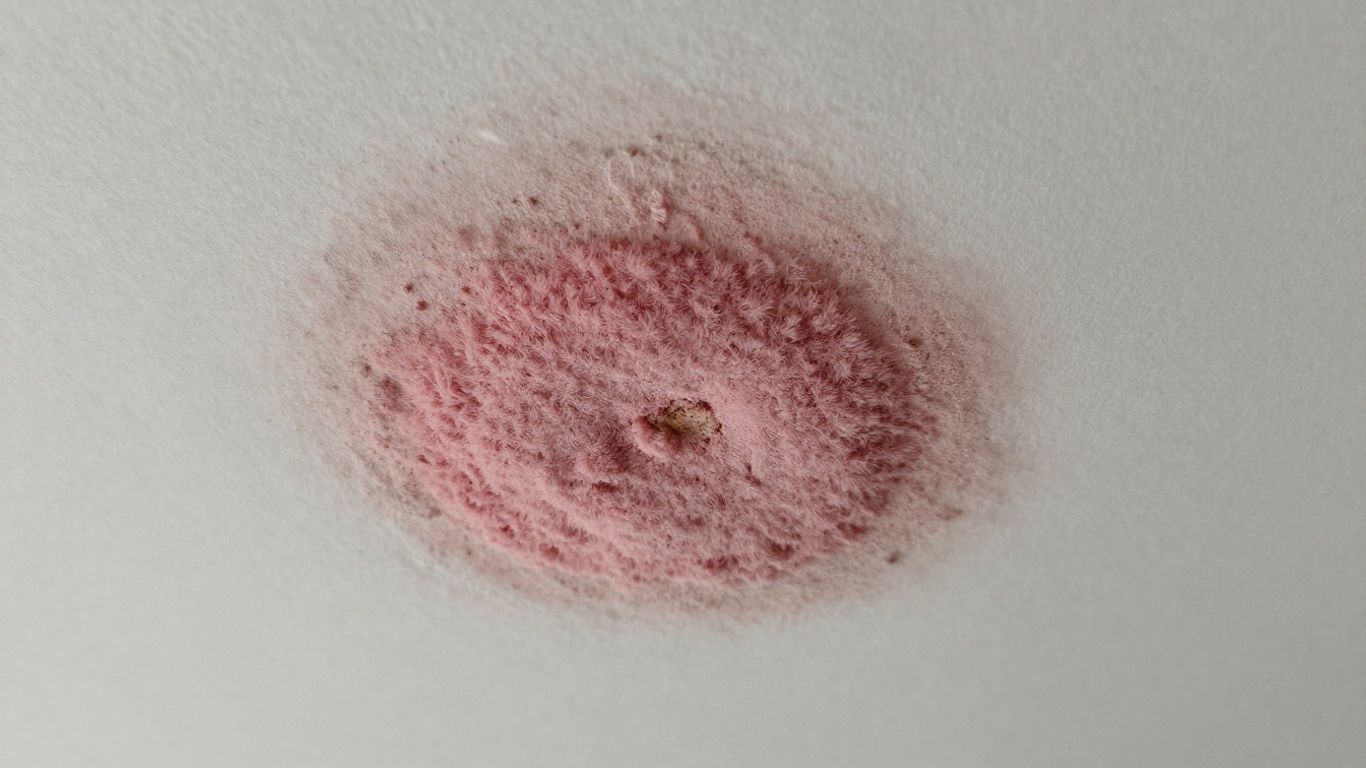
Alright, so you’ve spotted that tell-tale pinkish film on your ceiling. Don’t panic just yet. Tackling this stuff is usually doable, but you need to go about it the right way. It’s not quite like regular mold, but it’s definitely a nuisance that needs attention.
Preparing the Area for Cleaning
Before you even think about scrubbing, you need to get the area ready. This means protecting yourself and the stuff around the affected spot. Always wear gloves and a mask – you don’t want to breathe in whatever this stuff is or get it on your skin. If the area is large, you might want to cover furniture or floors with plastic sheeting. Open up windows for some airflow, but try not to create a strong draft that could spread spores around. It’s a bit of a balancing act.
Using Natural Cleaning Solutions
For smaller patches, you can often get away with using common household items. White vinegar is a pretty good go-to. Just spray it directly onto the pinkish area and let it sit for about 10 to 15 minutes before you scrub it away. Another option is a paste made from baking soda and water; it’s a bit abrasive and can help lift the grime. You can also use 3% hydrogen peroxide, which acts as a disinfectant. Let it sit for a good 10 minutes before wiping it down. These methods are great for regular maintenance cleaning and aren’t as harsh as some commercial products.
Remember, these natural cleaners work best on non-porous surfaces and for minor issues. If the pink stuff has really dug into porous materials like drywall or wood, it might be a tougher battle.
When to Consider Professional Removal
Sometimes, you just can’t win the fight yourself. If the pink growth covers a large area, say more than three square feet, or if it keeps coming back no matter what you do, it’s time to call in the pros. They have the specialized equipment and knowledge to deal with bigger problems and, importantly, to find out why it keeps happening. This is especially true if anyone in your household has health issues that could be made worse by exposure. Professionals can also handle situations where the growth might be in your HVAC system, which is definitely not a DIY job.
Here’s a quick rundown of when DIY might be okay versus when you should really get professional help:
- DIY Appropriate For:
- Small spots (less than 1 square foot)
- New growth on hard, non-porous surfaces
- No one in the house has health concerns related to it
- You have good ventilation while cleaning
- When to Call Professionals:
- Growth covers more than 3 square feet
- It keeps coming back after you clean it
- You suspect it’s in your air ducts
- Family members have health issues or are very young/old
- It’s on porous materials like drywall or wood
Preventing Pink Mold Recurrence
So, you’ve tackled the pink stuff and gotten rid of it. Great job! But honestly, the real work isn’t over yet. If you don’t do anything else, that pink gunk will likely be back before you know it. It’s all about making your bathroom less inviting for these little bacteria. Think of it like this: you wouldn’t leave a buffet open for unwanted guests, right? Same idea here.
Improving Ventilation Habits
This is probably the biggest one. Pink mold absolutely loves damp, stagnant air. Making sure air can move freely is your first and best defense. Always, always run your exhaust fan when you’re showering or taking a bath. And don’t just turn it off the second you step out; let it run for at least 20-30 minutes afterward to really clear out the moisture. If you don’t have an exhaust fan, or if it’s not cutting it, try opening a window. Even cracking it a bit helps a lot. It’s about getting that humid air out and fresh air in. This simple step can make a huge difference in preventing mold growth.
Regular Cleaning and Maintenance
Consistency is key here. You can’t just clean once and expect it to stay away forever. Think of it as a weekly routine. Get into the habit of wiping down shower walls, tiles, and even the glass doors after you use them. A quick swipe with a squeegee or a microfiber cloth takes seconds but stops water from sitting there and feeding any potential growth. Also, pay attention to the grout lines and the base of your fixtures – these are prime spots for pink mold to reappear.
- Wipe down wet surfaces after every shower.
- Clean grout and caulking weekly.
- Launder shower curtains and bath mats regularly.
- Address any soap scum buildup promptly.
Controlling Moisture Levels
Beyond just ventilation, you need to actively manage moisture. This means fixing any little drips from faucets or showerheads right away. Even a slow drip creates a constant damp spot. If you have areas that tend to stay damp, like under sinks or in laundry rooms, consider using moisture-absorbing products. Keeping humidity below 60% is a good target. It might sound like a lot, but these small, consistent actions really add up to keep your home less hospitable to pink mold. It’s much easier to prevent it than to constantly scrub it away, and keeping things clean is a big part of that.
The goal is to make your bathroom environment as dry and clean as possible between uses. This means not just cleaning up visible messes but also addressing the underlying conditions that allow bacteria to thrive. Small, consistent efforts are far more effective than infrequent, deep cleans.
Final Note: Keeping Your Home Pink Mold-Free
Pink mold might look a bit alarming, but it’s usually a sign of too much moisture and not enough airflow. Remember, it’s technically bacteria, not true mold, but it still needs to be dealt with. By understanding why it shows up – usually dampness and leftover soap – and taking steps to clean it and prevent it, you can keep your home looking and feeling fresh. Good habits like wiping down wet spots and using fans make a big difference. A clean, dry home is a healthy home for everyone.
Frequently Asked Questions
What exactly is pink mold?
Pink mold isn’t really mold at all. It’s a type of bacteria that looks pink or reddish and likes to grow in wet spots, like on your ceiling or in the bathroom. It’s not usually a big health threat for most people, but it’s good to clean it up.
Why does pink mold appear on my ceiling?
It shows up on ceilings because that’s often where moisture collects, especially if there’s a leak or high humidity. Poor air circulation lets it settle in and grow, particularly if there are any leftover organic bits like dust or soap residue.
Is pink mold dangerous to touch?
For most healthy folks, touching pink mold won’t cause major problems. However, it’s best to avoid it. If it gets into a cut or wound, or if you have a weakened immune system, it could potentially cause an infection.
How can I clean pink mold myself?
For small spots, you can try cleaning with a solution of white vinegar and water, or a mild bleach and water mix (about 1 part bleach to 10 parts water). Make sure the area is well-ventilated when you clean. Scrub the area gently and then rinse and dry it well.
Why does pink mold keep coming back?
If pink mold keeps reappearing, it’s a strong sign that the main problem hasn’t been fixed. This usually means there’s still too much moisture or not enough air moving around. You need to find and stop the source of the dampness for good.
When should I call a professional for pink mold?
You should think about calling in experts if the pink mold covers a large area, like more than a few square feet. Also, if it keeps coming back no matter what you do, or if you suspect it’s growing inside walls or in your air vents, it’s time for professional help.
