When you find water in the basement, the first hour decides the cost of the next three months. closet mold 47226 Clifford IN in Clifford, IN should address in a single phone call: live dispatcher answers, truck rolls within the hour, photographs document the loss before any cleanup, and the work plan ships with a written specification plus moisture map. Mold Remediation Hotline runs that exact sequence for every 47226 emergency.
About Closet Mold 47226 Clifford IN in Clifford, IN
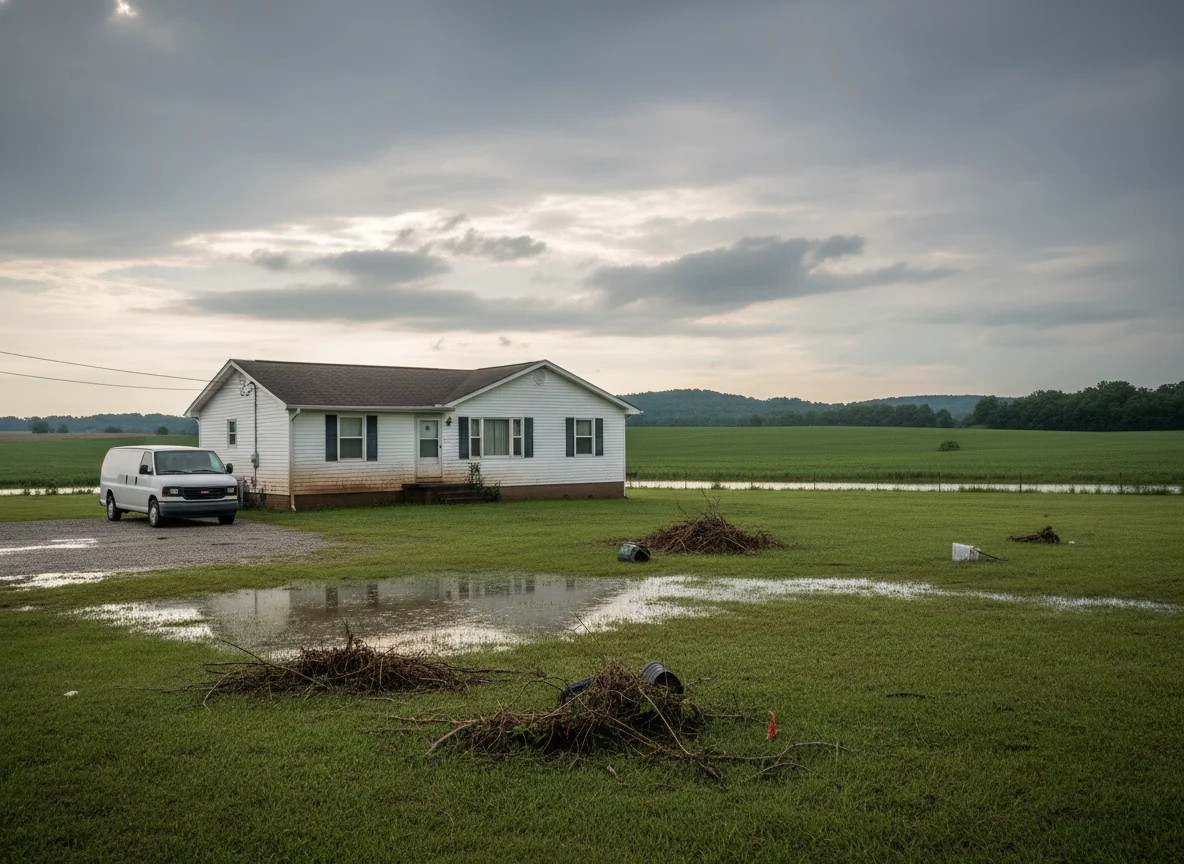
In Clifford area, basement flooding findings cluster by water source. Sump pump failure shows uniform water depth across the basement floor. Foundation seepage shows water concentrated near specific wall sections. Sewer backup shows water entering from floor drains with sewage odor. Burst pipe shows a clear point-source pattern. Indiana farmland and small-town housing stock built on clay subsoil that pushes hydrostatic pressure against block foundations biases the seasonal mix toward sump failure and seepage.
Numerous Southern Indiana basement flood projects bridge two trade categories: emergency water damage restoration (extraction, drying, antimicrobial) and rebuild restoration (drywall, flooring, baseboard, trim). Mold Remediation Hotline handles the first category and coordinates contractor handoffs for the second. Indiana farmland and small-town housing stock built on clay subsoil that pushes hydrostatic pressure against prevent foundations usually means we also recommend sump-pump upgrades and drain-tile inspections to prevent recurrence.
Why Basement Flooding Matters for Clifford Residents
Two simultaneous problems open the moment water hits the basement floor: airborne mold spores from saturated drywall and carpet pad, AND structural damage to sill plates, floor joists, and electrical panels. Either can run into five figures if left unaddressed.
Subfloor mold remediation that skips the source-fix is just a delay. If a slow plumbing leak caused the colony, remediation without fixing the leak guarantees a return within 6-18 months. Source diagnosis is the most vital inspection deliverable.
Warning Signs in Clifford, IN 47226 Homes
- Buckled or warped hardwood/laminate flooring near a basement-adjacent wall
- Wet baseboards, drywall, or carpet pad after a recent storm
- Active dripping or water flow that homeowner cannot stop
- Sewer odor without visible water (often precedes a backup event)
- Cold-feeling concrete floor in normally-dry weather (active moisture)
- Sewage backup from floor drains, toilets, or laundry-room drains
Our Basement Flooding Remediation Services in Clifford, IN
Every closet mold 47226 Clifford IN call in 47226 runs through the same inspection-first scoping procedure — the demo plan never starts until the affected zone is mapped.
Inspection & Moisture Mapping
Industrial water extraction equipment removes 99%+ of standing water in a single visit. In addition, pumping is the easy phase; what comes next (drying) determines whether mold colonization happens. That's how crawl-space vapor barriers tearing at the seams and letting ground moisture wick upward ends up in a remediation scope months later.
Demolition & Material Removal
Commercial dehumidification typically takes 4-7 days in {state_full} climate. We don't pull equipment until every reading hits target — premature pull-out causes return mold calls. What homeowners often miss: antimicrobial fog penetrating the wall-cavity behind a knee-wall the kit can't see directly.
Structural Drying
Surface mold removal happens in this order: sealed zone, demolition of saturated porous materials, HEPA vacuuming of remaining surfaces, antimicrobial fogging, drying. Skipping or reordering any stage compromises the outcome.
Containment Setup
After extraction, mold inspection begins: thermal imaging to locate hidden saturation, pin moisture meters on every wall and sill, surface tape-lifts for visible proliferation, and an ERMI baseline air test. Notably, the drying plan is written from this data.
Antimicrobial Treatment & Clearance
Our prevention scope covers four typical failure modes: pump capacity (size + age + battery backup), drainage (French drain + downspout extension), waterproofing (foundation membrane + crack repair), and grading (slope away from foundation).
How Our Remediation Process Works
Eight phases on every Clifford, IN 47226 basement flood call. On top of that, the whole sequence is calibrated to IICRC S500 water damage restoration standards: Each one has a sign-off photo and humidity reading.
- Call intake. A live dispatcher records the visible signs, suspected moisture source, and crawl-space or basement access. Inspection slot booked within 48 hours.
- On-site inspection. Moisture mapping, thermal imaging, air sample, surface tape-lift. Written scope before any demo.
- Industrial drying. LGR dehumidifiers and axial air movers run continuously for 3-7 days. Pin-type readings logged daily.
- Remove compromised material. Sheathing cut back to known-clean wood plus 6-12 inch margin. HEPA-filtered wet vac handles chips and dust.
- Bag-out. Contaminated material bagged under EPA protocol, hauled under sealed conditions.
- Treatment. EPA-registered antimicrobial fogging on all exposed framing, joists, and adjacent dry sheathing. Species-specific where lab data is available.
- Build containment. Negative air pressure, sealed perimeter, PPE swap chamber, smoke-tested for leaks before demo begins.
- Clearance. Third-party air sample plus surface verification. Written report before any rebuild.
Expert Experience: What We've Seen in Clifford, IN
Most flooded basement calls in Clifford, IN 47226 share three early signs that homeowners missed: cool/damp basement in the weeks before the flood, efflorescence (white powder) on block walls, and musty smell when HVAC kicks on. Acting on them pre-flood cuts costs by 80%. Indiana farmland and small-town housing stock built on clay subsoil that pushes hydrostatic pressure against block foundations produces all three regularly.
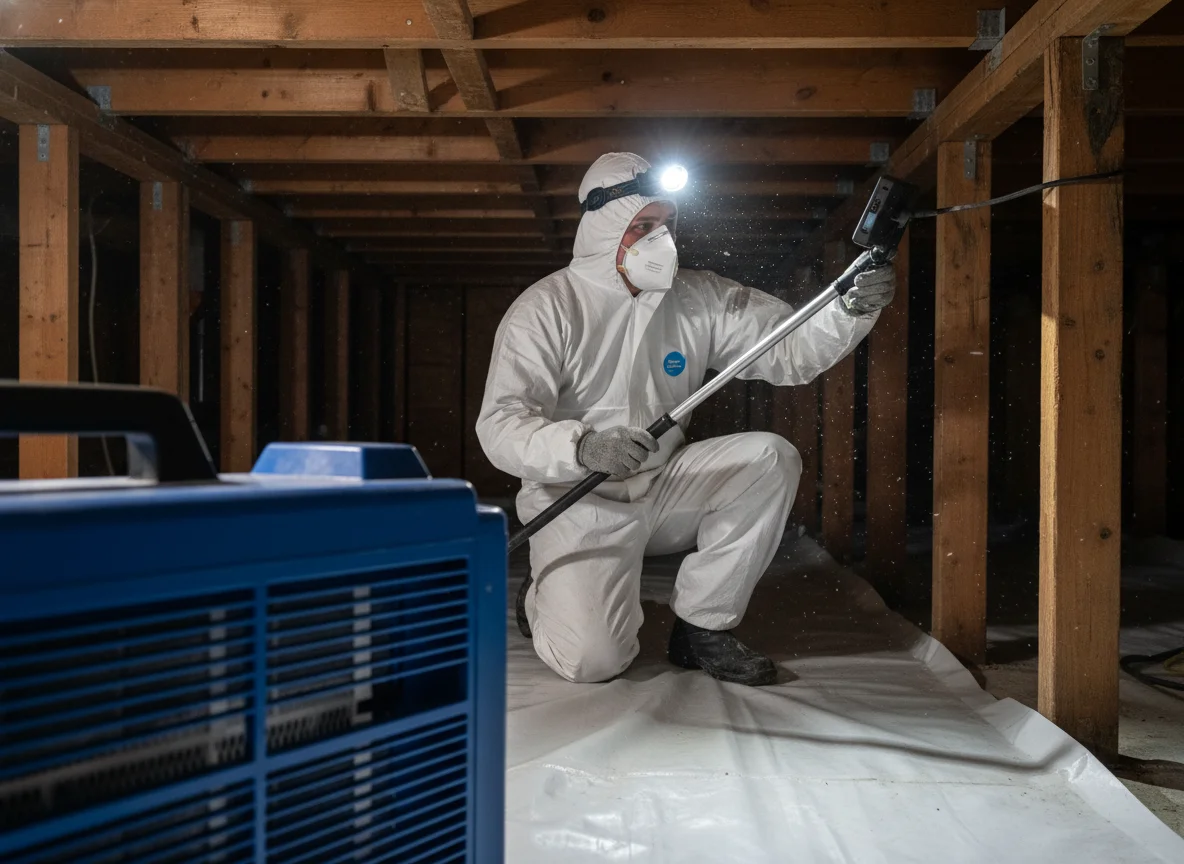
Seasoned flood crews handle cross-contamination prevention obsessively. Run a wet vac through a basement without containment and spores migrate up through the floor system into the entire HVAC. HEPA-filtered negative air machines, polyethylene barriers at the basement stairwell, dedicated boot covers — that's how a basement-only concern doesn't become a whole-house mold case.
If you're in 47226 and you've found visible mold on subfloor sheathing, stop reading and grab the phone. On top of that, we'd rather take a precautionary inspection at 2 a.m. than rebuild your kitchen floor next year.
What Our Clifford Customers Say
"Stachybotrys behind the kitchen wall. Beyond that, they cut, contained, removed, treated, and tested under EPA protocols. The detail most contractors skip is thermal-imaging cameras revealing wet drywall the eye still reads as dry.
— Karen M., Clifford
"Crawl space mold from a vapor-barrier failure. In addition, they handled the remediation, recommended encapsulation, and coordinated with a contractor for the follow-up. Underneath the obvious damage is usually the way a sump-pump check valve fails open and lets discharged water cascade right back into the pit.
— Bryan T., Clifford
"Found mold growing in the basement after a slow plumbing leak ran for months. Beyond that, crew did the full inspection, gave us a written quote, and finished the remediation in under a week. Field reality: the slow stain bloom on a finished ceiling that the homeowner attributes to roof leaks for two seasons before discovering the bathroom-overflow upstream is the kind of finding that reshapes an outline.
— Daniel R., Clifford
Pros and Cons of DIY vs. Professional Basement Flooding Remediation
DIY Approach
Pros: If the source is a known recent plumbing leak and the patch is genuinely surface-only, basic DIY containment and bleach treatment may suffice. Keep in mind, rare.
Cons: Without thermal imaging and moisture readings, you don't recognize the actual affected zone. Yet, without ERMI clearance, no proof of completion. Without HEPA filtering during demo, spore release contaminates surrounding rooms.
Professional Remediation
Pros: Inspection precedes specification. In addition, clearance air test plus dampness log. EPA-registered antimicrobial. Demo plan based on humidity map, not just visual. HEPA sealed zone.
Cons: Required if you intend to file an insurance claim or sell the home within 5 years. Just as important, higher initial cost than DIY.
Tips to Prevent Basement Flooding in Your Clifford Home
- Test sump pumps every spring — replace every 5-7 years even if working
- Install or replace vapor barriers before they tear or shift out of place
- Schedule a crawl-space inspection every 18 months — most basement flood starts there
- Inspect crawl-space insulation annually for sagging (indicates moisture saturation)
- Keep refrigerator and ice-maker supply lines in plain view; never hide them behind cabinets
- Add a battery-backup sump pump in case of power loss during storms
- Keep gutters clear and downspouts discharging 6+ feet from the foundation
Service Area Context: 47226
Operational context for 47226: average dispatch-to-arrival window during normal traffic is approximately 31 minutes. On top of that, each case gets the same inspection-first scoping process. About 56% of basement flood projects we run in 47226 include crawl-space-driven moisture rather than direct plumbing or roof intrusion. Our staff has logged approximately 16 basement flood cases in this ZIP area over the past 12 months.
Pre-Call Checklist for Clifford IN Homeowners
Before you call us, run through this short checklist — it speeds up the triage and improves the accuracy of your insurance file:
- Have you avoided running the HVAC system (it spreads spores and humidity)?
- Have you photographed the standing water and any visible damage BEFORE moving anything?
- Have you avoided wading through standing water near submerged outlets or appliances?
- Have you moved undamaged belongings to a higher floor or dry area?
- Have you noted any tenants, children, or immunocompromised household members?
See Our Crew in Action
Service Area Map
Conclusion
Every closet mold 47226 Clifford IN emergency we close in Clifford, IN 47226 ends the same way: a written file that satisfies your insurance carrier. A basement dried below moisture-meter thresholds, and a post-remediation air specimen confirming no mold colonization. That consequence is what skilled response delivers — not just a pumped-out basement.
Frequently Asked Questions About Closet Mold 47226 Clifford IN
How many days will closet mold 47226 Clifford IN take in my Clifford, IN home?
Plan on 7-10 days for a typical Clifford, IN 47226 basement flood job. Even so, drying is the bottleneck, not demolition. We can't pull LGR dehumidifiers until dampness readings hit target on every joist face.
What kind of warranty do you offer on basement flood work?
Our standard warranty covers the remediated zone for 12 months IF the underlying dampness source has been corrected. The warranty doesn't cover new mold from a NEW humidity event (distinct leak, different cause). Most failures are new sources, not failed remediation.
Is post-remediation testing really necessary?
Yes — for insurance claims, house sales, and your own peace of mind. Equally important, third-party clearance air sampling proves the remediation was effective. Without it, you have no defense if the buyer or carrier disputes the job later.
Will my homeowners insurance cover closet mold 47226 Clifford IN?
Most Indiana policies cover basement flood when caused by a sudden, accidental water event (burst pipe, appliance leak, sewer backup). Equally important, long-term seepage or humidity-driven mold is typically excluded. Documentation is everything — photographs, humidity readings, air samples — and we supply all of it.
Why is basement flood considered worse than surface mold?
Subfloor mold remediation requires partial demolition because the colony lives inside the wood, not on its surface. What's more, subfloor job is a multi-day project; surface is often one day. Surface mold can sometimes be HEPA-vacuumed and treated with EPA-registered antimicrobial.
What should I do after closet mold 47226 Clifford IN to keep it from recurring?
After clearance, install humidity monitoring near the previously affected zone. What's more, if plumbing, replace the failed fixture and add a leak detector. Recurrence rate at 5 years on properly-completed jobs is under 5 percent. If the source was crawl-space humidity, full encapsulation eliminates recurrence.
How risky is DIY closet mold 47226 Clifford IN in Indiana?
Risk depends on size and species. Just as important, the ERMI clearance test reveals what DIY missed. Surface cleaning of minor patches: lower risk. What homeowners often miss: spring-thaw groundwater seeping through cold-joint cracks in poured-foundation walls.
What should I do before the crew arrives?
Pre-arrival: photograph everything in present say, clear the affected room. Locate the water source if known, identify the access points to the subfloor (crawl space, basement ceiling), and have your insurance information ready.
Subfloor mold remediation pricing in Clifford, IN — what should I expect?
Costs vary by outline. Worth noting, whole-basement work can clear $25K. Whole-room subfloor replacement with joist sistering can hit $5K-$15K. A 4x4 ft patch with no joist work runs $1,500-$3,500. That's how the felt-like, dark-green pile of mature Aspergillus colonies growing on water-damaged plywood subfloor ends up in a remediation scope months later.
Can you do subfloor remediation after a sewer backup in Clifford, IN?
Yes. Category 3 black water requires IICRC S520 biohazard protocols. Beyond that, full PPE, and disposal of all porous contact materials. Our crews are certified for both water and microbial remediation under combined S500/S520 standards.
Trusted Sources & References
- Centers for Disease Control and Prevention — Basic Facts about Mold and Dampness
- Environmental Protection Agency — A Brief Guide to Mold, Moisture, and Your Home
- Institute of Inspection, Cleaning and Restoration Certification — IICRC S500 Water Damage Restoration Standard
- Federal Emergency Management Agency — Dealing with Flood Damage
- U.S. Department of Housing and Urban Development — Healthy Homes Mold Resources