Searching ceiling mildew removal 47226 Clifford IN usually starts with shock and ends with a question about insurance. Clifford, IN 47226 homeowners trust Mold Remediation Hotline because the same team handles the live emergency (water extraction, structural drying) AND the insurance documentation (photographs, dampness readings, written scope) under one workflow. Combining those two phases is what changes a claim from "denied" to "approved within 30 days." Both are solvable with one call.
About Ceiling Mildew Removal 47226 Clifford IN in Clifford, IN
In Southern Indiana, basement flooding peaks during midwest storm season. In addition, storm cells dump 2-4 inches of rain in a hour, overwhelming city storm drains. Sewer backups follow within 30-60 minutes. Then 24-72 hours later, foundation seepage continues as saturated soil drains against the basement walls. The ceiling mildew removal 47226 Clifford IN emergency window often extends days past the visible storm event.
A typical Clifford, IN basement flood response runs 5-10 days from extraction to clearance. Phases: emergency extraction (hours 0-6), removal of unsalvageable wet materials (day 1-2), structural drying with LGR dehumidifiers (days 2-5), antimicrobial application (day 5), and post-remediation moisture/air-quality verification (day 6-7). Each stage ships with photographs and moisture readings for the insurance file.
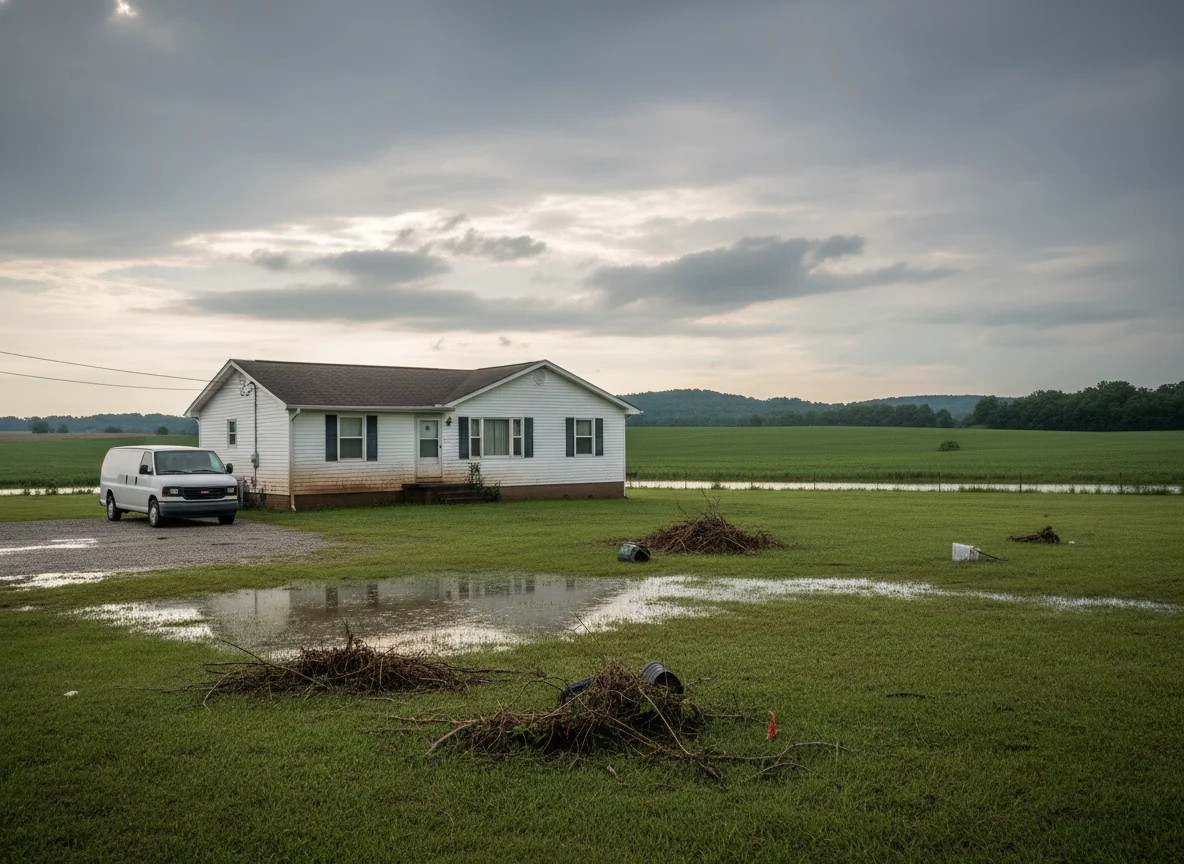
Why Basement Flooding Matters for Clifford Residents
Two simultaneous problems open the moment water hits the basement floor: airborne mold spores from saturated drywall and carpet pad, AND framing harm to sill plates, floor joists, and electrical panels. Beyond that, either can run into five figures if left unaddressed.
Speed matters for one specific reason: every additional month, moisture continues to feed the colony AND wood-decay fungi continue to degrade the structural rating of the sheathing. Both clocks are calibrated to Indiana climate.
Warning Signs in Clifford, IN 47226 Homes
- Wet baseboards, drywall, or carpet pad after a recent storm
- Cracking grout or loose tile in a basement bathroom
- Sewage backup from floor drains, toilets, or laundry-room drains
- Wet or damp drywall tape lines along the bottom 12 inches of basement walls
- Musty or damp smell from the basement that lingers more than 24 hours
- Standing water visible in basement, regardless of depth
Our Basement Flooding Remediation Services in Clifford, IN
Every ceiling mildew removal 47226 Clifford IN call in 47226 runs through the same inspection-first scoping process — the demo plan never starts until the affected zone is mapped.
Antimicrobial Treatment & Clearance
After the cleanup, we walk through the failure source with the homeowner. Every report includes specific prevention recommendations. What homeowners often miss: antimicrobial fog penetrating the wall-cavity behind a knee-wall the kit can't see directly.
Inspection & Moisture Mapping
Standing water gets pulled with industrial-grade extractors. The wrong category-call leads to wrong PPE and wrong disposal — getting this right is the first 5 minutes of every job. Category determination happens on arrival via visual + odor + source assessment.
Containment Setup
Inspection in basement flood response means three things: thermal imaging, humidity mapping, and microbial baseline. We log each on every job because the structural drying timeline and antimicrobial selection depend on those readings.
Structural Drying
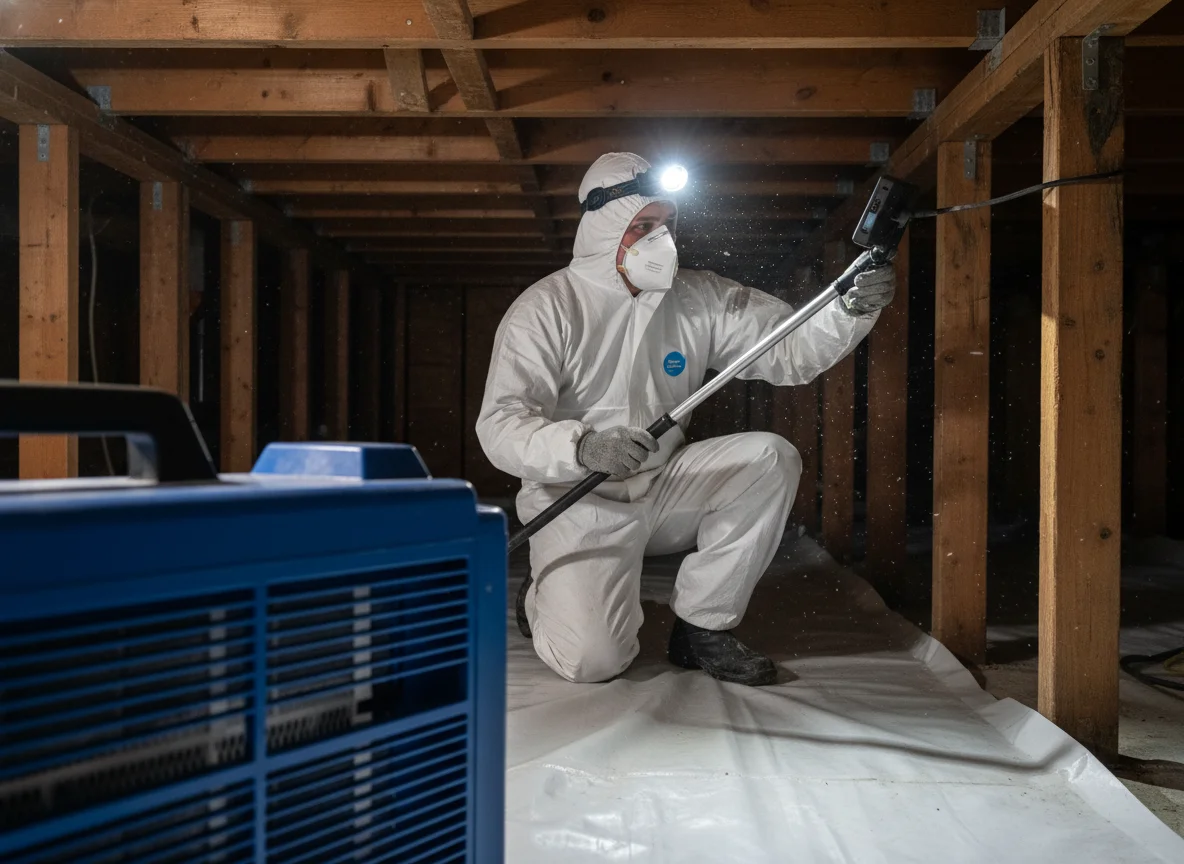
HEPA-filtered negative air machines, containment barriers, removal of contaminated drywall and insulation, and EPA-registered antimicrobial application to all framing and concrete.
Demolition & Material Removal
Structural drying runs 3-5 days minimum on every {city} basement flood. LGR dehumidifiers stage in the affected zone; axial air movers maintain airflow across wet surfaces. Crucially, daily moisture-meter logs document the drying curve.
How Our Remediation Process Works
Eight phases on every Clifford, IN 47226 basement flood call. In addition, the whole sequence is calibrated to IICRC S500 water damage restoration standards: Each one has a sign-off photo and moisture reading.
- Phone triage. Live agent gathers symptoms, suspected source, and access. Inspection scheduled same week.
- Site inspection. Full moisture map plus pre-remediation air sample. Demo scope is written from the data, not the phone call.
- Build containment. Negative air pressure, sealed perimeter, PPE swap chamber, smoke-tested for leaks before demo begins.
- Treatment. EPA-registered antimicrobial fogging on all exposed framing, joists, and adjacent dry sheathing. Species-specific where lab data is available.
- Waste protocol. Every bag of demo material is sealed, labeled with contamination class, and disposed per state mold-waste rules.
- Demo phase. Sheathing demolition under HEPA containment, contaminated material bagged out per EPA protocol.
- Structural drying. LGR dehumidifiers + air movers running 3-7 days. Daily moisture logs.
- Clearance. Third-party air sample plus surface verification. Written report before any rebuild.
Expert Experience: What We've Seen in Clifford, IN
A few seasons of Southern Indiana flood-response job teaches the value of moisture-mapping the entire basement, not just the visible water zone. Equally important, drywall wicking pulls moisture 12-24 inches up from the floor through capillary action. We consistently read humidity on walls and behind baseboards every project — about 60% of the time the wet zone extends past what the homeowner could see.
Insurance and legal point on basement floods: never dispose of sewage-contaminated material as standard trash. Category 3 black water waste requires sealed bag-out and labeled hauling under EPA and state biohazard guidance. Important to flag, mixing it into regular trash is a violation in most Indiana counties.
If you're in 47226 and you've found visible mold on subfloor sheathing, stop reading and grab the phone. We'd rather take a precautionary inspection at 2 a.m. than rebuild your kitchen floor next year.
What Our Clifford Customers Say
"Stachybotrys behind the kitchen wall. Beyond that, they cut, contained, removed, treated, and tested under EPA protocols. Insurance documentation was perfect — claim approved within two weeks."
— Karen M., Clifford
"Crawl space mold from a vapor-barrier failure. Beyond that, they handled the remediation, recommended encapsulation, and coordinated with a contractor for the follow-up. Field reality: the slow stain bloom on a finished ceiling that the homeowner attributes to roof leaks for two seasons before discovering the bathroom-overflow upstream is the kind of finding that reshapes a scope.
— Bryan T., Clifford
"Found mold growing in the basement after a slow plumbing leak ran for months. Just as important, clearance air sample came back clean." Crew did the full inspection, gave us a written quote, and finished the remediation in under a week.
— Daniel R., Clifford
Pros and Cons of DIY vs. Professional Basement Flooding Remediation
DIY Approach
Pros: If the source is a known latest plumbing leak and the patch is genuinely surface-only, basic DIY isolation and bleach treatment may suffice. On top of that, rare.
Cons: Without thermal imaging and moisture readings, you don't know the actual affected zone. Here's the catch: without ERMI clearance, no proof of completion. Without HEPA filtering during demo, spore release contaminates surrounding rooms.
Professional Remediation
Pros: Inspection precedes scope. Clearance air sample plus moisture log. HEPA containment. EPA-registered antimicrobial. That's how attic baffles blocked by blown-in insulation, killing the soffit-to-ridge air path and growing mold on the underside of the roof deck ends up in a remediation scope months later.
Cons: Required if you intend to file an insurance claim or sell the house within 5 years. Beyond that, higher initial cost than DIY.
Tips to Prevent Basement Flooding in Your Clifford Home
- Test foundation drainage every spring — water pooling against the foundation feeds subfloor moisture
- Add a battery-backup sump pump in case of power loss during storms
- Run bathroom exhaust fans for at least 20 minutes after every shower
- Install or replace vapor barriers before they tear or shift out of place
- Pull and inspect any flooring that buckles, lifts, or develops a musty smell
- Test sump pumps every spring — replace every 5-7 years even if working
- Install water-leak detectors near every appliance with a water connection
Service Area Context: 47226
Operational context for 47226: average dispatch-to-arrival window during normal traffic is approximately 31 minutes. About 56% of basement flood projects we run in 47226 involve crawl-space-driven moisture rather than direct plumbing or roof intrusion. Our staff has logged approximately 16 basement flood cases in this ZIP area over the past 12 months. The detail most contractors skip is the musty basement smell that lingers long after the obvious water is gone.
Pre-Call Checklist for Clifford IN Homeowners
Before you call us, run through this short checklist — it speeds up the triage and improves the accuracy of your insurance file:
- Have you contacted your homeowners insurance carrier to open a claim file?
- Have you collected any prior water-damage history (previous floods, prior repairs)?
- Have you moved undamaged belongings to a higher floor or dry area?
- Have you confirmed whether the home is currently for sale or under contract?
- Have you turned off electrical power to the affected area at the breaker (do this from a dry location)?
See Our Crew in Action
Service Area Map
Conclusion
The ceiling mildew removal 47226 Clifford IN question has a 24-hour shelf life before the mold-growth window opens. Just as important, mold Remediation Hotline answers live in Clifford, IN, dispatches IICRC-certified crews to 47226, and gives you a written documentation file suitable for any Indiana homeowners insurance claim. Don't let standing water turn into a six-figure mold issue.
Frequently Asked Questions About Ceiling Mildew Removal 47226 Clifford IN
What's the difference between basement flood and surface mold?
Three differences: basement flood affects structural wood (load-bearing), it grows on the back face you can't observe, and it usually involves wood-decay fungi (not just surface molds). Crucially, each requires a different antimicrobial and scope.
Can I DIY basement flood removal?
The honest answer: most homeowners overestimate their DIY containment capability. On top of that, subfloor mold removal involves cutting wet wood, which aerosolizes massive spore loads. Without HEPA-filtered negative air and complete PPE, you're contaminating the surrounding rooms while you work.
What should I do after ceiling mildew removal 47226 Clifford IN to keep it from recurring?
Address the underlying moisture source: failing plumbing, crawl-space dampness, slab leaks, or appliance pans. Beyond that, our crews supply a written prevention recommendation at the end of every project, and we coordinate with plumbing, waterproofing, or crawl-space specialists for the upstream restore.
What's the typical timeline for a basement flood project in Clifford?
Plan on 7-10 days for a typical Clifford, IN 47226 basement flood project. Yet, we can't pull LGR dehumidifiers until humidity readings hit target on every joist face. Drying is the bottleneck, not demolition.
What should I do before the crew arrives?
Pre-arrival: photograph everything in current state, clear the affected room. Locate the water source if known, spot the access points to the subfloor (crawl space, basement ceiling), and have your insurance information ready.
Do I need ERMI or air sampling after subfloor remediation?
Clearance testing is the one step that makes the remediation defensible. About 30 percent of DIY-quality job fails clearance on first specimen. Trained work that passes clearance has documentary proof the colony is gone.
What about Category 3 black water basement flood?
Yes — Category 3 contamination changes the demo scope (more aggressive removal) and the antimicrobial selection (broader-spectrum). On top of that, all sewer-backup subfloor project in Clifford, IN 47226 gets the maximum-protocol response from our crews.
Will my homeowners insurance cover ceiling mildew removal 47226 Clifford IN?
Most Indiana policies cover basement flood when caused by a sudden, accidental water event (burst pipe, appliance leak, sewer backup). Long-term seepage or humidity-driven mold is typically excluded. That's how the after-flood smell that combines wet carpet pad, drywall paper, and warm-air return ducts cycling spores into bedrooms ends up in a remediation specification months later.
What kind of warranty do you offer on basement flood work?
Our standard warranty covers the remediated region for 12 months IF the underlying moisture source has been corrected. Yet, most failures are new sources, not failed remediation. The warranty doesn't cover fresh mold from a NEW dampness event (distinct leak, varied cause).
How much does Ceiling Mildew Removal 47226 Clifford IN typically cost in Clifford?
Most Clifford basement flood projects fall in the $2K-$8K range. Beyond that, the variables are affected square footage, whether joists need sister-ing, and whether the existing flooring (hardwood, tile, vinyl) can be saved or has to come up. Inspection-first scoping is the only way to get a honest number.
Trusted Sources & References
- Centers for Disease Control and Prevention — Basic Facts about Mold and Dampness
- Environmental Protection Agency — A Brief Guide to Mold, Moisture, and Your Home
- Institute of Inspection, Cleaning and Restoration Certification — IICRC S500 Water Damage Restoration Standard
- Federal Emergency Management Agency — Dealing with Flood Damage
- U.S. Department of Housing and Urban Development — Healthy Homes Mold Resources