A flooded basement occurring at 2 a.m. doesn't adhere to standard business hours. The core question regarding NADCA mold 47226 Clifford IN is really about which service has immediate access to trucks in Southern Indiana and a responsive dispatcher. Mold Remediation Hotline provides both. Our truck-mounted extractors efficiently remove standing water in a single pass; commercial-grade dehumidifiers reduce moisture content to below 16 percent before any reconstruction estimate is provided. Given Indiana's farmland and older housing stock built on clay subsoil, which exerts hydrostatic pressure on block foundations, prompt action is essential—every hour the water remains, the necessary demolition area expands.
About Nadca Mold 47226 Clifford IN in Clifford, IN
Many basement flood situations in Southern Indiana involve two distinct service categories: urgent water damage restoration (which includes extraction, drying, and antimicrobial treatment) and subsequent rebuild restoration (covering drywall, flooring, baseboards, and trim). Mold Remediation Hotline manages the initial category and facilitates contractor transitions for the second. Due to Indiana's farmland and older housing built on clay subsoil, which creates hydrostatic pressure against block foundations, we typically suggest sump-pump enhancements and drain-tile examinations to prevent future occurrences.
The categorization of basement flooding also dictates the insurance discussion. Typical Indiana homeowners policies provide coverage for sudden, accidental water incidents (such as a burst pipe or appliance malfunction) but do not cover groundwater flooding (from a rising water table or surface flood). Sewer backup usually requires a separate endorsement. Regardless, the response for NADCA mold 47226 Clifford IN remains consistent—the scope of insurance coverage is contingent on precise documentation of the cause.
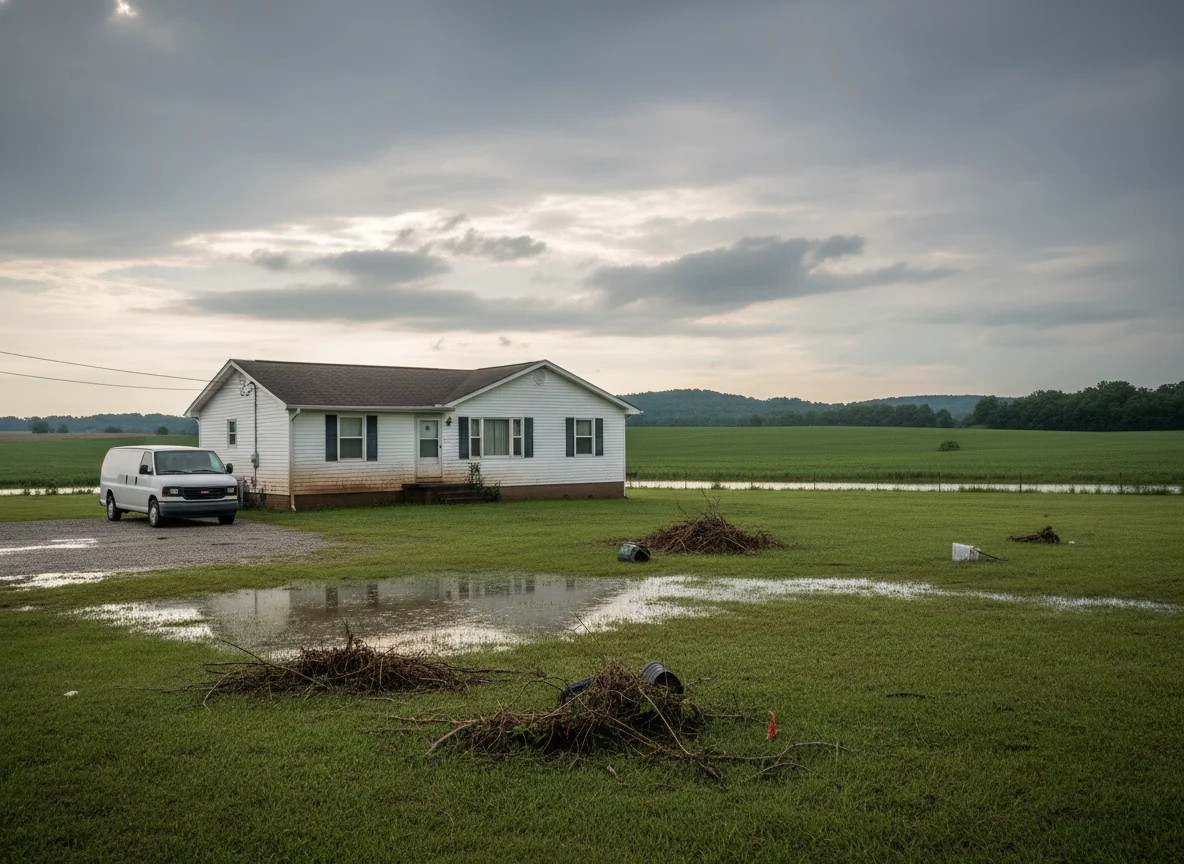
Why Basement Flooding Matters for Clifford Residents
Two reasons why a rapid professional response leads to cost savings: each additional hour of standing water increases the area requiring demolition, and every extra day of saturation renders more porous materials unsalvageable. Acting quickly is significantly more economical.
Wood-decaying fungi spread through the air via spores. Without HEPA-filtered containment during demolition, a localized issue can become a whole-house problem. Indiana's climate exacerbates this by accelerating air mixing between rooms.
Warning Signs in Clifford, IN 47226 Homes
- Loud sump pump cycling on a non-rainy day (groundwater intrusion)
- Visible water staining or efflorescence on basement walls
- Sewage backup from floor drains, toilets, or laundry-room drains
- Cracking grout or loose tile in a basement bathroom
- Sump pump running continuously or short-cycling
- Active dripping or water flow that homeowner cannot stop
Our Basement Flooding Remediation Services in Clifford, IN
Every NADCA mold 47226 Clifford IN request in 47226 follows the same initial inspection process—the demolition strategy is never initiated until the affected zone has been thoroughly mapped.
Demolition & Material Removal
Professional-grade LGR dehumidifiers, air movers, and sealed drying chambers are used to bring affected materials below 16 percent moisture content, adhering to IICRC S500 guidelines.
Inspection & Moisture Mapping
Standing water is removed using industrial-strength extractors. Category assessment is performed upon arrival through visual cues, odor, and source identification. Incorrect category determination results in inappropriate PPE and disposal methods—getting this right is crucial during the first 5 minutes of every task.
Structural Drying
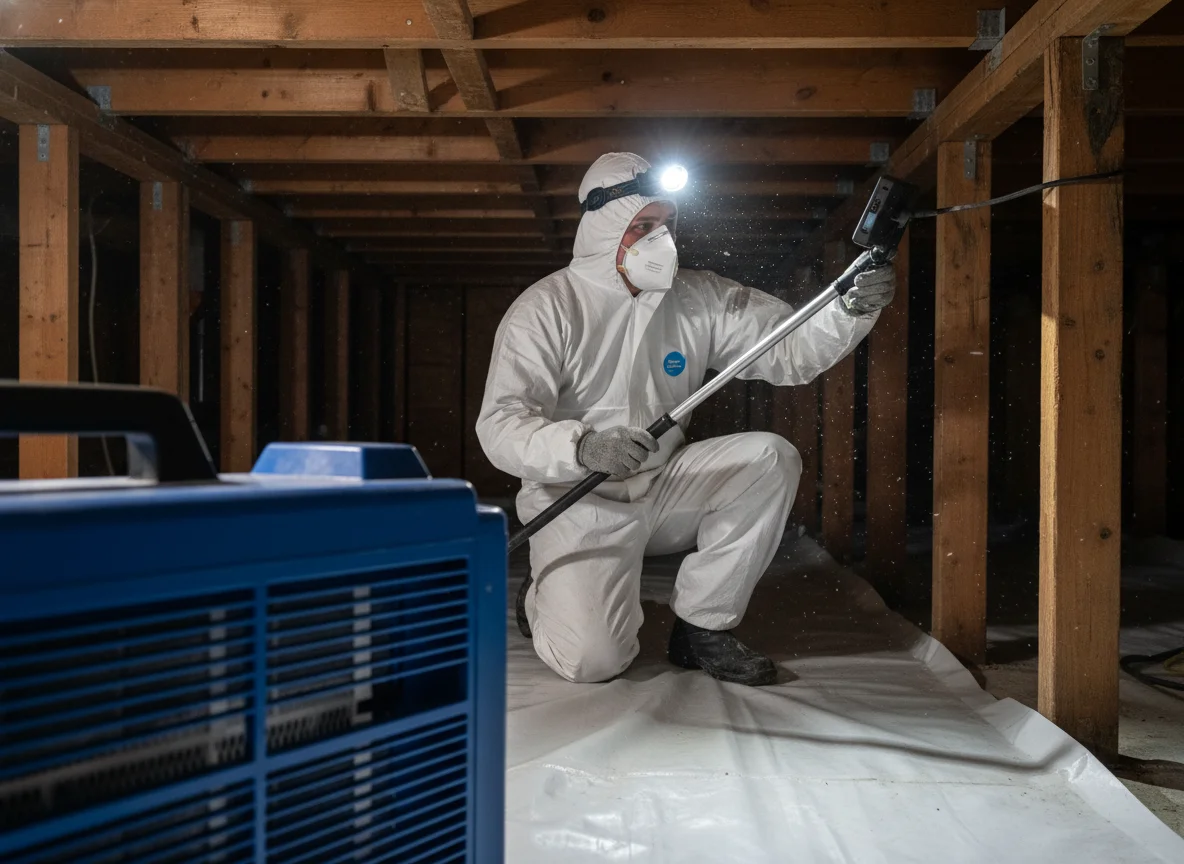
Surface mold removal proceeds in this sequence: containment, removal of saturated porous materials, HEPA vacuuming of remaining surfaces, antimicrobial fogging, and drying. Omitting or altering the order of any step compromises the effectiveness of the outcome.
Containment Setup
Inspection for basement flood response encompasses three key aspects: thermal imaging, moisture mapping, and microbial baseline assessment. We record each of these for every job, as the structural drying timeline and the choice of antimicrobial agents depend on these readings.
Antimicrobial Treatment & Clearance
Our preventative measures address four common failure scenarios: pump capacity (including size, age, and battery backup), drainage (French drains and downspout extensions), waterproofing (foundation membranes and crack repairs), and grading (sloping away from the foundation).
How Our Remediation Process Works
The flood-response process we implement across Southern Indiana is specifically tailored to Indiana's climate. Each stage accounts for the risk of re-saturation during the operational period:
- Phone triage. Live agent gathers symptoms, suspected source, and access. Inspection scheduled same week.
- On-site inspection. Moisture mapping, thermal imaging, air sample, surface tape-lift. Written scope before any demo.
- Industrial drying. LGR dehumidifiers and axial air movers run continuously for 3-7 days. Pin-type readings logged daily.
- Waste protocol. Every bag of demo material is sealed, labeled with contamination class, and disposed per state mold-waste rules.
- Demo phase. Sheathing demolition under HEPA containment, contaminated material bagged out per EPA protocol.
- Antimicrobial application. Fogging system distributes EPA-registered fungicide across the exposed work zone, including hidden surfaces.
- Build containment. Negative air pressure, sealed perimeter, PPE swap chamber, smoke-tested for leaks before demo begins.
- Clearance. Third-party air sample plus surface verification. Written report before any rebuild.
Expert Experience: What We've Seen in Clifford, IN
Basement-flood forensic analysis in the Clifford area reveals several indicators: Water-line stain height indicates the peak water depth. Concrete efflorescence pattern points to persistent moisture pressure. Floor-drain backflow rings signify a sewer event. Indiana's farmland and small-town homes built on clay subsoil, which creates hydrostatic pressure against block foundations, frequently exhibit all three signs during the Midwest storm season.
Post-remediation verification testing is the stage where most homeowners assume, 'The cleanup looks good, we're done.' However, moisture content in joists and the sill plate must be confirmed below 16% using pin-type meters before new flooring is installed. Skipping this step is the primary cause of mold callbacks 3-6 months later.
If you're located in 47226 and have discovered visible mold on subfloor sheathing, cease reading immediately and contact us. We prefer to conduct a precautionary inspection at 2 a.m. rather than rebuilding your kitchen floor next year.
What Our Clifford Customers Say
"Crawl space mold resulting from a vapor-barrier failure. They managed the remediation, suggested encapsulation, and coordinated with a contractor for the subsequent work. One phone call, multiple issues resolved."
— Bryan T., Clifford
"Discovered mold growing in the basement after a slow plumbing leak persisted for several months. The team performed a comprehensive inspection, provided a written estimate, and completed the remediation in less than a week. The clearance air sample returned clean."
— Daniel R., Clifford
"Stachybotrys was found behind the kitchen wall. They performed cutting, containment, removal, treatment, and testing in accordance with EPA protocols. The insurance documentation was flawless—the claim was approved within two weeks."
— Karen M., Clifford
Pros and Cons of DIY vs. Professional Basement Flooding Remediation
DIY Approach
Pros: Mold confined to surfaces of non-porous materials (like sealed concrete or tile) can sometimes be treated DIY using HEPA vacuuming and antimicrobial wiping.
Cons: Subfloor sheathing (OSB, plywood, T&G) is porous—mold penetrates the wood grain. Surface treatment doesn't eliminate the colony. Wood-decay progresses undetected. Insurance will reject any future claims.
Professional Remediation
Pros: Full-depth remediation targets the colony within the wood. Demolition replaces compromised sheathing. Drying reduces moisture content in adjacent dry wood to below 16%. Third-party clearance is obtained.
Cons: Requires room downtime. More expensive than spray-and-pray DIY. Worth every dollar when it works.
Tips to Prevent Basement Flooding in Your Clifford Home
- Repair plumbing leaks within 48 hours, not 'when there's time'
- Test foundation drainage every spring — water pooling against the foundation feeds subfloor moisture
- Maintain crawl-space relative humidity below 55 percent with a dedicated dehumidifier
- Install water-leak detectors near every appliance with a water connection
- Keep refrigerator and ice-maker supply lines in plain view; never hide them behind cabinets
- Add a battery-backup sump pump in case of power loss during storms
- Inspect washing machine and dishwasher supply hoses every year — replace at 5-year mark
Service Area Context: 47226
Operational context for 47226: the typical time from dispatch to arrival during normal traffic is approximately 31 minutes. Our team has recorded around 16 basement flood incidents in this ZIP code over the past year. Approximately 56% of the basement flood projects we undertake in 47226 are caused by crawl-space-driven moisture, rather than direct plumbing or roof intrusions. Each case undergoes the same initial inspection process.
Pre-Call Checklist for Clifford IN Homeowners
Before contacting us, please review this brief checklist—it will expedite the triage process and improve the accuracy of your insurance claim file:
- Have you avoided cleaning or sanitizing yourself before the crew documents the loss?
- Have you collected any prior water-damage history (previous floods, prior repairs)?
- Have you identified the water source if possible (sump, sewer line, pipe, foundation)?
- Have you avoided running the HVAC system (it spreads spores and humidity)?
- Have you avoided wading through standing water near submerged outlets or appliances?
See Our Crew in Action
Service Area Map
Conclusion
Understanding NADCA mold 47226 Clifford IN is crucial because the difference between a successful basement recovery and a multi-month mold remediation project is determined within the initial 48 hours. Mold Remediation Hotline manages those critical first 48 hours for homeowners in Clifford, IN 47226—including extraction, drying, antimicrobial treatment, and post-remediation clearance testing.
Frequently Asked Questions About Nadca Mold 47226 Clifford IN
Can you guarantee the mold won't come back?
We guarantee the quality of our remediation work for a period of 12 months. The failure rate, when the moisture source was properly addressed, is less than 5%. The most frequent cause of recurrence is an uncorrected source of moisture—which is why our inspection always includes source identification.
How do I prevent basement flood from coming back?
Following clearance, install a humidity monitor near the previously affected area. If crawl-space humidity was the source, complete encapsulation prevents recurrence. If plumbing was the issue, replace the faulty fixture and add a leak detector. The recurrence rate at 5 years for properly completed jobs is under 5 percent.
How much does Nadca Mold 47226 Clifford IN typically cost in Clifford?
Most basement flood projects in Clifford range from $2K-$8K. The variables include the affected square footage, whether joists require sister-ing, and if existing flooring (hardwood, tile, vinyl) can be salvaged or must be removed. An inspection-first approach is the only way to obtain an honest estimate.
What should I do before the crew arrives?
Remove furniture and personal items from the affected room. Do not attempt to lift any flooring (we will do so under containment). Avoid running dehumidifiers or fans (this alters moisture readings). Take initial photos for your insurance documentation. If possible, shut off HVAC to the affected zone.
Is it safe to remove basement flood myself in my Clifford home?
Risk varies with size and species. Surface cleaning of small mold patches carries lower risk. Cutting wet OSB or plywood without HEPA containment will spread spores throughout the entire HVAC system. The ERMI clearance test reveals what DIY efforts missed.
Do you handle sewage-backup subfloor contamination?
Subfloor work involving sewer backup represents the most stringent category we handle. Preventing cross-contamination is paramount because sewer pathogens travel alongside mold spores. We implement full HEPA containment, biohazard disposal, and ERMI clearance testing.
Do I need ERMI or air sampling after subfloor remediation?
Clearance testing is the sole phase that validates the remediation process. Approximately 30 percent of DIY-quality work fails clearance on the initial sample. Professional work that passes clearance provides documented proof that the colony has been eradicated.
How long does Nadca Mold 47226 Clifford IN take?
Most subfloor remediation projects in Clifford typically take 5-10 days from initial intake to final clearance. The phases include: inspection (1 day), containment setup (half-day), demolition (1-2 days), structural drying (3-5 days), antimicrobial application (half-day), and clearance testing (1 day).
How does my Indiana insurance handle a NADCA mold 47226 Clifford IN claim?
Coverage depends on the cause. A burst pipe yesterday: typically covered. A slow leak active for 18 months: usually denied. Mold riders may sometimes apply. We meticulously document the loss event so the carrier has precise facts to act upon, rather than just a homeowner's claim.
Why is basement flood considered worse than surface mold?
Three distinctions exist: basement floods impact structural wood (load-bearing), mold grows on the unseen back face, and it often involves wood-decay fungi (not merely surface molds). Each scenario requires a specific antimicrobial treatment and scope of work.
Trusted Sources & References
- Centers for Disease Control and Prevention — Basic Facts about Mold and Dampness
- Environmental Protection Agency — A Brief Guide to Mold, Moisture, and Your Home
- Institute of Inspection, Cleaning and Restoration Certification — IICRC S500 Water Damage Restoration Standard
- Federal Emergency Management Agency — Dealing with Flood Damage
- U.S. Department of Housing and Urban Development — Healthy Homes Mold Resources