Green mold isn't one thing — it's a family of mold species that happen to produce green-colored spores. Aspergillus, Penicillium, and Cladosporium are the most common green molds found in Bartholomew County homes, and each prefers different conditions: Penicillium loves water-damaged drywall and wallpaper, Aspergillus thrives in HVAC systems and damp insulation, and Cladosporium colonizes cooler surfaces like window frames and bathroom ceilings.
Green Mold Species Identification
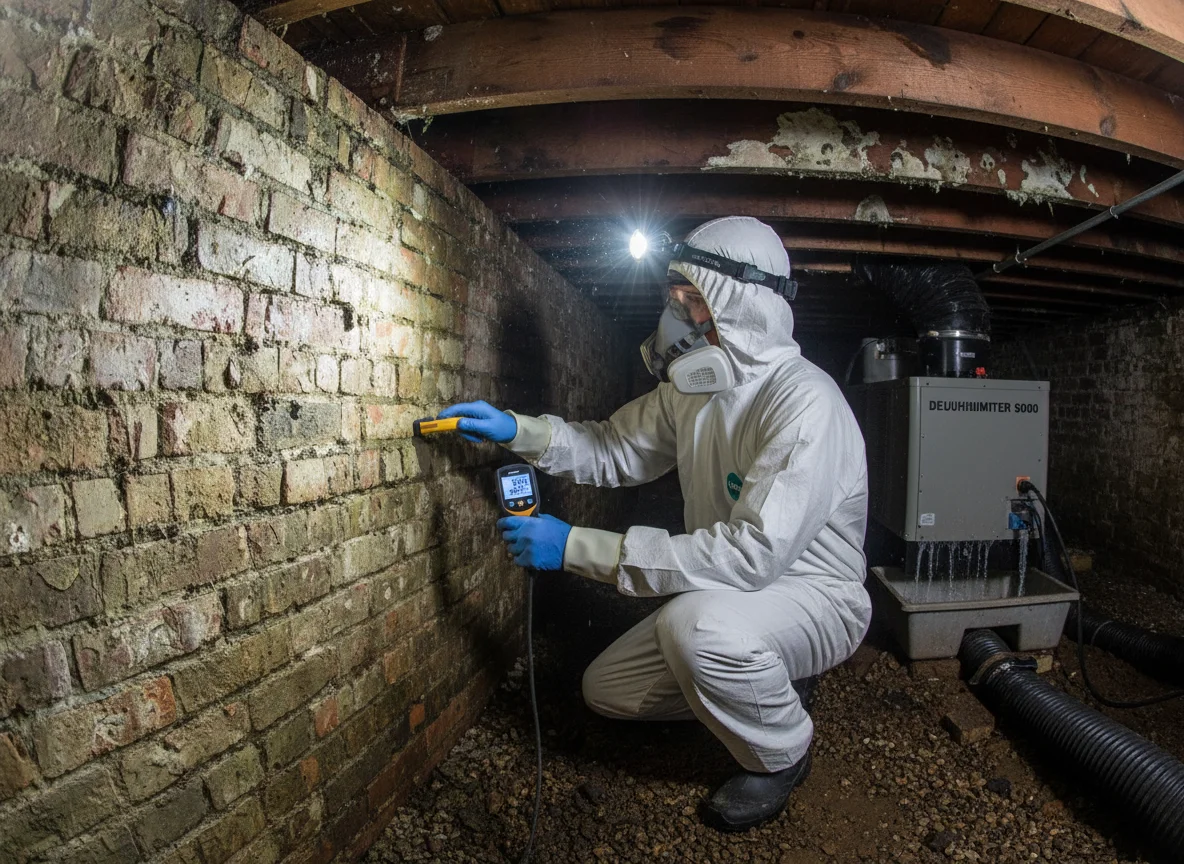
Lab-grade air and surface sampling to identify the specific green mold species present — Aspergillus, Penicillium, Cladosporium, or other. Our green mold specialists use microscopy and culture analysis to determine species, spore concentration, and appropriate remediation protocol.
Aspergillus Mold Remediation
Aspergillus species (including A. fumigatus and A. niger) commonly colonize HVAC ductwork, damp insulation, and water-damaged ceiling tiles. Our green mold remediation for Aspergillus includes enhanced containment, HEPA air scrubbing, and full HVAC system decontamination.
Penicillium Mold Remediation
Penicillium is the most common green mold found on water-damaged drywall, wallpaper, and carpet. It spreads rapidly across paper surfaces and can produce mycotoxins. Our green mold cleanup includes complete removal of affected drywall paper, HEPA vacuuming, and antimicrobial treatment.
Cladosporium Mold Remediation
Cladosporium prefers cooler, condensation-prone surfaces — window frames, bathroom ceilings, exterior walls with poor insulation, and behind furniture placed against cold walls. Our green mold specialists treat Cladosporium colonies on painted surfaces, wood, and textiles.
Green Mold in HVAC Systems
Green mold in ductwork — usually Aspergillus or Penicillium — spreads spores through every room the system serves. Our green mold HVAC remediation includes coil cleaning, blower sanitization, full duct decontamination, and post-remediation air testing to confirm the system is clean.
Green Mold on Concrete & Masonry
Green mold on basement walls, garage floors, and foundation surfaces is different from mold on drywall — it's often feeding on organic dust and condensation rather than the substrate itself. Our green mold specialists use wire brushing, HEPA vacuuming, and masonry-safe antimicrobials for these surfaces.
Bathroom & Kitchen Green Mold
Green mold in bathrooms and kitchens — typically Cladosporium on ceilings and Penicillium behind sinks — requires careful inspection for hidden plumbing leaks, failed caulk seals, and exhaust fan deficiencies. Our green mold team addresses both the visible mold and the moisture source behind it.
Post-Remediation Green Mold Verification
After green mold remediation, we run the same lab-grade air and surface tests to confirm the identified species has been effectively removed. Written clearance report — essential documentation for insurance, property sales, and peace of mind in Indiana.