Mold Removal Service McEver GA
24/7 Emergency Mold Remediation — Hall County & Lake Lanier Corridor Specialists
Mold Removal in McEver, Georgia — Why This Rural Hall County Community Faces Unique Challenges
McEver, Georgia, is an unincorporated community in western Hall County, situated along the McEver Road corridor between Flowery Branch and Gainesville. Unlike incorporated cities with municipal water infrastructure, building inspection departments, and dense commercial services, McEver operates without formal municipal boundaries — and that absence has direct consequences for how mold problems develop and go unaddressed in local homes.
The dominant mold risk factor in McEver is Lake Lanier proximity. The community sits roughly three to five miles from the lake's western shoreline, well within the humidity influence zone that raises ambient moisture levels year-round. During Georgia's long summer season — May through September — lake evaporation combines with the region's natural subtropical humidity to push indoor relative humidity well above 60% in homes that lack whole-house dehumidification. That sustained moisture load feeds mold growth inside wall cavities, under flooring, inside HVAC ductwork, and throughout crawl spaces — often for months before homeowners notice visible signs.
McEver's rural character introduces a second layer of mold vulnerability. Many properties sit on well water and septic systems rather than municipal utilities, which means water intrusion events — a failed well pump, a septic backup, a broken supply line — can go undetected for days or weeks before they're discovered. Homes on larger lots, sometimes two to five acres, have extended foundation perimeters in direct contact with Hall County's characteristic red clay soil — a substrate that holds moisture against foundation walls long after rain stops. The combination of lake humidity, rural utility vulnerabilities, and expansive soil contact creates a mold risk profile that demands specialized local knowledge to diagnose and remediate effectively. Mold Remediation Hotline provides McEver with exactly that expertise, serving all Hall County properties without distance surcharges or trip fees.
Our Mold Removal Services for McEver
- Comprehensive Mold Inspection & Assessment
- Residential Mold Removal & Remediation
- Black Mold (Stachybotrys) Remediation
- Crawl Space Mold Removal & Encapsulation
- HVAC Duct Mold Inspection & Cleaning
- Attic Mold Removal & Ventilation Correction
- Post-Flood & Storm Mold Emergency Response
- Air Quality Testing & Spore Analysis
- Well Water / Septic-Related Moisture Assessment
- Foundation Drainage & Moisture Barrier Installation
- Hall County Permit & Code Compliance
- Post-Remediation Clearance Testing
Why McEver Homes Need Professional Mold Removal
1. Lake Lanier Humidity and Year-Round Indoor Moisture
McEver's proximity to Lake Lanier — one of the largest reservoirs in the Southeast at 38,000 acres — creates a persistent elevated-humidity environment that affects every home within a five-mile radius of the shoreline. Lake evaporation releases an estimated 200 to 300 million gallons of water vapor into the local atmosphere daily during summer months. For McEver homes, this means indoor humidity routinely exceeds 60% from May through October without mechanical dehumidification. At that threshold, mold spores — which are always present in Georgia's outdoor air — find the moisture they need to germinate on drywall paper, wood framing, carpet backing, and HVAC coil surfaces. Homeowners who notice a persistent musty smell, condensation on windows, or dark spots appearing on ceilings and baseboards are often seeing the downstream effect of lake-driven humidity that has been saturating their home's building materials for weeks or months. Professional mold removal in McEver must address not just the visible mold but the underlying humidity engine that Lake Lanier provides year-round.
2. Red Clay Soil, Foundation Contact, and Crawl Space Mold
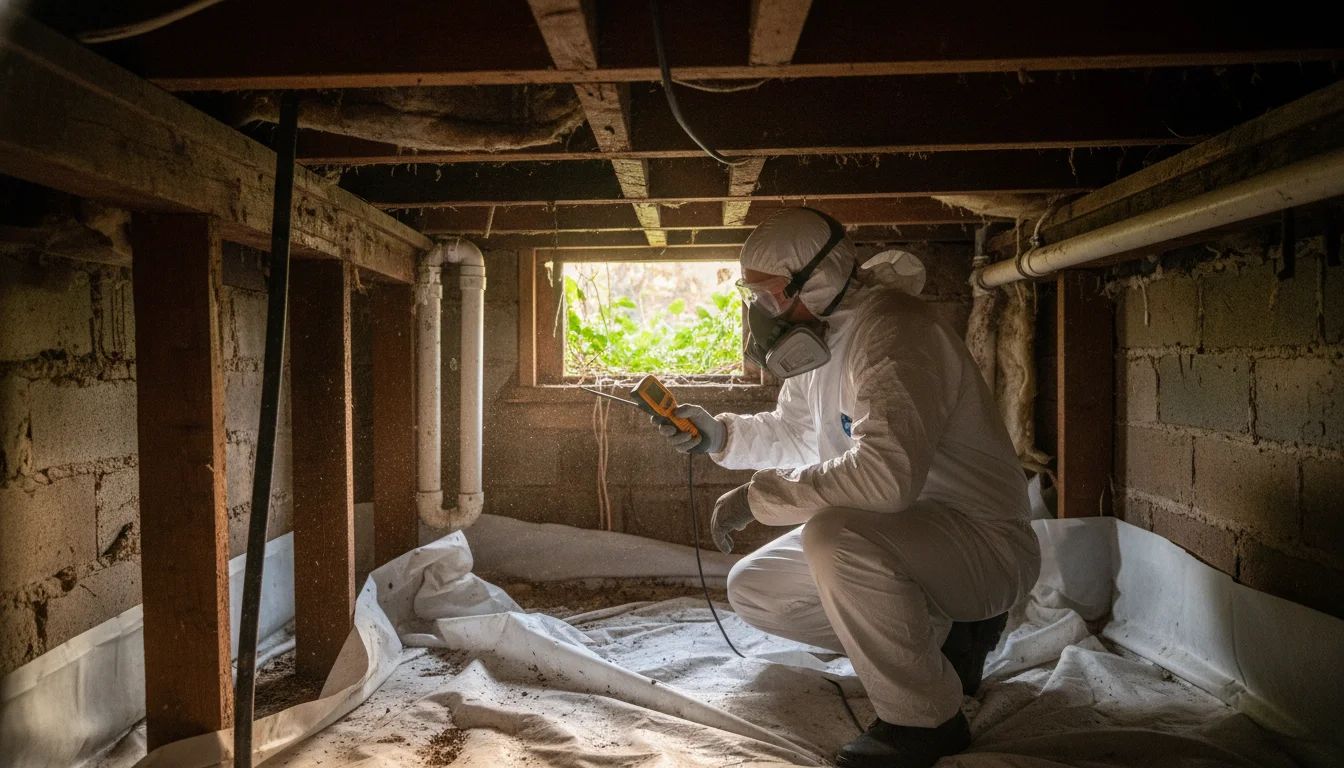
Hall County's red clay soil — a product of millions of years of weathered Appalachian rock — is both a defining feature of the McEver landscape and a persistent moisture problem for local foundations. Red clay has extremely low permeability: water infiltrates slowly and drains even more slowly, meaning the soil zone immediately surrounding a home's foundation stays wet for days or even weeks after a rain event. For McEver's older homes with unencapsulated crawl spaces, this wet soil releases moisture vapor upward into the floor system continuously. Floor joists, subfloor plywood, and insulation batts absorb that moisture and support mold colonies that grow out of sight beneath the living space. Even homes with concrete slab foundations aren't immune — red clay that stays saturated against a slab edge creates a capillary path for moisture to wick upward through the concrete, raising indoor humidity from the floor up. Crawl space encapsulation with heavy-duty vapor barriers and mechanical dehumidification is the only permanent solution for McEver homes with soil-contact moisture issues.
3. Older Farmhouse and Rural Construction Vulnerabilities
McEver's housing stock includes a significant number of properties built between the 1950s and 1980s — the farmhouses, ranchers, and early subdivision homes that predate modern moisture management building codes. These homes share common construction features that invite mold: fiberglass batt insulation in walls and attics that holds moisture like a sponge when exposed to humidity or minor leaks, single-pane or aluminum-frame windows that condense water on interior surfaces during Georgia's humid summers, bathroom exhaust fans that vent into attics rather than outdoors (pumping moist shower air directly into the roof cavity), and crawl spaces with dirt floors and open foundation vents that admit humid outdoor air. Each of these conditions can support hidden mold growth for years before a homeowner discovers it — often during a renovation or real estate transaction when walls are opened. Professional mold remediation for older McEver homes requires identifying and correcting these systemic moisture pathways, not just treating the visible mold.
4. Limited Service Access and Rural Response Challenges
As an unincorporated community in western Hall County, McEver has no local mold remediation providers within its immediate area. Residents must rely on contractors traveling from Gainesville, Flowery Branch, or beyond — and many of those contractors charge trip fees, impose minimum job sizes, or deprioritize McEver in favor of higher-density service areas. Mold Remediation Hotline takes the opposite approach: we treat McEver as a priority service community, with same-day inspection availability, 24/7 emergency dispatch, and no rural distance surcharges. We bring the same IICRC-certified expertise to a McEver farmhouse on five acres that we bring to a Gainesville commercial building — because we believe every Hall County property owner deserves the same standard of mold removal service, regardless of how far they live from the nearest town center.
Our Mold Removal Process for McEver Properties
Moisture Source Assessment
We evaluate your McEver property's specific moisture drivers — lake humidity exposure, soil drainage patterns, foundation type, well/septic condition, and construction era — using thermal imaging and calibrated moisture meters.
Containment & Air Filtration
HEPA-filtered negative air containment isolates mold-affected areas to prevent cross-contamination. We seal off the work zone and deploy commercial air scrubbers before any mold materials are disturbed.
Remediation & Treatment
Affected materials are removed per IICRC S520 standards. Remaining structural surfaces receive EPA-registered antimicrobial treatment. Crawl spaces receive vapor barrier encapsulation and dehumidifier installation.
Prevention & Clearance
We correct the root moisture cause — drainage improvements, dehumidification, ventilation fixes — and perform post-remediation air quality testing to verify your McEver home is mold-free.
Frequently Asked Questions About Mold Removal in McEver
McEver sits within a high-humidity corridor created by Lake Lanier, a 38,000-acre reservoir that releases substantial water vapor into the local atmosphere through evaporation — especially during Georgia's long summer season. Homes within a five-mile radius of the shoreline, which includes most McEver properties, experience indoor humidity levels that routinely exceed the 60% threshold at which mold spores can germinate and colonize building materials. Without whole-house dehumidification or dedicated crawl space humidity control, this lake-driven moisture load feeds mold growth inside walls, under flooring, in attics, and through HVAC ductwork for months at a time before visible signs appear.
Hall County's red clay soil has extremely low permeability — water soaks in slowly and drains even more slowly. After rain, the soil zone surrounding a McEver home's foundation stays saturated for days or weeks. For crawl space homes with dirt floors and open vents, this wet soil continuously releases moisture vapor upward into floor joists, subfloor, and insulation — creating ideal mold-growing conditions beneath the living space. The only permanent solution is crawl space encapsulation: installing a heavy-duty polyethylene vapor barrier over the dirt floor, sealing foundation vents, and placing a commercial-grade dehumidifier to maintain humidity below 55%.
McEver's older homes — particularly farmhouses and ranchers built between the 1950s and 1980s — were constructed before modern moisture management became standard in building codes. Common vulnerabilities include: bathroom exhaust fans venting into attics (pumping humid air into roof cavities), fiberglass insulation that holds moisture like a sponge when exposed to humidity or minor leaks, single-pane windows that condense water on interior surfaces during humid summers, and crawl spaces with dirt floors and open foundation vents that continuously admit humid outdoor air. These systemic issues can support hidden mold colonies for years until walls are opened during renovations or real estate inspections.
Yes. We serve every property in the McEver area — from homes along McEver Road and the surrounding connector roads to the larger rural lots on the community's outskirts near the Hall County line. As an unincorporated community, McEver has no formal municipal boundaries, and we treat every address within the McEver service area equally: same-day inspection availability, 24/7 emergency dispatch, and no rural distance surcharges. Whether your property is a half-acre lot in a subdivision or a five-acre farmhouse parcel, you receive the same IICRC-certified mold removal service.
McEver's rural properties that rely on well water and septic systems face unique mold risks that municipal-water homes do not. A failed well pump, leaking pressure tank, or broken supply line can release water inside a home for days before detection — especially in basements or utility rooms that aren't visited daily. Septic system backups introduce not just moisture but organic material that mold feeds on aggressively. Additionally, well water itself, if the well cap or casing is compromised, can introduce moisture into the surrounding soil that migrates toward the foundation. Our mold inspection for rural McEver properties includes checking well equipment, septic system function, and supply-line integrity as part of the moisture source assessment.
Yes. As an unincorporated community with no downtown commercial district, McEver has no mold remediation providers based within the immediate area. Most contractors serving McEver travel from Gainesville, Flowery Branch, or Oakwood — and some impose trip fees, minimum job sizes, or deprioritize McEver jobs in favor of higher-density service areas. Mold Remediation Hotline provides full-service mold removal to McEver without distance surcharges, with same-day inspection availability and 24/7 emergency response to all Hall County properties. We bring the same commercial-grade equipment, IICRC-certified technicians, and transparent pricing to McEver that we provide to Gainesville and Flowery Branch properties.
Helpful Mold Resources for McEver Homeowners
- Residential Mold Removal in Gainesville GA — Complete guide for Hall County homeowners
- Commercial Mold Removal in Gainesville GA — For Hall County business properties
- Mold Removal in Flowery Branch GA — Lake Lanier waterfront mold specialists
- Mold Removal Cost in Gainesville GA — 2026 pricing guide for Hall County
- Best Mold Removal Companies in Gainesville GA — How to choose the right contractor
Get a Free Mold Removal Estimate in McEver Today
From Lake Lanier humidity to red clay crawl spaces, our team understands McEver's unique mold challenges. We serve all of Hall County with same-day inspections and no rural distance surcharges.
(332) 220-030324/7 Emergency Service • Free Inspections • Hall County Specialists
Mold Remediation Hotline — Serving McEver & All of North Georgia
We provide professional mold removal services across Hall County and the North Georgia region: