allergic reaction mold inspection Chicago IL
24/7 Professional Mold Services — Cook County, Illinois Specialists
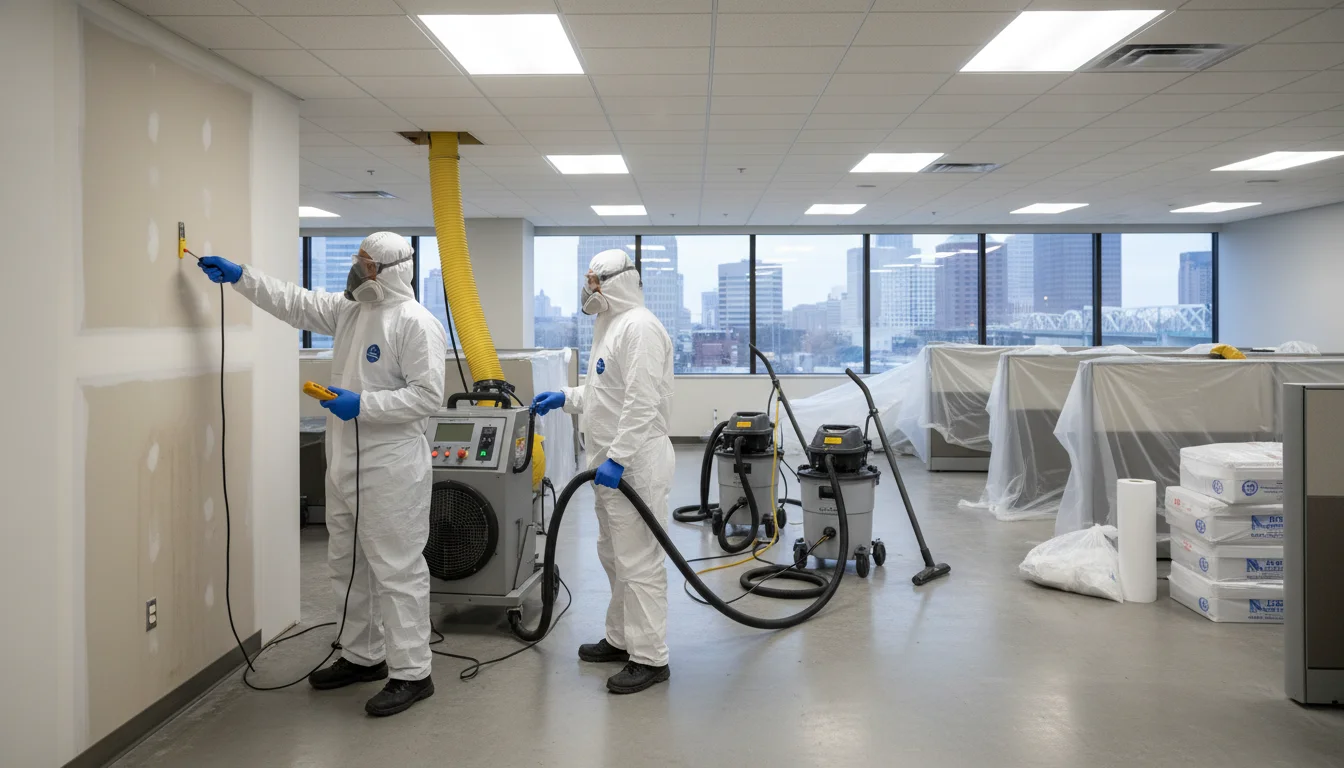
Professional Allergic Reaction Mold Inspection Chicago Il in Chicago, Illinois
Chicago, Illinois, presents a unique mold risk profile driven by its location and climate. Throughout Cook County and the Chicago metro area, homeowners and property managers face mold challenges that generic mold removal franchises — applying a one-size-fits-all approach — cannot properly address. Understanding mold remediation in Chicago requires understanding the specific ways this region generates moisture problems throughout the year.
Whether you are dealing with a basement that flooded after heavy rain, toxic black mold discovered during a renovation, a musty attic with ventilation failure, or the aftermath of a pipe burst that saturated wall cavities and flooring, professional mold remediation that accounts for Chicago's specific construction types, soil conditions, and seasonal moisture patterns is essential for lasting results. Mold Remediation Hotline provides Chicago with IICRC-certified mold remediation that addresses the root moisture cause, not just the visible mold — serving all Cook County without trip charges or subcontractor markups.
Our Mold Services for Chicago Properties
- Basement Mold Inspection & Assessment
- Toxic Black Mold (Stachybotrys) Removal
- Post-Sewer Backup Mold Remediation
- Foundation Crack & Waterproofing Mold Correction
- Attic Mold Removal & Ventilation Repair
- HVAC Duct Mold Inspection & Sanitization
- Apartment & Multi-Unit Mold Remediation
- Landlord-Tenant Mold Documentation & Testing
- Heavy Rain & Flood Emergency Mold Response
- Air Quality Testing & Post-Remediation Clearance
- Cook County Code Compliance
- 24/7 Emergency Mold Response
Why Chicago Needs Professional Mold Remediation
1. Lake Michigan Humidity and Lake-Effect Moisture
Lake Michigan — one of the largest bodies of fresh water on earth — drives Chicago's humidity profile from May through October. The lake moderates temperatures but releases enormous moisture into the air mass that moves over the city. During summer, outdoor humidity routinely exceeds 75%, and that lake-humidified air infiltrates basements, crawl spaces, and wall cavities throughout Chicago's neighborhoods. Combined with the city's clay-rich glacial soils that hold water against foundations — particularly in neighborhoods built on former marshland and filled lakefront — the sustained moisture creates year-round mold conditions in tens of thousands of Chicago properties.
2. Chicago's Century-Old Housing Stock and Basement Vulnerabilities
Chicago's residential architecture — dominated by brick bungalows, two-flats, three-flats, and greystones built between 1890 and 1940 — features basements that were never designed to be dry, finished living spaces. Original stone and brick foundations lack exterior waterproofing. Clay sewer laterals installed before 1950 crack and leak. Cast-iron plumbing corrodes internally, developing slow pinhole leaks inside walls. Many two-flats and three-flats share a single drainage system that overflows when overwhelmed by heavy Chicago rainstorms, flooding adjacent basements.
3. Heavy Rain, Combined Sewer Overflows, and Basement Flooding
Chicago's combined sewer system — where stormwater and sanitary sewage share the same pipes — overflows into basements during the heavy rain events that occur multiple times each summer. When Chicago receives more than 1.5 inches of rain in a short window, neighborhood sewer systems back up, flooding basements across entire blocks. The Chicago Department of Water Management has documented thousands of basement backups annually. Water that is only ankle-deep is sufficient to saturate drywall wicking and activate dormant mold spores in floor joists above.
4. The Freeze-Thaw Winter Cycle and Spring Mold Activation
Chicago winters subject buildings to dozens of freeze-thaw cycles from November through March. Water that infiltrates foundation cracks, brick mortar, and flat roof membranes freezes, expands by approximately 9%, and widens those openings incrementally. By spring, when Chicago receives 3-4 inches of rain monthly and temperatures rise into the 60s, the water freely enters through the pathways winter widened. The warming air temperatures then activate dormant mold spores, producing an annual mold surge in homes and commercial buildings throughout Cook County.
Our Mold Remediation Process for Chicago Properties
Property Assessment & Moisture Mapping
We evaluate your Chicago property using thermal imaging, moisture meters, and air quality sampling to identify the full extent of moisture and mold — including hidden wall-cavity and ceiling-cavity contamination that surface inspection misses.
Containment & HEPA Air Scrubbing
Full containment with negative air pressure and HEPA-filtered air scrubbers prevents cross-contamination during material removal. HEPA units run throughout remediation to capture airborne spores.
Remediation & Antimicrobial Treatment
Mold-affected materials removed per IICRC S520 standards. Structural surfaces receive EPA-registered antimicrobial treatment. HVAC ductwork inspected and sanitized where affected.
Verification & Moisture Prevention
Post-remediation air quality testing with written lab report. Root-cause moisture correction plan addressing drainage, dehumidification, ventilation, and seasonal maintenance for lasting mold prevention.
Frequently Asked Questions — Chicago Mold Remediation
Basement mold remediation in Chicago and Cook County ranges from $2,000-$5,500 for small contained areas (under 100 sq ft), $5,500-$18,000 for moderate multi-room basement remediation with drainage correction, and $18,000-$65,000+ for whole-basement remediation requiring foundation waterproofing, french drain installation, sump pump, and full crawlspace encapsulation. Chicago-specific cost drivers include: the age of the home (asbestos/lead testing required for pre-1978 construction), combined sewer backup history, proximity to Lake Michigan (elevated water table), and whether the basement is finished living space. Every project starts with a free on-site inspection and written fixed-price estimate. Call (332) 220-0303.
Chicago's combined sewer system — where stormwater and sanitary sewage share pipes — was built before 1900 and serves nearly all of the city. During heavy rain events delivering more than 1.5 inches of rain within a few hours, the combined system cannot handle the volume, and water backs up through floor drains into basements across entire neighborhoods. This floodwater saturates drywall wicking, floor joists, and subfloor materials, activating dormant mold spores within 24-48 hours. Professional mold remediation after a Chicago basement backup must include antimicrobial treatment of all affected framing and drywall, not just water extraction.
Under the Chicago Residential Landlord and Tenant Ordinance (RLTO), landlords are responsible for maintaining rental units in habitable condition, which includes addressing conditions that pose health and safety risks. The Illinois Environmental Protection Act and Chicago municipal code establish that mold — particularly toxigenic species like Stachybotrys (black mold) — constitutes a condition that the landlord has a duty to remediate, especially when it results from building envelope failures (roof leaks, plumbing leaks, foundation water intrusion) that are the landlord's maintenance responsibility. Tenants should document mold conditions with dated photographs, notify the landlord in writing, and if the landlord fails to act within 14 days, tenants may have remedies under RLTO Section 5-12-110. Call (332) 220-0303 for professional mold inspection documentation for landlord disputes.
Chicago receives an average of 36 inches of rain annually, with heavy downpour events concentrated in May-September. When more than 1.5 inches of rain falls within hours, three simultaneous mechanisms cause basement water intrusion: (1) overloaded combined sewers back up through floor drains; (2) clay-rich glacial soils saturate and exert hydrostatic pressure against foundation walls; and (3) overwhelmed gutters and downspouts pond water against foundations. In Chicago's clay soil, this water does not drain quickly — it sits against foundation walls for days. Basement mold remediation after heavy Chicago rain must address all three water-entry vectors.
Mold clearance testing is the independent verification that a mold remediation project was completed successfully and that indoor mold spore counts have returned to normal background levels. A Chicago-certified mold assessor collects air samples inside the remediated area and compares them to outdoor baseline samples. Passing clearance requires indoor spore types and concentrations to match or fall below outdoor levels, and requires zero visible mold remaining. In Chicago's humid climate, clearance testing is particularly important for properties near Lake Michigan, where elevated baseline humidity can sustain residual mold. We provide third-party post-remediation verification with a written lab report acceptable for real estate transactions, landlord-tenant disputes, and insurance documentation.
We dispatch to all Chicago neighborhoods and ZIP codes including: Lincoln Park 60614, Loop 60601-60607, Wicker Park 60622, Logan Square 60647, Lakeview 60657, Hyde Park 60637, Pilsen 60608, Bridgeport 60608, Rogers Park 60626, Edgewater 60660, Bucktown 60647, Bronzeville 60653, West Loop 60607, River North 60654, Old Town 60610, and all surrounding Cook County suburbs. Emergency response within 60 minutes. No trip charges within Cook County.
Helpful Mold Resources for Chicago Homeowners
Get a Free Allergic Reaction Mold Inspection Chicago Il Estimate in Chicago Today
From Cook County to the Chicago metro area, our mold remediation team understands the specific challenges facing Illinois homeowners. Serving all Cook County with same-day inspections and no trip charges.
(332) 220-030324/7 Emergency Service • Free Inspections • Cook County Specialists
Mold Remediation Hotline — Serving Chicago & Illinois
We provide professional mold remediation throughout Cook County and the Chicago metro area: