A $50 Smart Leak Detector Now Earns Up to 15% Off Homeowners Insurance
By Mold Remediation Hotline · May 5, 2026
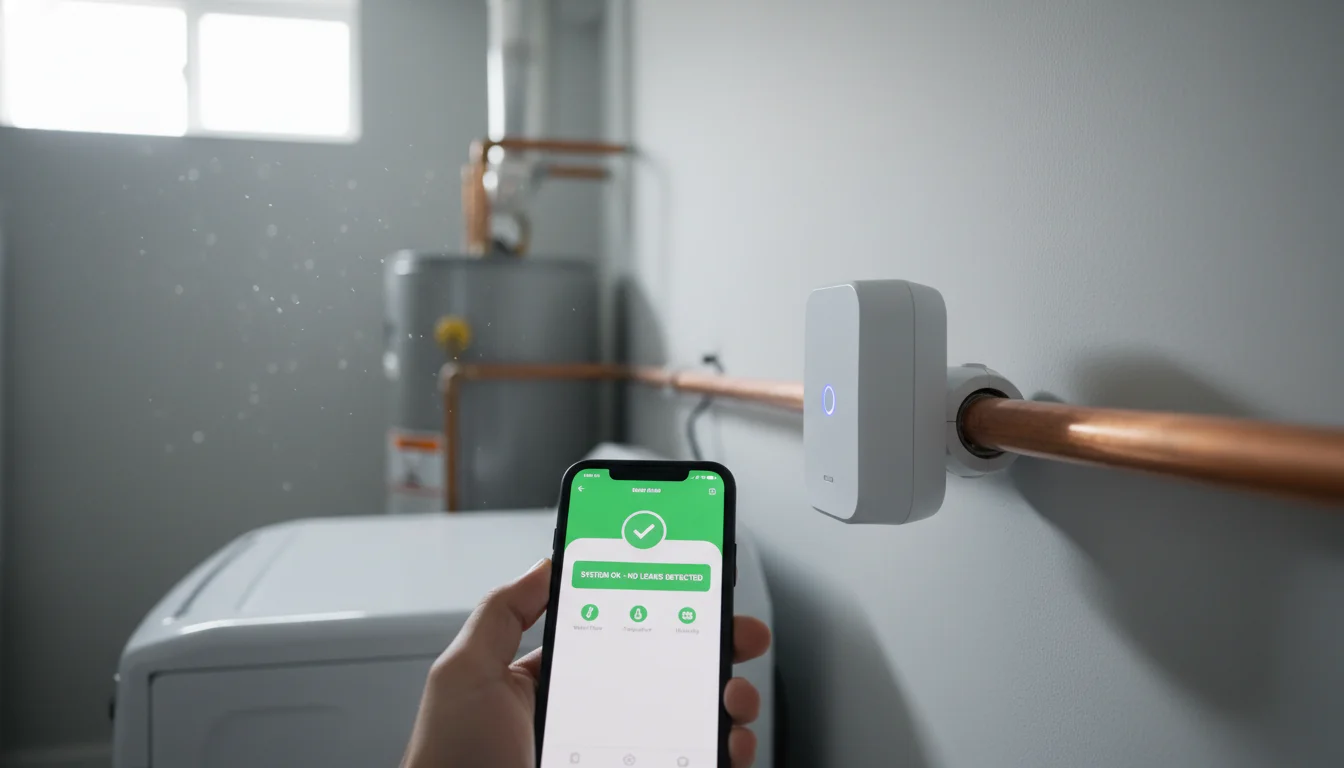
A quiet shift in homeowners insurance has turned a $50 hardware purchase into one of the highest-ROI water damage prevention moves a homeowner can make in 2026. Several major carriers are now offering premium discounts of up to 15% to policyholders who install whole-home smart water leak detection devices, according to a brief published this morning. Search interest backs the trend: Google data shows queries for "water leak detection and repair" up 160% over the last month, with "leak detection" and "water leak detection" both up 70%, the strongest momentum anywhere in the water-damage category.
Why insurers are paying homeowners to install leak detection
Water damage is the most common and most expensive non-catastrophic claim in residential property insurance. The average non-weather water claim runs into five figures by the time water damage cleanup, drywall replacement, mold remediation, and flooring repair are all settled. A device that catches a slow supply-line leak at 3 a.m. and shuts off the main water line in seconds prevents the entire chain.
From the carrier's perspective, a one-time $50-$300 hardware subsidy or premium discount is dramatically cheaper than paying out one $20,000 claim. That math is now showing up at the policy level, not just in pilot programs.
How smart water leak detection actually works
Two device categories qualify for most discount programs:
- Point sensors. Battery-powered pucks placed near appliances, water heaters, sump pumps, and under sinks. They detect water on contact and alert via Wi-Fi. Best for catching localized leaks; do not shut off water.
- Whole-home flow monitors with auto-shutoff. Installed on the main water supply line. They monitor flow rate, pressure, and temperature continuously, learn the home's normal water usage pattern, and automatically shut off the supply when they detect anomalies — a burst pipe, a forgotten faucet, or a slow leak behind a wall.
Carriers offering the largest discounts (typically 5-15%) usually require the second category — a device that not only detects but also acts.
Which devices typically qualify
Specific eligibility varies by carrier and is changing fast as more devices enter the market, but the names that appear most frequently on approved-equipment lists include:
- Moen Flo Smart Water Monitor and Shutoff
- Phyn Plus Smart Water Assistant + Shutoff
- LeakSmart Hub + Auto-Shutoff Valve
- StreamLabs Smart Home Water Monitor (with auto-shutoff add-on)
- Flume 2 Smart Water Monitor (detection-only — usually a smaller discount)
Point sensors from brands like Aqara, Govee, and Ring may qualify for smaller discounts (typically 1-5%) when paired with a smart home hub that can trigger an automated shutoff valve.
How to actually claim the discount
The process is straightforward but easy to skip. Three steps:
- Confirm eligibility before you buy. Call your insurance agent and ask which leak detection devices qualify under your specific policy and state. Discount programs are state-by-state and not always advertised.
- Install the device and register it with the manufacturer's app. Most carriers will accept the activation confirmation email or screenshot as proof of installation.
- Submit proof to your insurer. Some carriers ask for the device's MAC address or serial number; some accept a photo of the installed unit on the main supply line. Document the install date — most discounts apply at the next renewal, not retroactively.
The water leak repair angle most homeowners miss
Smart leak detection is also a water leak repair tool, not just a prevention tool. When a flow monitor catches a slow leak that has been running for weeks behind a finished wall, the value is not the discount — it is catching the leak before mold colonies establish behind the drywall.
As the team at Mold Remediation Hotline regularly sees, the most expensive water leak repair jobs are the ones where the leak ran undetected long enough for mold to spread into wall cavities, subfloors, and insulation. A whole-home detector compresses the discovery window from weeks to minutes.
Water leak detection plus traditional prep — not instead of it
Smart hardware is not a substitute for the basics. Sump pump testing, gutter clearing, and shutoff-valve familiarity still matter. Leak detection is an addition to those steps, not a replacement. The combination — physical prep plus continuous monitoring — is what dropped average water-claim severity in carrier pilot programs enough to justify the discount in the first place.
Done together, the two halves cover the two scenarios that actually drive water damage cleanup calls: a pipe failure you cannot anticipate, and a slow leak you cannot see.
FAQ
- How much does a qualifying smart water leak detection device cost?
- Point sensors typically start around $20-$40 each. Whole-home flow monitors with auto-shutoff range from roughly $300 to $900 installed, depending on the device and whether a plumber is needed for the supply-line valve. A 15% premium discount on a $2,000 annual policy ($300/year) often pays back the device in 1-3 years.
- Will my insurance discount apply if I only install point sensors and not a whole-home shutoff?
- Usually a smaller discount, often 1-5%, applies to detection-only setups. The largest discounts are reserved for systems that can automatically shut off the main water supply when a leak is detected.
- Does smart water leak detection cover slow leaks behind walls?
- Whole-home flow monitors detect anomalies in flow rate and pressure, which often catches slow supply-line leaks before they become visible. Point sensors only detect water on contact, so they will not catch a slow leak unless the water reaches the sensor's location.
- Do I need professional installation to qualify for the insurance discount?
- Point sensors are DIY in nearly every case. Whole-home flow monitors that tap into the main supply line typically require a licensed plumber. Most carriers do not require professional installation for the discount, but some do — confirm with your agent.
- Can a smart leak detector replace water damage restoration coverage on my policy?
- No. Detection devices reduce the likelihood and severity of water damage; they do not replace coverage. Always maintain water damage restoration coverage on your homeowners policy regardless of the prevention hardware installed.
- Is leak detection useful in homes without a basement?
- Yes. Whole-home flow monitors install on the main supply line regardless of basement presence, and point sensors are equally useful behind dishwashers, washing machines, and water heaters in slab homes.
Caught a leak too late and worried about hidden mold? Talk to a remediation specialist now.
Call (332) 220-0303 — 24/7 nationwide.