School Mold Communication: How to Keep Parents Informed Without Creating Panic
When mold is discovered in a school building, the communications clock starts ticking immediately. Within hours, word spreads through texts between students, social media posts by staff, and frantic parent phone chains. By the time the district issues its first official statement — often 48 to 72 hours after discovery — the narrative has already been written by rumor, and the district finds itself in a reactive crouch rather than a position of proactive transparency. The single most consequential decision school administrators make during a mold incident is not about containment or remediation; it is about communication strategy. Getting it right preserves trust, protects student health, and demonstrates institutional competence. Getting it wrong creates a cycle of parent anger, media scrutiny, and legal exposure that can take years to unwind.
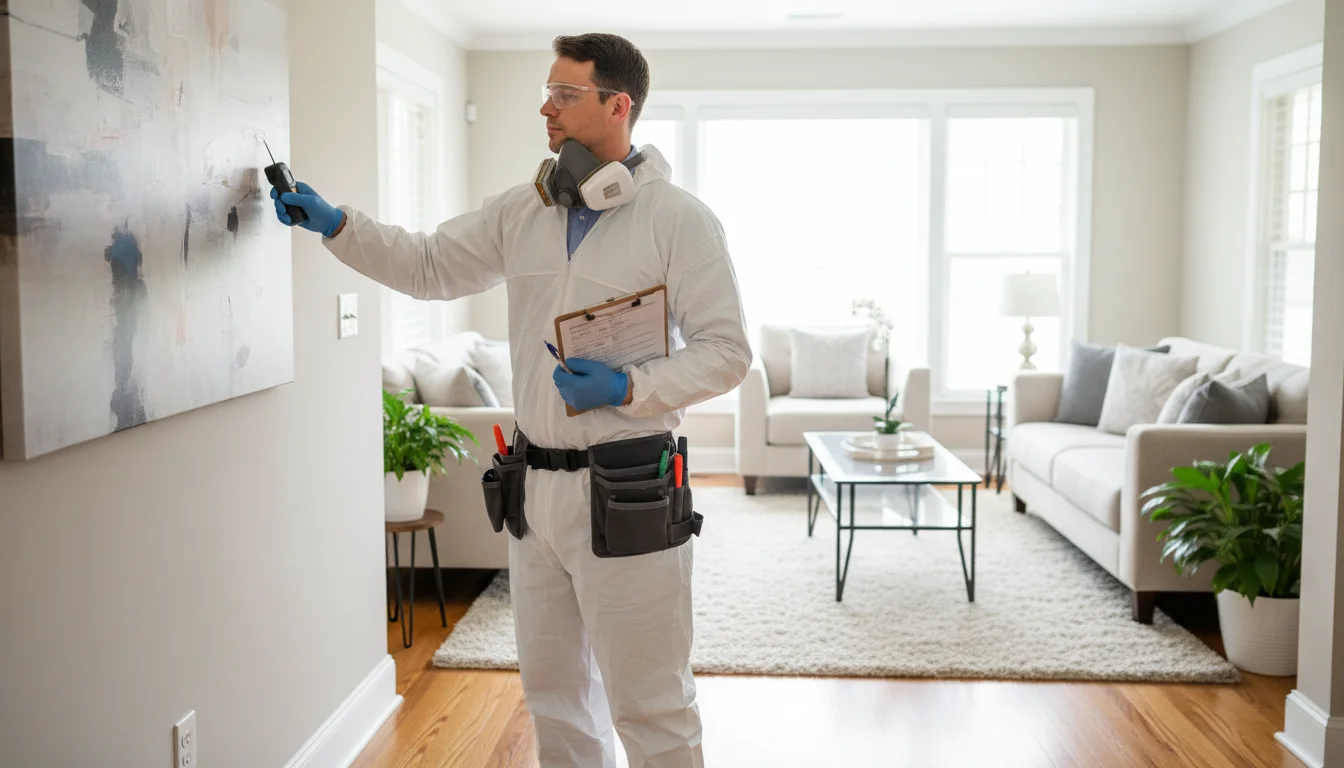
When to Notify Parents About School Mold
The threshold for parent notification should be low and clearly defined in a written district policy before any incident occurs. Notification should be triggered when mold is visually confirmed in any occupied area exceeding 10 square feet, when air quality testing reveals indoor spore counts significantly elevated above outdoor baseline levels, when students or staff report respiratory symptoms that are temporally associated with occupancy of a specific room or building, or when remediation activities including containment setup will be visible to students and staff during the school day. Waiting until laboratory results confirm the specific species of mold is neither necessary nor advisable — the presence of visible mold at a scale requiring professional intervention is itself the notification trigger.
Timing matters critically. The first communication should go out within 24 hours of the decision to initiate professional mold assessment or remediation. A same-day communication is ideal when the mold is in a heavily occupied area or when students have already been relocated. Delays beyond 48 hours create an information vacuum that parents fill with worst-case speculation, and once that speculation becomes established in community conversation, even the most carefully crafted district statement must contend with the momentum of misinformation.
What to Say — and What Not to Say
An effective parent notification strikes a balance between transparency and measured reassurance. It should include what was found and where, in plain language without minimizing the finding or using euphemisms like moisture issue when mold is confirmed, what immediate actions the district has taken including relocating affected classes if applicable, the name and credentials of the environmental consultant or remediation firm engaged, the timeline for inspection, testing, and remediation, and the date by which parents will receive a follow-up communication with additional information. The notification should also include a point of contact — a named individual with a phone number and email address — so that parents with specific health concerns about their child can reach someone directly rather than posting their questions on Facebook.
There are specific statements that should never appear in a parent notification about school mold. Do not state or imply that the mold is harmless before laboratory species identification and spore count analysis are complete. Do not claim that remediation will be completed by a specific date unless that date is contractually committed by the remediation contractor with a written schedule. Do not assert that children's health has not been affected — this is a medical determination that the district is not qualified to make and that opens significant liability exposure. Do not use dismissive language suggesting parents are overreacting. Even a single dismissive remark captured in a parent's cell phone video can define the narrative of the entire incident.
Documentation to Share With Parents and the Community
Districts that establish trust during mold incidents are those that share documentation proactively rather than waiting for public records requests to force disclosure. Documents that should be made available on the district website within one week of the incident include the initial inspection report from the environmental consultant with moisture measurements and visual findings, the laboratory report from air and surface sampling showing spore types and concentrations compared to outdoor baselines, the written scope of work from the remediation contractor, and the post-remediation clearance report confirming that spore counts have returned to normal background levels.
Redacting proprietary pricing information from contracts is reasonable; redacting health-relevant data from environmental reports is not. Parents do not need to see the contractor's per-square-foot pricing, but they do need to see the laboratory data that confirms their child's classroom air is safe to breathe. When districts withhold this information, parents reasonably conclude that the data is unfavorable, and the eventual forced disclosure through open records requests confirms that suspicion.
Timeline Expectations and Regular Updates
A mold remediation project in an occupied school building typically spans two to six weeks depending on scope. During that period, parents should receive at least weekly updates even if the update is simply confirming that the project remains on schedule. These updates can be brief emails or posts to the district website, but they must be consistent. A district that communicates weekly through the duration of the remediation builds credibility; a district that goes silent after the initial notification forfeits it.
The final communication — the clearance notification — is the most important. It should attach the full post-remediation clearance report and state explicitly that independent third-party testing has confirmed that spore counts in the affected areas have returned to levels consistent with or below outdoor baseline conditions and that the areas are safe for reoccupancy. This is the communication that parents will save, screenshot, and reference in any future discussions about school environmental health.
Managing Social Media Concerns
Social media is where school mold narratives escalate, fragment, and become permanently embedded in community memory. The district cannot control parent conversations on Facebook, Nextdoor, and community group chats, but it can influence them by being the most reliable source of information in those conversations. This requires that the district maintain a dedicated page on its website for the mold incident that is updated in real time, post links to that page in official district social media channels with each update, monitor community social media for factual inaccuracies and address them calmly with a link to the official update page, and never engage in arguments with individual parents in comment threads. The tone in social media responses must be professional, factual, and compassionate — the district is communicating with worried parents, not debating with adversaries.
Designating a single communications staff member as the spokesperson for the incident prevents contradictory statements from multiple district employees. All media inquiries, all parent group meeting requests, and all public statements should flow through this single channel to maintain message consistency.
Turning a Mold Incident Into a Demonstration of District Competence
Every school mold incident is an opportunity. The district that communicates transparently, shares documentation proactively, completes remediation promptly, and delivers a clean clearance report has demonstrated to its community that it takes student health seriously and manages facilities competently. Parents who were initially alarmed become advocates for the district's professionalism. The incident becomes a reference point in future bond elections and facility funding discussions, not a liability.
The district that delays, obfuscates, minimizes, and withholds creates a lasting legacy of distrust that extends far beyond the mold incident itself. That distrust affects every future interaction between the district and its community, from curriculum decisions to budget referendums. The choice between these two outcomes is made in the first 24 to 48 hours of the incident, and it is a communications decision as much as a facilities decision.
Need Guidance on School Mold Communications or Remediation?
We work with school districts to manage the full mold incident lifecycle — from initial inspection through remediation and post-clearance verification. Our team understands that effective communication with parents and the community is just as important as the technical quality of the remediation itself. Free consultation available.
(332) 220-0303School District Experience • IICRC Certified • Independent Clearance Testing • Confidential Consultation