Portable Classroom Mold Problems: Why Trailers Are Magnets for Moisture and What Schools Can Do
An estimated 385,000 portable classrooms are in use across American public schools, housing roughly 7.5 million students daily. Designed as temporary overflow solutions, many of these units have been in continuous service for 15, 20, or even 30 years — far beyond their intended lifespan. During that time, their construction materials, HVAC systems, and moisture management properties have degraded to the point where portable classrooms are among the most mold-prone occupied structures in any school district's inventory. Understanding why portables fail and what facility directors can do about it is essential for protecting the students and teachers who spend six to seven hours a day inside them.
Why Portable Classrooms Develop Mold Faster Than Permanent Buildings
The fundamental problem is construction design. Permanent school buildings sit on concrete slab foundations with moisture barriers, have brick or masonry exteriors with integrated drainage planes, and are served by central HVAC systems designed to manage humidity across large air volumes. Portable classrooms, by contrast, are wood-framed boxes sitting on concrete piers or blocks with a ventilated crawl space underneath. That crawl space — shaded, damp, and usually inaccessible — is a year-round mold incubation chamber whose spores migrate upward through floor penetrations into the occupied classroom above.
The wall assemblies in portable classrooms compound the problem. Most portables use vinyl-covered gypsum or wood paneling interior surfaces over fiberglass batt insulation within wood stud cavities. When moisture penetrates the exterior siding, it becomes trapped against the interior vapor barrier with no path to dry outward. The result is concealed mold growth inside wall cavities that produces musty odors and spore release for months to years before visible staining appears on interior surfaces. By the time staff notice the smell, the hidden mold colony is often extensive.
HVAC Limitations in Portable Classroom Units
The through-wall or rooftop packaged HVAC units installed in most portable classrooms are designed for cost and simplicity, not for humidity control. These units typically cool air quickly but run short cycles that do not allow enough runtime to dehumidify effectively. The result is a classroom that reaches the thermostat setpoint in temperature but remains at 65–80% relative humidity — well above the EPA's recommended maximum of 60% and deep into the range where mold proliferates on any available organic surface.
Condensate drainage is a recurring failure point. Portable classroom HVAC drain pans and lines clog with dust and biological growth, causing water to overflow into the unit cabinet where it soaks into insulation, filter media, and surrounding drywall. Because these units are often mounted on the roof or exterior wall, the leak may go unnoticed for an entire season. When the first warm day of spring triggers the cooling cycle, a winter's worth of mold growth inside the air handler is aerosolized into the classroom within minutes.
Moisture Sources Unique to Portable Trailers
Portable classrooms face several moisture sources that permanent buildings do not. The ground clearance space underneath each unit is typically bare soil that wicks moisture upward into the floor assembly. Perimeter skirting, intended to hide the pier foundation, traps humidity and prevents drying airflow. Roof penetrations for HVAC units, exhaust fans, and conduit are sealed with sealant that deteriorates under UV exposure and thermal cycling, creating direct pathways for rainwater entry. Window units, common in older portables, leak at the sill and allow condensation to run inside wall cavities during cold weather when warm interior air meets cold glass.
Occupant density amplifies every moisture problem. A standard portable classroom of 900 square feet may house 25–30 students plus a teacher, each exhaling approximately one pint of water vapor per school day. Without adequate ventilation and dehumidification, that moisture load accumulates in drywall, carpet, upholstery, and books, maintaining surface conditions favorable for mold germination. The combination of high occupant density and poor HVAC performance makes portables uniquely susceptible to chronic mold problems that recur even after surface cleaning.
Inspection Frequency and Protocol Recommendations
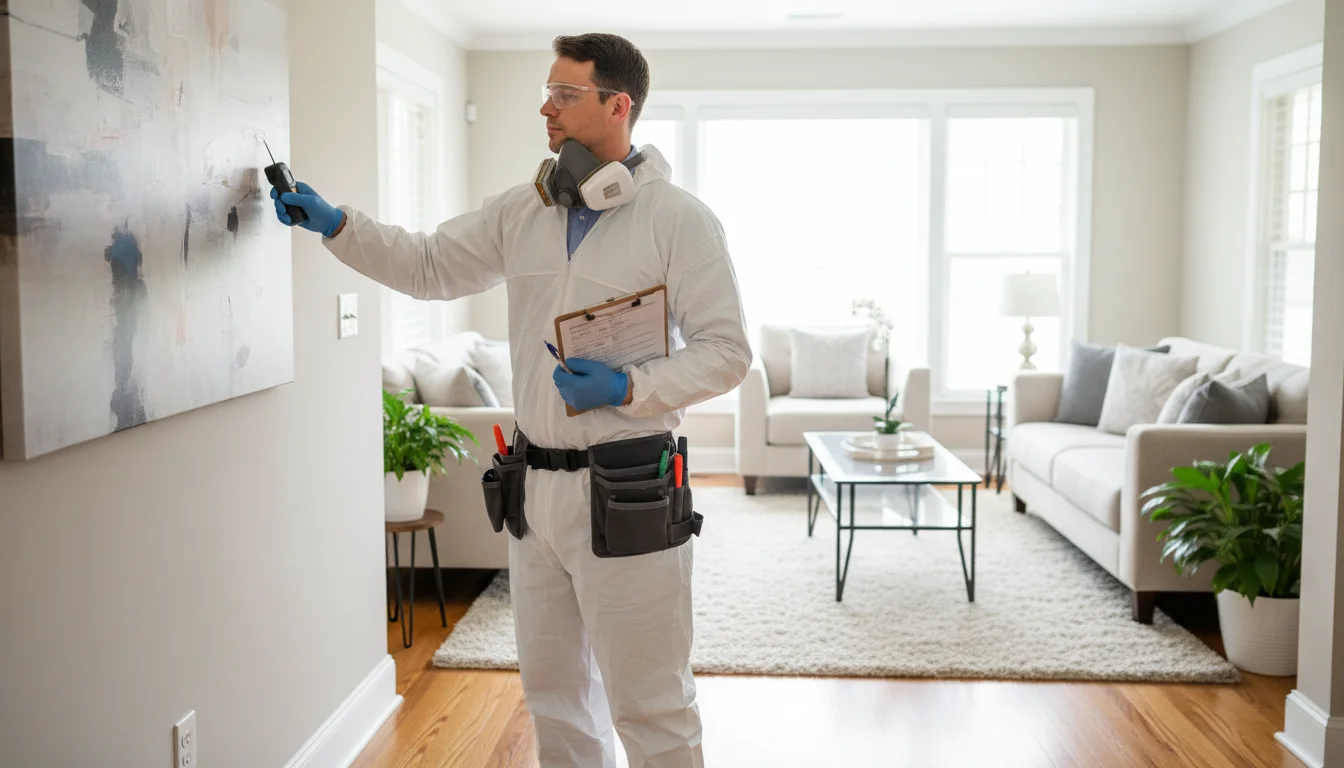
Given their vulnerability, portable classrooms should be inspected for mold and moisture at a minimum three times per year: once before the school year begins in August or September, once during winter when condensation risk is highest, and once in late spring after the rainy season when ground moisture and roof leaks have had months to work their way into building assemblies. The inspection protocol should include thermal imaging of all walls, ceiling, and floor perimeters to identify hidden moisture, relative humidity measurement with a calibrated hygrometer confirming levels remain below 60%, visual inspection of HVAC condensate pans, drain lines, and filter condition, and odor assessment — musty or earthy smells in a portable are a reliable early warning of concealed mold even when surfaces appear clean.
Inspection findings should be logged in a portable-specific database that tracks moisture trends over time. A portable that passes inspection today but shows a steadily rising moisture trend over three consecutive inspections requires intervention even if no visible mold is present.
When to Replace Versus Remediate a Portable Classroom
The decision to remediate or replace a mold-affected portable classroom should be driven by the scope of contamination, the unit's age, and the cost of remediation relative to replacement. Remediation is appropriate when mold is limited to accessible surfaces, the HVAC system is serviceable with cleaning and component replacement, the roof, windows, and exterior envelope are intact and can be made watertight with minor repairs, and the unit is less than 15 years old. Professional remediation in these cases should follow full IICRC S520 protocols including containment, negative air, HEPA air scrubbing, removal of affected porous materials, antimicrobial treatment of structural framing, and post-clearance verification.
Replacement is the better option when mold has penetrated the wall and ceiling cavities extensively such that remediation would require stripping the interior to the studs, the roof or exterior envelope has failed and requires replacement that approaches 50% or more of the replacement cost, the unit is more than 20 years old and has a documented history of recurrent mold problems, or the HVAC system is an obsolete R-22 unit that cannot be economically retrofitted and contributes to persistent humidity problems. In these cases, a new prefabricated classroom with integrated dehumidification, a sealed floor system, and modern water-resistant construction materials will provide better long-term air quality outcomes at lower lifecycle cost than attempting salvage remediation on a unit that has already demonstrated its failure modes.
Need Portable Classroom Mold Inspection or Remediation?
Our team understands the unique moisture dynamics of portable educational facilities. We provide comprehensive inspections with thermal imaging, honest assessments of remediate-vs-replace decisions, and full IICRC S520 remediation when repair is the right call. Free on-site assessment with no obligation.
(332) 220-0303Portable Classroom Specialists • IICRC Certified • Thermal Imaging Inspections