Hospital HVAC Mold Prevention: A Facility Manager's Maintenance Program
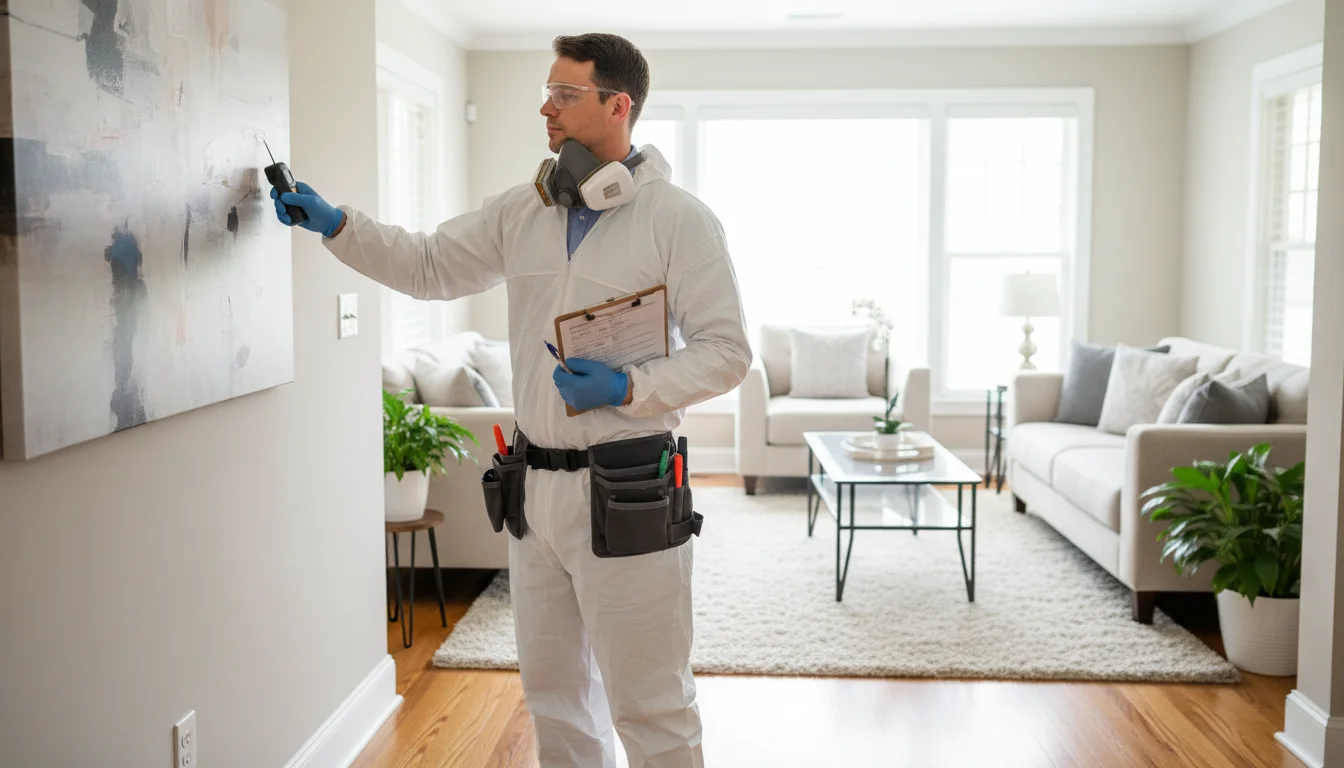
Hospital HVAC systems move millions of cubic feet of air through patient care areas every day. When those systems are clean and well-maintained, they're the facility's best defense against airborne contaminants. When they're neglected, they become the single most efficient mold distribution system in the building — drawing spores from a contaminated coil or condensate pan and delivering them directly to patient rooms, operating suites, and sterile processing departments. A proactive HVAC mold prevention program is the most cost-effective investment a hospital facility manager can make.
Air Handler Inspection and Coil Cleaning Schedule
Hospital air handler units (AHUs) should be inspected for mold, moisture, and cleanliness at least quarterly — more frequently for units serving critical care areas. The inspection should include: visual inspection of the cooling coil upstream and downstream faces for visible microbial growth, condensate pan inspection for standing water, biofilm, or corrosion, filter bank inspection for bypass (air leaking around filters rather than through them), and interior insulation inspection for moisture damage or fungal growth.
Cooling coil cleaning frequency depends on several factors: outdoor air quality, unit runtime, coil design, and whether the unit has upstream filtration at MERV 13 or higher. For most hospital AHUs, annual coil cleaning is the minimum. Units serving ICUs, ORs, or other critical areas should be cleaned semi-annually. The cleaning method matters: pressure washing can drive microbial material deeper into the coil fin pack. The preferred method is low-pressure application of an EPA-registered HVAC coil cleaner followed by thorough rinsing — with the condensate drain verified to be flowing freely before and after cleaning.
Duct Inspection and Cleanliness Standards
Hospital ductwork should be inspected every 2-3 years using video borescope inspection of representative sections. The North American Insulation Manufacturers Association (NAIMA) and National Air Duct Cleaners Association (NADCA) provide cleanliness standards: duct surfaces should be free of visible microbial growth, accumulated debris should not exceed 0.05 inches depth on non-porous surfaces, and air handler interior surfaces should meet the same standard.
When duct cleaning is required — because inspection reveals visible mold or accumulated debris exceeding standards — it must be performed under negative air pressure using HEPA-filtered vacuum collection. The process requires: isolating the duct section being cleaned from the rest of the system, establishing negative air at the collection point, mechanical agitation of duct surfaces to dislodge debris, HEPA vacuum collection of dislodged material, and post-cleaning visual inspection to verify cleanliness. For hospital applications, duct cleaning should be scheduled during low-census periods and coordinated with infection control to assess whether served areas need temporary air quality monitoring.
Humidity Monitoring and Control
ASHRAE Standard 170 for healthcare facilities specifies relative humidity ranges of 20-60% for most patient care areas, with specific ranges for ORs (20-60%), sterile processing (maximum 60%), and pharmacies (maximum 60%). These aren't just comfort standards — they're mold prevention standards. Maintaining relative humidity below 60% deprives mold spores of the moisture they need to germinate on any surface in the hospital.
Facility managers should implement continuous humidity monitoring in critical areas with automated alerts when levels exceed 60% for more than two hours. Portable data loggers can supplement the building automation system for areas not on the central monitoring network. When humidity excursions occur — common during shoulder seasons when chillers cycle off but outdoor humidity remains high — the root cause should be investigated and corrected before mold has time to establish.
UV-C Light Installation for Coil and Drain Pan Treatment
Ultraviolet germicidal irradiation (UV-C) in the 254-nanometer wavelength, when installed upstream of cooling coils and directed at the coil face and condensate pan, has been shown to reduce or eliminate microbial growth on these surfaces. The key to effective UV-C installation is proper sizing: the intensity at the target surface must be sufficient for the air velocity passing through the coil. Undersized UV-C systems provide a false sense of security without actually controlling microbial growth.
UV-C is not a substitute for coil cleaning — it's a supplement that reduces the frequency and difficulty of cleaning. A properly sized UV-C system combined with annual coil cleaning provides the most robust defense against HVAC-originated mold in hospital air distribution systems.
Hospital HVAC systems that aren't actively monitored for humidity and cleanliness don't just fail quietly — they distribute contaminants throughout the facility. Prevention costs a fraction of the remediation, patient relocation, and reputational damage that follows a mold outbreak traced to the air handling system.