Elderly Mold Exposure: Health Risks and Warning Signs Seniors and Caregivers Must Know
The Centers for Disease Control and Prevention (CDC) explicitly classifies adults aged 65 and older as a high-risk group for mold-related illness. This is not a footnote in a report — it is a frontline public health designation that affects over 56 million Americans. For seniors aging in place and the adult children who help care for them, understanding how mold exposure uniquely threatens elderly health is not optional knowledge. It can mean the difference between an early intervention and a preventable hospitalization.
Why the CDC Classifies Seniors as High-Risk
The CDC's mold guidance singles out specific populations for heightened concern: infants and children, people with asthma or allergies, individuals with compromised immune systems, and adults over 65. For seniors, the designation stems from three converging factors that make mold exposure more dangerous than it is for younger adults.
First, the aging immune system undergoes a process called immunosenescence — a progressive decline in immune function that reduces the body's ability to mount an effective defense against inhaled pathogens, including mold spores and the mycotoxins some species produce. Second, seniors have a higher baseline prevalence of chronic respiratory conditions like COPD, asthma, and chronic bronchitis, all of which mold exposure can directly exacerbate. Third, many seniors spend 80-90% of their time indoors, meaning indoor air quality — including mold spore concentrations — has an outsized impact on their total environmental exposure.
The CDC classifies adults 65+ as a high-risk group for mold-related illness. Immunosenescence, chronic respiratory conditions, and high indoor time create a triple threat that younger adults do not face.
Respiratory Effects: When Mold Attacks Aging Lungs
For seniors with pre-existing COPD, mold exposure can trigger acute exacerbations — sudden worsening of symptoms that often require emergency medical intervention. The inflammatory response that mold spores provoke in airways can narrow already-compromised bronchial passages, leading to dangerous drops in blood oxygen saturation. A senior who was managing COPD with daily medication can find themselves in respiratory distress within days of sleeping in a mold-affected bedroom.
Asthma attacks represent an equally serious risk. Even seniors with well-controlled asthma can experience breakthrough attacks when exposed to elevated indoor mold spore counts. Unlike younger asthma patients, elderly individuals often have reduced respiratory reserve, meaning an asthma attack that a 30-year-old weathers at home could send a 75-year-old to the emergency department. Chronic bronchitis — persistent inflammation of the bronchial tubes — can become a debilitating daily reality for seniors living in homes with ongoing mold problems.
Immune System Decline and Mold Susceptibility
Immunosenescence reduces both the speed and the strength of the body's immune response. T-cells and B-cells — the white blood cells that identify and neutralize foreign invaders — become less numerous and less responsive with age. When mold spores enter the respiratory system of an elderly person, the immune system may respond too slowly to prevent colonization, or too aggressively, triggering an inflammatory cascade that damages healthy tissue alongside the pathogen.
Additionally, many seniors take medications that further suppress immune function — corticosteroids for arthritis, chemotherapy agents, and immunosuppressants prescribed for autoimmune conditions. These drugs create an even wider window of vulnerability. A mold spore count that causes mild sniffles in a healthy 40-year-old can trigger a systemic reaction in an immunocompromised senior.
Symptoms Seniors and Caregivers Must Watch For
Mold-related illness in seniors often presents differently than in younger adults. The following symptoms should prompt immediate investigation of the living environment:
- Persistent cough — A cough that lingers for weeks and worsens at home but improves during hospital stays or visits to other locations strongly suggests an environmental trigger, with mold being a prime suspect.
- Wheezing and shortness of breath — New-onset wheezing in a senior who never had asthma is a red flag. Existing wheezing that worsens indoors is an even stronger signal.
- Unexplained fatigue — Chronic mold exposure can cause persistent fatigue that mimics the exhaustion of a low-grade infection. Family members may notice a once-active senior becoming increasingly sedentary.
- Cognitive fog — Mycotoxins from certain mold species (particularly Stachybotrys, or "black mold") have been associated with neurological symptoms including confusion, memory problems, and difficulty concentrating — symptoms easily misattributed to normal aging or early dementia.
- Skin irritation and rashes — Direct contact with moldy surfaces or airborne spores can cause dermatological reactions in seniors with thinning, more-permeable skin.
When to See a Doctor
Seniors experiencing any of the above symptoms — especially when symptoms correlate with time spent at home — should consult their primary care physician promptly. A doctor can perform pulmonary function tests, order chest X-rays or CT scans, and run blood work to check for elevated IgE antibodies, eosinophil counts, and inflammatory markers that may indicate mold-related illness. Caregivers should document when symptoms worsen (time of day, which room of the house) and bring that information to the appointment.
How to Test If Home Mold Is Causing Health Issues
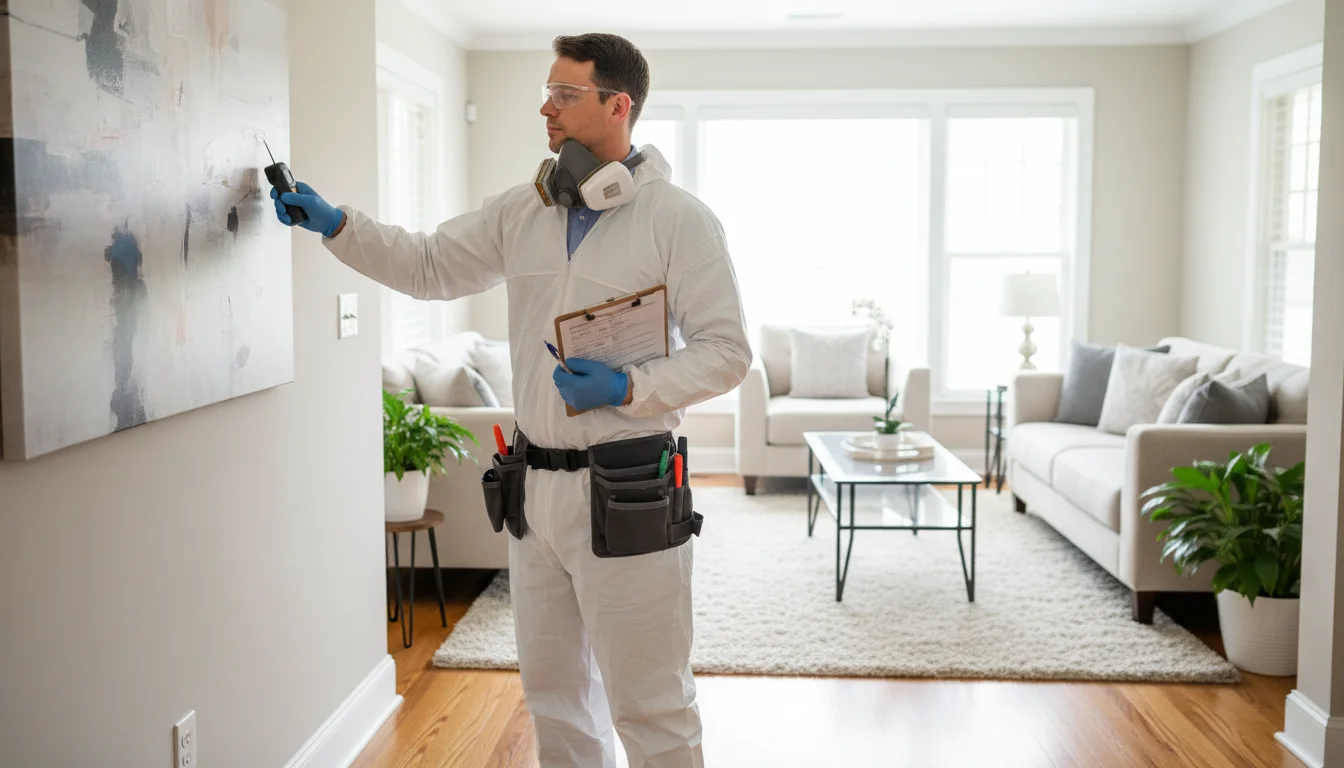
The most practical test is a "vacation test": if symptoms improve when the senior spends 3-5 days away from home — at a family member's house or a hotel — and return upon coming back, an environmental trigger is likely. Professional mold inspection is the next step. A qualified inspector uses moisture meters, thermal imaging cameras, and air sampling pumps to measure indoor spore concentrations and compare them to outdoor baseline levels. Indoor counts significantly exceeding outdoor levels for the same species strongly indicate an active indoor mold colony.
At-home mold test kits from hardware stores can detect the presence of mold but cannot quantify spore concentrations or identify the species with precision. They are best used as a preliminary screen before professional assessment, not as a replacement for it. For seniors with symptoms, professional testing is the responsible choice.